THE CLASSIC COLLECTION✦An outlaw’s diary: the CommuneCLASSIC FREE BOOKS
An outlaw’s diary: the Commune
Cécile Tormay
THE CLASSIC COLLECTION · 1904
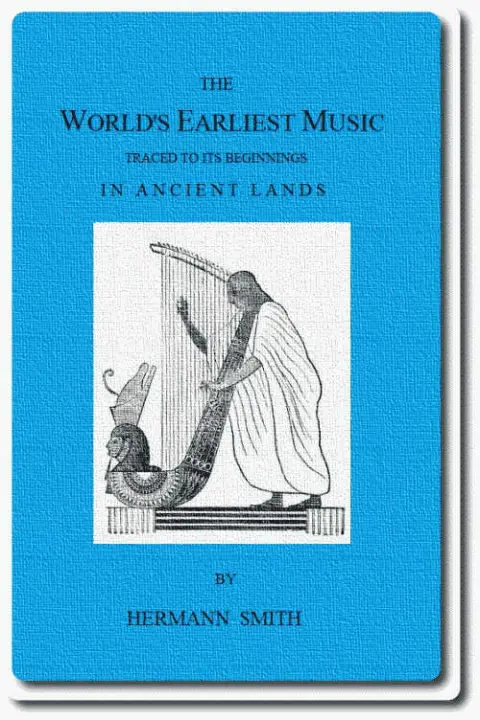
"The World's Earliest Music" by Hermann Smith is a historical account written in the early 20th century. This work explores the origins and evolution of music across ancient civilizations, particularly focusing on the evidence of musical instruments from regions like Greece, Egypt, China, Assyria, and Babylonia. The author aims to shed light on how these early cultures shaped the development of musical expression and the significance of music in their daily lives. At the start of the book, Smith introduces the idea of a "music-trail" that leads us through the remnants of ancient civilizations and their musical instruments. He contemplates the challenges in understanding ancient music due to the scarcity of intact artifacts and emphasizes the value of rock carvings, paintings, and archaeological findings in reconstructing musical history. The author also highlights the interconnectedness of music, culture, geography, and history, indicating that our current understanding of music is derived from the evolution and transmission of musical ideas over millennia, particularly from ancient Egypt and Greece. Smith invites readers to engage in this journey to explore how the nuances of ancient music continue to resonate through time.
Introduction adapted from the source catalogue; source summaries may be automatically generated.
Free to read · English · 91,887 words · No account needed
MAKE TIME FOR A GOOD BOOK
On by default. Untick to stop anonymous reading totals. Each page counts after 10 seconds in view. How this works.
Anonymous counting is on unless you have switched it off.
Aristotle, on the Bombyx flutes 99,
on Mese 103,
Aristoxenus his pupil 341,
on development 348
Aristoxenus, musician and philosopher 341,
his works 343
Art is the superfluous 285
Arunda Donax, for reeds 49
Ashmolean Museum, the Lady Maket pipes now in 41
Asia Minor 238,
minstrels in 337
Asiatic music distracting 21
Assur-ban-ipal, slabs at British Museum 295
Assyrian, Double pipes 55, 60,
Dulcimers 253,
harp, representation of 262,
route to Greece 350
Athenæus Pronomus 92
Athene, the Goddess, 128, 138
Athens, founding of 327
Athens Museum, Apollo 322
Auletris, flute player 73
Auloi, Greek flutes 73
Babylon, Berosus on 170
Babylonia 304, 314
Bach, J. S., use of the thumb 85
Bailey, J., Festus quoted 133
Ball, Rev. J. C., Turano Sythic speech 169
Bamboo Books, The ancient Chinese 276
Bamboo Forests in China 193
Bark, boats made of 286
Beethoven, his folk song themes 83,
his melodies 180,
his famous three knocks of Fate 273
Berlin Museum, Egyptian lyre in 298
Berosus on Babylon 170
Bird’s Nest or Chinese Sheng 10, 182
Blaikley, J. D., experiments on Egyptian flutes 57
Bombyx flutes 99, 102
Book of Changes, Chinese 191
Borneo, Cane Harps from 303-4
Boscawen, St. Chad, on Chaldea 4,
on Persia 6,
metal working 208,
Lute on slab from Tello 352
Bow with boat form of early lyres 285, 289
Boxing, Etruscan to sounds of flutes 78
British Museum, relics in:
Apollo, Statue of 15
Pans Pipes or Syrinx 17
Peruvian Pan pipes 18
Peruvian Stone Syrinx 17
Egyptian Gingras, part of 28-33, 48
Cymbals found in Egyptian mummy 29
Wall painting of Egyptian ladies playing the double pipes 46
Copy of a Corneto painting 60-67
Song on a Chaldean tablet 62
Fragment of flute bulb 80
Greek Monaulos, two specimens 84
Chinese Encyclopia shelved there 190
Leva flute pipe 246
Harps on Assyrian slabs 262
Roman Cornu and Trumpets 270,
Litmus 271
Egyptian Boated lyres, 288
Three thousand gems, 311
Bronze of Hermes, 308
Chelys lyre, parts of, 310
Herculanæum, painting of Apollo with harps, 318
Calliope, Hymn to the Muse, 145, 163
Bruce, the Traveller, Grand Harp painting found by, 290
Brussels Museum, Catalogue of, 240
Krena Flute from, 246
Buddha and Confucius, 256
Bulb found by Maspero, 124-5
Bulbs for flute mouthpiece shewn on vases, 121
fragment of, in British Museum, 80
Burney, Dr., on Hermes lyre, 308
his picture of one kind of lyre, 318
Caspian Sea Mountains, 350
Capistrum for flute player, 70
Caucasian Mountains, 219, 350
Cecrops, founder of Athens, 65, 327
Cephisis, River of, 128-9
Cesnola collection at New York, 71, 100
his Salamis flute, 115
Chaldea, land of, 6, 8
Songs, 62
Chaldean Race, 170, 350
Sculpture by, 4, 208
Chappell, W., on fragment of Egyptian pipe, 33
on the tongue box, 43
reed growth, 120
Greek hymns, 143-4
harmony in Egyptian music, 302
Cleonidas quoted, 312
no Greek major scale, 348
Charites, City of, 128, 137
China, her past, 3, 4
Chinese Musical Instruments.
Outspread Phœnix, 18, 157, 160
Bird’s Nest or Sheng, 152, 176, 203
Stone Chime, 160, 163
Gong chime, 162, 235
Yellow Bell and Forest, 175
Tetrachord of Bells, 216
Clarionet or Kwant-ze, 219
Monster Bell, 233, 234
Flutes, 236, 237, 244, 246
Dragon flute, 239
Se, 227, 251, 257
Hwang-chong-tche, 241, 243
Guitars, 250, 280
Violin of gourd or cocoanut, 251
Dulcimers, 253
Kin or C’hin, 259, 260, 261
Trumpets, 264, 268
Rattling Tiger, 272
Drums, 272
Your reading position is saved on this browser. Take it to another device with a library code. Reading pages adapt to text, rather than matching a printed edition.
BEHIND THE BOOK
This eBook is for the use of anyone anywhere in the United States and most other parts of the world at no cost and with almost no restrictions whatsoever. You may copy it, give it away or re-use it under the terms of the Project Gutenberg License included with this eBook or online at www.gutenberg.org. If you are not located in the United States, you will have to check the laws of the country where you are located before using this eBook. Read the source licence.
The original source file, including credits and licence, is retained by this library. Request an original-format copy at no charge. Please include the book title and Project Gutenberg identifier #53039.
KEEP YOUR CURIOSITY GOING
Cécile Tormay

Moritz Busch
John L. Ransom
Frances Wright
Cécile Tormay

Mabel Potter Daggett