THE CLASSIC COLLECTION✦An outlaw’s diary: the CommuneCLASSIC FREE BOOKS
An outlaw’s diary: the Commune
Cécile Tormay
THE CLASSIC COLLECTION · 1904
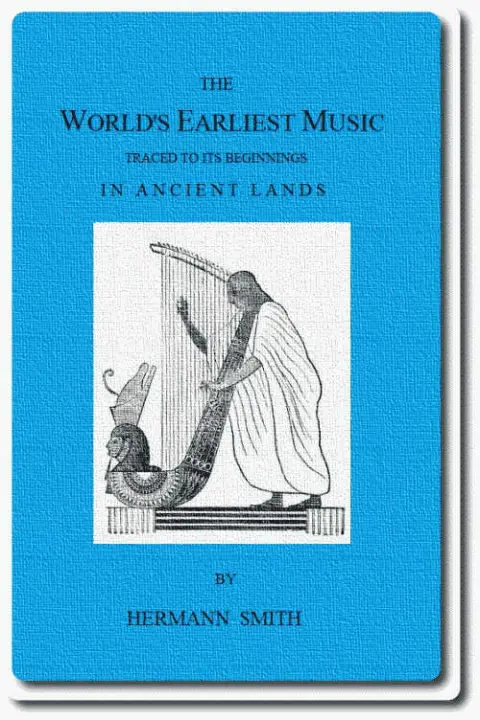
"The World's Earliest Music" by Hermann Smith is a historical account written in the early 20th century. This work explores the origins and evolution of music across ancient civilizations, particularly focusing on the evidence of musical instruments from regions like Greece, Egypt, China, Assyria, and Babylonia. The author aims to shed light on how these early cultures shaped the development of musical expression and the significance of music in their daily lives. At the start of the book, Smith introduces the idea of a "music-trail" that leads us through the remnants of ancient civilizations and their musical instruments. He contemplates the challenges in understanding ancient music due to the scarcity of intact artifacts and emphasizes the value of rock carvings, paintings, and archaeological findings in reconstructing musical history. The author also highlights the interconnectedness of music, culture, geography, and history, indicating that our current understanding of music is derived from the evolution and transmission of musical ideas over millennia, particularly from ancient Egypt and Greece. Smith invites readers to engage in this journey to explore how the nuances of ancient music continue to resonate through time.
Introduction adapted from the source catalogue; source summaries may be automatically generated.
Free to read · English · 91,887 words · No account needed
MAKE TIME FOR A GOOD BOOK
On by default. Untick to stop anonymous reading totals. Each page counts after 10 seconds in view. How this works.
Anonymous counting is on unless you have switched it off.
Chinese Notation, 10
Flat-fourths, 39, 53, 177, 205
Confucian hymn, 151
Ear for pitch, 159
Scale of P’ai-hsiao, 159
Chronology, 170
Foot measures, 172, 177
Measures and Weights, 178, 197
Enormous Encyclopedia, 190
Book of Changes, 191
Yellow Emperors foot, 196
Old Ritual, 228
Bell foundry, 232-233
Coins, 242
Strings, 252
Classics, 276
King Seang Wei, his buried books, 276
Duke Tan Foo ancestral temples, 276
Ritual Music, 277
Sect of the learned, 277
Love songs, 279
Orchestras, 280
Oldest written music, 282
Chord, as a musical term, 332
Chorebus, the poet musician, 335
Citharist players, The charm of, 346
Civilization, Primitive, 168
Origin of, 171
Clarionet, Japanese, 112
Chinese, 219
Cleonidas on seven stringed lyre, 313
His writings, 341
College of Mandarins, 190
Confucius, Hymn to, 151
on music, 190
his favourite instrument the Kin, 255, 259
ancient celebrations, 277
sacrificial hymn to, 282
Corneto Etruscan painting, 60, 67
Cretan Seal of Apollo’s Lyre, 351
Crete, stepping stone to Greece, 328
Crissa, Plains of, 130
Cromornes, their caps, 224
Cyprus, held by Egypt, 328
Danaus, founder of Argos, 65, 327
Dayr-el-Bahari Temple of, 10
De Candole, origin of wheat, 348
Debrett’s peerage Ancestor Worship, 283
Delphi, Temple of, 131
Pindar, his Iron chair at, 132
Pythagorus Sophocles Æschylus and Phideas at, 132
Music Tablets, 143
lyre, 306
Demaratus, Merchant of Corinth, 68
in Terpanders time, 334
Dennis on Etruscan Vases, 71
Diagram of Nations, 5
Diatesseron, The Greek fourth, 332
Diaulos, Greek flutes, 49, 80-85
Didymus, his minor tone, 344
his diatonic scale, 344
Dion, Statue of Hermes, 130
Dionysius on rhythm, 144
Greek hymn by, 146
Diosopolis Parva, Horn from, 225
Dirce, Fountain of, 129
Disjunct or Greater System, 341
Dragon, Chinese, 3
flute, 239
Dulcimer, Chinese, 253
Ear, Artists habit of reliance on, 333
Edkins, Dr., Akkadian and Chinese languages, 169
Edwards, Miss, at a Nubian funeral, 61
Egypt, Exploration Fund, 225
Egyptian Music unwritten, 304
Egyptian chant of Thotmes IV., 276
player on the Nay, 59
method compared with Chinese, 245
Egyptian Musical Instruments.
Mamms or Twin flutes, 47, 62
Nay, 58
Seba, 58
Lyres, 13, 287-289, 297
Zummarah, 38, 57
Arghool reed flute, 35-36
its reeds, 55, 71
Elam, Land of, 167
Elgin, Lord, Lyre from Athens, 319, 323
Ellis, Dr. A. J., on Persian Scale, 7
the lutist Zalzal, 22
Arabic music, 22
test of Gong Chimes, 162
scale of Kublai Khan, 188
on Amiot, 201
scales of various nations, 201
on Japanese scales, 216-217
Greek scales founded on the fourth, 218
Emerson on the Builder, 181
Emperors Chinese.
Fu-Hsi, 183, 188, 253, 263
Huang Che, the destroyer of books, 186
Hwang-ti, 171, 188, 197, 257
Shun, 188, 276
Yao, 171
Empress, Chinese, Nu-wo, 188
Encyclopedia of the Chinese, 190
Engel, Carl, on the Sheng, 201
Equal Temperament System of, 346
Erato, The Muse her Psaltery, 317
and Trigon, 321
Eratosthenes, writings on music, 344
on flutes with boxing, 78
Erech, city of the dead, 283
Etrurian Kings of Rome, 67
Etruscan double flutes, 60
Subulones, 69
tomb opening of, 66
vases, 68
Euphrates Valley and River, 167, 168, 169-170, 307
Euterpe, the Muse playing her flutes, 77
Evans, A. J., Knossos lyre seal, 351
Experiments with the Sheng pipes, 199
Ezra and Moses, 190
Feng tribes early in China, 163
Filmore, J., on Indian melodies, 247
Finding the Chinese Lüs, 165
Fingers, the fates of music, 21, 33
Flageolet pipe, 98
Flute of Ismenias, 93
Flute player with Phorbia, 70
Your reading position is saved on this browser. Take it to another device with a library code. Reading pages adapt to text, rather than matching a printed edition.
BEHIND THE BOOK
This eBook is for the use of anyone anywhere in the United States and most other parts of the world at no cost and with almost no restrictions whatsoever. You may copy it, give it away or re-use it under the terms of the Project Gutenberg License included with this eBook or online at www.gutenberg.org. If you are not located in the United States, you will have to check the laws of the country where you are located before using this eBook. Read the source licence.
The original source file, including credits and licence, is retained by this library. Request an original-format copy at no charge. Please include the book title and Project Gutenberg identifier #53039.
KEEP YOUR CURIOSITY GOING
Cécile Tormay

Moritz Busch
John L. Ransom
Frances Wright
Cécile Tormay

Mabel Potter Daggett