THE CLASSIC COLLECTION✦An outlaw’s diary: the CommuneCLASSIC FREE BOOKS
An outlaw’s diary: the Commune
Cécile Tormay
THE CLASSIC COLLECTION · 1904
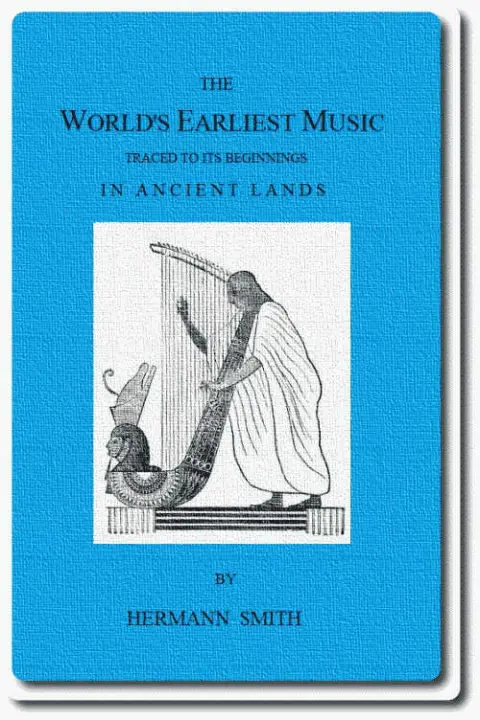
"The World's Earliest Music" by Hermann Smith is a historical account written in the early 20th century. This work explores the origins and evolution of music across ancient civilizations, particularly focusing on the evidence of musical instruments from regions like Greece, Egypt, China, Assyria, and Babylonia. The author aims to shed light on how these early cultures shaped the development of musical expression and the significance of music in their daily lives. At the start of the book, Smith introduces the idea of a "music-trail" that leads us through the remnants of ancient civilizations and their musical instruments. He contemplates the challenges in understanding ancient music due to the scarcity of intact artifacts and emphasizes the value of rock carvings, paintings, and archaeological findings in reconstructing musical history. The author also highlights the interconnectedness of music, culture, geography, and history, indicating that our current understanding of music is derived from the evolution and transmission of musical ideas over millennia, particularly from ancient Egypt and Greece. Smith invites readers to engage in this journey to explore how the nuances of ancient music continue to resonate through time.
Introduction adapted from the source catalogue; source summaries may be automatically generated.
Free to read · English · 91,887 words · No account needed
MAKE TIME FOR A GOOD BOOK
On by default. Untick to stop anonymous reading totals. Each page counts after 10 seconds in view. How this works.
Anonymous counting is on unless you have switched it off.
Then the American explorers in Babylonia have unearthed a tablet sculptured in relief showing musicians, and one sitting, playing a harp of eleven strings; Mr. St. Chad Boscawen gives the date of this slab circa B.C. 3,000, it was found at Tel-lo, the ancient Sirpurra. Another valuable find, much earlier in date, was a terra-cotta relief depicting a shepherd seated playing his lute, and his dog with a curly tail standing beside him (probably this lute-lover was an earlier Anacreon), the lute so like the Egyptian Nefer, and the attitude in holding the instrument exactly the same; for so remote a time the drawing of the figures is little less than marvellous. This relic was found in the schoolroom attached to the temple library at Nippur, it confirms the conjecture I put forth that the Nefer form was derived from Babylonia—I called it the paddle form.
Each year fresh treasures may be unearthed, so energetic are the new explorers, sons of nations, all rivals in archæological work, each emulating the other in adding new riches to the Museums to hold in trust for the world’s coming ages, adding to the known past other more distant millenniums.
With so much material accumulating throwing new light upon the subject, I contemplate a sequel to this volume, to be ready, if health aids the fulfilment of my wish, by the coming Christmas, and to be entitled “Our Musical Inheritance.”
A, the master note in Greek pitch, 335
Aalst, Van, on Migration of the Chinese, 8, 163
Semi-tonal scale, 160
on Gong chimes, 162
Stone chimes, 163
diagram of Lüs, 173-5
Books destroyed, 186
ideas of, 189
Abydos Tombs, Petrie’s discovery of cross-string Harps, 351
Abysinnian Kissar Harp, 294
Adonis, Phœnicean, 33
Afghanistan, carvings of double flutes, 9
Agriculture, of early Chinese, 168
Akkad, the early settlement, 167-172
Akkadean Language, 169
religion, 169
Hymn, 172
tetrachord surmised, 331
Alexander the Great, 350
Alexandrian Library, 10, 342-3,
philosophers, 343-4
Alypius, his scales, 149
characters used for notes in Greek music, 334
transposition of his scales by Ptolemy, 146
Amenhotep, 111
Statue of called the Memnon, 322
Amiot, Pere, Chinese Music, 158
reeds of Cheng, 173, 187
misled A. J. Ellis, 201
on flutes, 240
Amphoræ, Vases for oil, 78
Anacreon, his ten stringed lyre, 312, 335
his songs, 349
Ancestor Worship the religion of China, 168-9
orchestra for the rites, 275
Confucian Hymn, Music of, 282
Antigenedes on reed growth, 119-121
Apollo, his invention of the lyre, 14
statue of, 15
oracle of, 130
hymns to, 130
his temples, 130
the Delphic tablets and hymn, 146-150
lyre by Praxiteles, 323-342
tetrachord scheme of his
lyre 336,
Cretan seal of lyre 350
Arabia the Divine land 11, 161
Archilochus, musician 339
Archytas, his major third 340,
contemporary with Plato 342-3
Arghool, Egyptian reed flute 35-36,
its reeds 71,
description 55
Arica, Peruvian flutes from 18
Aristophanes on flutes 73
Your reading position is saved on this browser. Take it to another device with a library code. Reading pages adapt to text, rather than matching a printed edition.
BEHIND THE BOOK
This eBook is for the use of anyone anywhere in the United States and most other parts of the world at no cost and with almost no restrictions whatsoever. You may copy it, give it away or re-use it under the terms of the Project Gutenberg License included with this eBook or online at www.gutenberg.org. If you are not located in the United States, you will have to check the laws of the country where you are located before using this eBook. Read the source licence.
The original source file, including credits and licence, is retained by this library. Request an original-format copy at no charge. Please include the book title and Project Gutenberg identifier #53039.
KEEP YOUR CURIOSITY GOING
Cécile Tormay

Moritz Busch
John L. Ransom
Frances Wright
Cécile Tormay

Mabel Potter Daggett