The Riddle of the Universe at the close of the nineteenth century
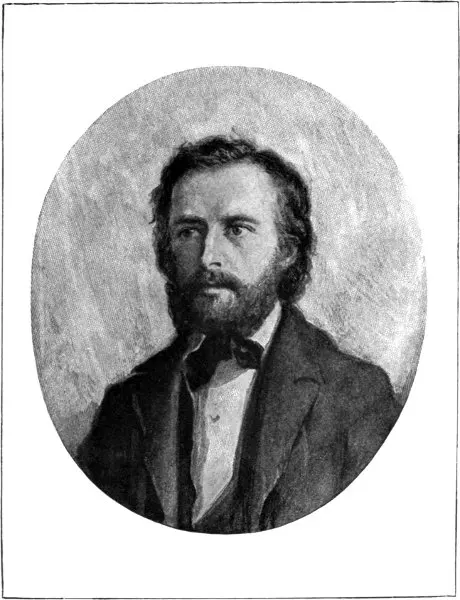
Ernst Haeckel
THE CLASSIC COLLECTION · 1904
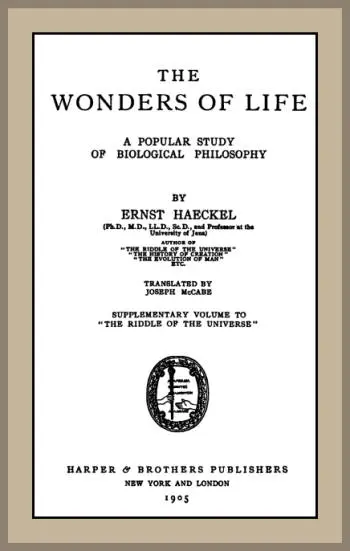
"The Wonders of Life: A Popular Study of Biological Philosophy" by Ernst Haeckel is a scientific publication written in the early 20th century. This work serves as a comprehensive exploration of biological philosophy, building upon the author's earlier work, "The Riddle of the Universe." Haeckel delves into the intricacies of life, the nature of living organisms, and the principles of monistic philosophy, providing insight into biological phenomena and their underpinnings. The beginning of the book introduces the central themes of truth and the pursuit of knowledge, positioning biology within the larger framework of natural philosophy. Haeckel discusses the relationship between science and philosophy, asserting that true understanding emerges from a blend of empirical observation and rational thought. He critiques dualistic theories and emphasizes a monistic approach, promoting the idea that knowledge is inherently tied to physiological processes within the brain. In doing so, he sets the stage for a detailed examination of life, its definitions, and its complexities throughout the remainder of the text.
Introduction adapted from the source catalogue; source summaries may be automatically generated.
Free to read · English · 146,945 words · No account needed
MAKE TIME FOR A GOOD BOOK
On by default. Untick to stop anonymous reading totals. Each page counts after 10 seconds in view. How this works.
Anonymous counting is on unless you have switched it off.
Frothy theory of plasm, 132, 133.
Fungi, 162, 204, 215, 234, 236.
Fungilli, 204, 235.
Gameta, the, 244.
Gastræa theory, the, 223.
Gastræads, 223.
Gastric canal, 228.
Gastro-canal system, 222, 223.
Gastrula, the, 166.
Gemmation, 242, 243.
Genealogy of organisms, 304, 305, 376.
Generation, sexual and asexual, 241-251.
Geogeny, 360.
Geology, historical nature of, 378;
monism of, 458.
Geotropism, 310.
Germ-plasm, 143;
the theory of, 367, 372.
German mind, Janus character of, 441.
Gills, 229, 230.
Globular shape, origin of, 34.
Glœocapsa, 32, 196, 205.
Goethe, monism of, 442;
realism of, 440;
scientific studies of, 440, 441.
Gonades, 249.
Gonochorism, 246.
Gonoducts, 250.
Granular theory of plasm, 134.
Gravitation, sensation in, 309.
Growth, 241.
Growth movements, 264.
Habit, 415-417;
in inorganic bodies, 417.
Heart, the, 228;
work of the, 277.
Heat, sensation of, 300, 301.
Heaven, 109.
Hedonism, 84.
Heliotropism, 298.
Helmholtz on the origin of life, 339.
Heraclitus on life, 28.
Heredity, conservative and progressive, 368;
cumulative, 369;
theories of, 135, 136, 366.
Hermaphrodism, 245, 246, 258, 259.
Hermaphroditic glands, 249.
Hertwig, O., on the biogenetic law, 382;
on the monera, 31.
Heterogenesis, 254.
His, W., theories of, 383.
Histolysis, 106.
Histona, the, 36.
Histonals, 165, 166, 171, 182.
Historical waves, 389.
History, 461;
nature of, 9;
sources of, 9.
Hofmeister on organic chemistry, 45.
Holosphæra, 173.
Honor, false sense of, 430.
Huxley on organic individuality, 152.
Hyaloplasm, 130, 143.
Hybrids, 255, 256;
fertility of, 255.
Hydrostatic movements, 270.
Hygiene, 401, 464.
Hylonism, 82.
Hylozoism, 81, 86, 451.
Hypogenesis, 255.
Hypotheses, nature of, 54;
necessity for, 86, 87, 89, 378, 439.
Idealism, theoretical and practical, 84, 92.
Idiocy, 20.
Idioplasm theory, the, 136, 137, 366, 367.
Ileum, the, 226.
Imagination, function of the, 87.
Imbibition energy of plasm, 39.
Imbibition in organisms, 261.
Immaterial world, the, 436, 437.
Immortality, the belief in, 64, 65, 71, 108;
of the unicellulars, 99-101.
Incurables and suicide, 118, 119.
Individuality, organic, 149, 152.
Infusoria, movement in the, 268, 269, 272.
Inoculation, 204.
Insanity, increase of, 114, 118, 119.
Insectivorous plants, 304, 305.
Instinct, 418.
Intelligence, 316, 317.
Intercellular matter, 145.
Intussusception, 42.
Ionic philosophers, the, 66.
Irritability, 287, 288, 291, 293.
Isopola, 174.
Kant as natural historian, 9;
biological ignorance of, 11, 318, 319;
critical views of, 438;
contradictory views of, 68, 434, 444;
influence of, 25;
mechanical views of, 435;
moral philosophy of, 412, 413;
mystic training of, 443;
narrow life of, 443;
philosophy of, 68, 69, 74, 434-440;
popularity of, 444;
theory of knowledge of, 9, 10, 69, 317-319, 332.
Kassowitz on archigony, 355.
Kelvin, Lord, on the origin of life, 339.
Kidneys, the, 233.
Kirchhoff on the work of science, 6.
Knowledge, a priori and a posteriori, 11, 24, 317;
and faith compared, 54;
dualistic
theory of, 24;
monistic theory of, 12-14.
Kusamaul on the child-soul, 30.
Lamarck, 79.
Lamarck's transformism, 363.
Landscape beauty, 187.
Lange on Kant, 439.
Larvæ, 253.
Law, beginning of idea of, 420;
reaction in science of, 401.
Leibnitz, philosophy of, 110.
Leucocytes, 228;
and bacteria, 305.
Lichens, 238.
Life, artificial production of, 352, 358;
as a flame, 28, 29;
constant change of, 386, 387;
evolution of, 360-365;
length of, 101;
nature of, 27, 343;
origin of, 337-358;
value of, 386-410.
Light, action of, 297-300.
Living substance, 36, 123.
Lobmonera, 206.
Localization of functions, 17, 19, 20;
of mental functions, 328, 329.
Locomotion, 275-285;
modern progress in, 404.
Lord's Supper, the, 426.
Love, progressive refinement of, 402.
Luminous animals, 312.
Lungs, 230, 231.
Machine-theory of life, the, 29, 30, 102.
Macrogameton, 244.
Mammals, common descent of the, 284;
motor apparatus of the, 283.
Manners and morals, 421.
Marriage, development of, 402, 403;
evolution of, 427;
priestly control of, 428.
Materialism, 82, 451.
Mathematics, 456.
Matrimony, 427, 428.
Matter as attribute of substance, 448.
Mechanical embryology, 103.
Mechanics, 259.
Medicine, development of, 462.
Membranes, cellular, 144, 145, 155, 157, 194.
Memory, 416.
Mental disease, evidential value of, 19.
Metabolism, 28,38, 44, 46, 103, 130, 210, 211, 217;
a mechanical process, 259, 260;
in the metaphyta, 219-221;
in the metazoa, 221, 233;
in the protophyta, 217-219;
in the protozoa, 219, 220.
Metagenesis, 253.
Metamerism, 167, 168, 281.
Metamorphology, 94.
Metaphysicians disdain physical science, 16.
Metaphysics, nature of, 10, 88, 89.
Metaphyta, 161, 165.
Metaplasm, 106, 129.
Metaplasmosism, 107.
Metasitism 217.
Your reading position is saved on this browser. Take it to another device with a library code. Reading pages adapt to text, rather than matching a printed edition.
BEHIND THE BOOK
This eBook is for the use of anyone anywhere in the United States and most other parts of the world at no cost and with almost no restrictions whatsoever. You may copy it, give it away or re-use it under the terms of the Project Gutenberg License included with this eBook or online at www.gutenberg.org. If you are not located in the United States, you will have to check the laws of the country where you are located before using this eBook. Read the source licence.
The original source file, including credits and licence, is retained by this library. Request an original-format copy at no charge. Please include the book title and Project Gutenberg identifier #46652.
KEEP YOUR CURIOSITY GOING

David Patterson (Spirit) Hatch
Coulson Kernahan

Ralph Waldo Emerson
Frances Wright

Edwin Abbott Abbott

Joseph Droz