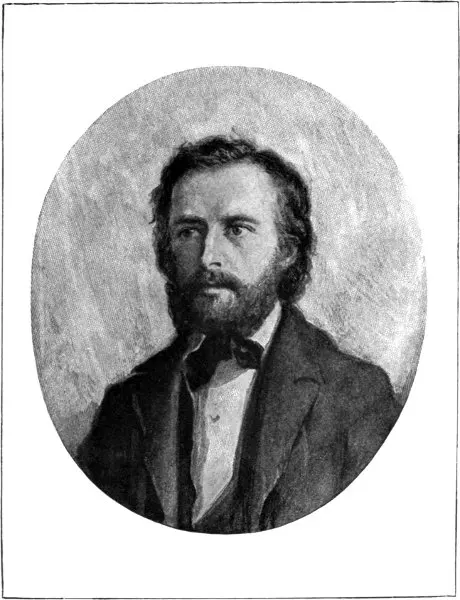
The Riddle of the Universe at the close of the nineteenth century
Ernst Haeckel
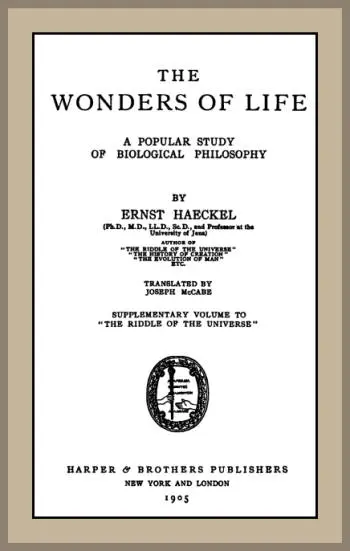
THE CLASSIC COLLECTION · 1904
"The Wonders of Life: A Popular Study of Biological Philosophy" by Ernst Haeckel is a scientific publication written in the early 20th century. This work serves as a comprehensive exploration of biological philosophy, building upon the author's earlier work, "The Riddle of the Universe." Haeckel delves into the intricacies of life, the nature of living organisms, and the principles of monistic philosophy, providing insight into biological phenomena and their underpinnings. The beginning of the book introduces the central themes of truth and the pursuit of knowledge, positioning biology within the larger framework of natural philosophy. Haeckel discusses the relationship between science and philosophy, asserting that true understanding emerges from a blend of empirical observation and rational thought. He critiques dualistic theories and emphasizes a monistic approach, promoting the idea that knowledge is inherently tied to physiological processes within the brain. In doing so, he sets the stage for a detailed examination of life, its definitions, and its complexities throughout the remainder of the text.
Introduction adapted from the source catalogue; source summaries may be automatically generated.
Free to read · English · 146,945 words · No account needed
MAKE TIME FOR A GOOD BOOK
On by default. Untick to stop anonymous reading totals. Each page counts after 10 seconds in view. How this works.
Anonymous counting is on unless you have switched it off.
Metazoa, 163.
Micella, 137, 344.
Micrococcus, 201, 202.
Microgameton, 244.
Middle Ages, thought in the, 66, 67.
Mimicry, 421, 422.
Mind, the, 315, 316;
a function of the brain, 328-330;
evolution of the, 319, 320, 322, 323, 326.
Miracles, 60;
in biology, 55;
nature of, 54.
Mohl, Hugo, 122.
Molecular structure of the monera, 34, 137;
theories of plasm, 342-346.
Molecules, 126, 127.
Monaxonia, 174.
Monera, the, 31-33, 40, 157, 182, 190-209, 342.
Monism, 81, 433-445.
Monobia, 160, 196.
Monoclinism, 247.
Monœcia, 248.
Monogamy, 240.
Morality, 411, 412;
a social instinct, 419, 420;
conventional, 430;
evolution of, 413, 414, 430-432;
a form of adaptation, 414.
Morphology, 94, 171.
Morphonta, 149, 152.
Motion in metabolism, 259.
Müller, Johannes, on the nature of life, 49;
on sensation, 288.
Muscles, the, 273, 276-279;
forms of in lower animals, 278;
striated and non-striated, 277.
Muscular cells, 277.
Mutation theory, the, 365, 373.
Myophæna, 269.
Nägeli on evolution, 365;
on plasm, 137;
on the origin of life, 343, 344, 354, 356;
on universality of sensation, 450.
Natural history, 9.
Naturalism, 86, 87.
Necrobiosis, 106, 349.
Neo-Darwinism, 375, 376.
Neo-Lamarckism, 375, 376.
Neovitalism, 48;
sceptical and dogmatic, 50.
Neurona, 12, 13, 328.
Nitrobacteria, 201, 215, 218.
Nuclein, 156.
Nucleolus, 140.
Nucleus of the cell, 122, 139, 155.
Nutrition, progress in supply of, 401.
Observation, subjective and objective, 7.
Occultism, 74, 75.
Œcology, 78, 95.
Oken, Lorentz, 79, 80.
Olfactory region, 303.
Ontogeny, 94, 361, 376, 379.
Optimism, 109, 110.
Organella, 35, 130, 159, 163, 191.
Organic chemistry, 37;
and inorganic, differences between, 27, 28, 40;
meaning of, 37;
sensations, 302, 308.
Organism, nature of an, 29, 30, 36.
Organization, nature of, 29;
progress of, 338;
stages of, 149, 150, 151.
Organs, 159, 163;
apparatus of, 164;
systems of, 164;
of sense and thought, 12.
Osmosis, 39.
Ostwald, as a monist, 38;
on enzyma, 46;
on growth, 44;
on mental energy, 330;
system of, 85.
Ovary, 325.
Ovoplasm, 245.
Ovulum, the, 245, 247, 250.
Pædogenesis, 253.
Palavitalism, 48, 49.
Palingenesis, 382.
Pangenesis theory, the, 366.
Panpsychism, 340.
Pantheism, 82.
Paranuclein, 141.
Parasites, 235-238.
Parasitology, 235.
Paratonic movement, 262, 274.
Parthenogenesis, 251, 252.
Passive movements in organisms, 262.
Pasteur disproves spontaneous generation, 350-352.
Paulospores, 244.
Peptones, 45.
Perception of stimuli, 292, 293, 296.
Perigenesis of the plastidules, 136.
Perpetual motion of universe, 258.
Persons, 36, 148, 150, 154, 166, 183.
Pessimism, 109, 110, 111.
Pflüger on origin of life, 345, 346, 356.
Philology, 461.
Philosophy, history of, 81;
modern, defects of, 453;
nature of, 2, 3, 453, 454.
Phoronomy, 259.
Photo-synthesis, 214, 217.
Phototaxis, 298.
Phronema, the, 14, 15-17;
structure of the, 329.
Phroneta, the, 13, 329, 331.
Phronetal cells, 14, 17.
Phylogeny, 94, 361, 376, 379;
sources of, 377.
Physicians, liberal views of, 116-118.
Physics, monism of, 455; nature of, 89, 454.
Physiologists, dualism of, 18.
Physiology, 93.
Phytomonera, 193.
Phytoplasm, 213, 217.
Piano theory of the soul, 16.
Pineal gland, the, 16.
Planospores, 244.
Plants, spontaneous movement in, 274, 275.
Plasm, 121, 123, 128-146;
chemical constituents of, 125, 126;
differentiation of the, 138;
molecules of, 136;
nature of, 27, 28, 159;
structure of, 128, 129, 130-138.
Plasma products, 144.
Plasmodomism, 33, 34, 130, 193, 197, 212, 213, 343, 357.
Plasmogony, 354.
Plasmophaga, 193, 196, 200, 212.
Plasson, 158.
Plassonella, 355, 358.
Plastids, 138, 192.
Plastidules, 136.
Plastin, 141.
Plate on Darwinism, 364.
Platnosphæra, 174.
Plato, dualism of, 436;
philosophy of, 66.
Platodes, 225.
Pleuronectides, 178.
Poetry, pedagogical value of, 439.
Poisonous bacteria, 221, 305;
fungi, 236.
Polioplasm, 130, 143.
Politics, 467.
Polytomy, 243.
Powder, 31.
Pressure, sense of, 310.
Preyer on the child-soul, 20;
on the earth as an organism, 37;
on universality of life, 340.
Principle of individuation, 153.
Probionta, 354.
Promorphology, 94, 172.
Protamœba, 206.
Proteids, 126, 127.
Protestants, liberalism among, 73.
Protists, the, 34, 35, 131, 160, 171, 182, 190-209;
can endure extreme temperatures, 300;
movements of the, 267, 271;
science of the, 92, 93;
sensitiveness to electricity, 313.
Protoplasm, 32;
nature of, 121, 122, 125.
Providence, belief in, 107, 108.
Pseudopodia, 268.
Psychiatry, 19, 329, 463.
Psychogenesis, 21.
Psychology, 461;
comparative, 21, 22;
modern, errors of, 71;
monistic, 322;
nature of, 18.
Psycho-monism, 92.
Psychophysics, 330.
Pteridophyta, 162, 220.
Ptomaines, 203.
Purposive movement, 264, 265.
Pyramidal types, 176.
Radiolaria, 41, 156, 172, 181;
movement in the, 322.
Ranke, J., on evolution, 322.
Rational sciences, 470.
Reaction, 293.
Realism, 90, 91.
Reason, 316, 317;
pure and practical, 317.
Reason and authority, 423.
Redemption, dogma of, 62.
Reflex movement, 262, 263.
Regeneration, organic, 101-105.
Your reading position is saved on this browser. Take it to another device with a library code. Reading pages adapt to text, rather than matching a printed edition.
BEHIND THE BOOK
This eBook is for the use of anyone anywhere in the United States and most other parts of the world at no cost and with almost no restrictions whatsoever. You may copy it, give it away or re-use it under the terms of the Project Gutenberg License included with this eBook or online at www.gutenberg.org. If you are not located in the United States, you will have to check the laws of the country where you are located before using this eBook. Read the source licence.
The original source file, including credits and licence, is retained by this library. Request an original-format copy at no charge. Please include the book title and Project Gutenberg identifier #46652.
KEEP YOUR CURIOSITY GOING

David Patterson (Spirit) Hatch
Coulson Kernahan

Ralph Waldo Emerson
Frances Wright

Edwin Abbott Abbott

Joseph Droz