THE CLASSIC COLLECTION✦A dead man’s diaryCLASSIC FREE BOOKS
A dead man’s diary
Coulson Kernahan
THE CLASSIC COLLECTION · 1904
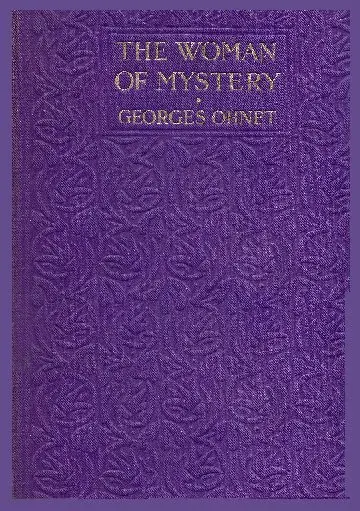
"The Woman of Mystery" by Georges Ohnet is a novel written in the early 20th century. The story revolves around themes of intrigue, political machinations, and the mysterious circumstances surrounding the death of a prominent general. The narrative is set against a backdrop of military and scientific endeavors, hinting at elements of suspense and potential betrayal. The opening of the novel introduces the Minister of War, who is in a state of agitation due to the mysterious explosion at the residence of General de Trémont, which resulted in his death. Colonel Vallenot reports to the Minister about the chaotic scene and strange findings, including a severed arm discovered amidst the ruins. As the investigation unfolds, various characters—including detectives and the General's loyal servant, Baudoin—converge around the sinister elements at play, implying that the tragedy may not have been a mere accident but rather a calculated crime involving espionage. Through this scene, the story sets a tone of intrigue that foreshadows the complex relationships and motivations that will be explored throughout the novel.
Introduction adapted from the source catalogue; source summaries may be automatically generated.
Free to read · English · 106,778 words · No account needed
MAKE TIME FOR A GOOD BOOK
On by default. Untick to stop anonymous reading totals. Each page counts after 10 seconds in view. How this works.
Anonymous counting is on unless you have switched it off.
“Yes, we have not tried it for some considerable time.” Milona took a crystal cup filled with flowers. She threw the bouquet on to the floor, and after extinguishing the wax candles in the chandelier, with one single exception, placed the cup on the table in such a way that the light might fall upon it from behind. Then, drawing out one of the long gold pins which fastened her hair, she crouched down on a stool, dipped the metal stem into the vase, and commenced a strange chant. In the water, through which the light penetrated, irisated eddies formed, and the two women attentively watched the broken fugitive lines, the tiny drops sparkling like diamonds, and the brilliant spirals of the water stirred to motion by the gold needle. Milona sang—
“Water is nought but trouble and mystery, light is certainty and truth. Let the light penetrate the water, and cause its secrets to be revealed. Turn, needle; shine, ray; water, divide.”
“Look, Milo, look!” exclaimed Sophia, excitedly. “The water is turning red, it seems to be turning into blood!”
Milona continued her chant—
“Blood is strength and life. The blood of the brain is victory. The blood of the heart is love. Turn, needle; redden, blood. Grant us victory and love!”
Sophia, on her knees by the side of the table, was anxiously watching with ardent eyes the crystal vase in which the water was whirling round under the impulse given to it by the gold needle.
“Look! Look again!” she exclaimed. “The water is turning green! It is shining like an emerald!”
“The emerald is the colour of hope, and hope is the joy of life. Turn, needle; water, become glaucous, like the eyes of the sirens, whom a man follows to his death!”
Milona withdrew the gold needle. The water, again restored to a state of calm, after having ceased turning around the sides of the crystal vase, first assumed a greyish tint, then turned to a dark colour.
“Milo,” exclaimed Sophia, in dismay, “the water is black! It is a sign of mourning! Who is to die?”
The servant, without replying, relit the candles, took the crystal vase and threw out of the window the water which had just been used for the experiment; then, in anger, she spat out into the night—
“May he die who opposes you!” she said fiercely. “Fate announces love, happiness, and death. You have the privilege of not continuing the enterprise you have begun. The spotted cards say you will not succeed. The water predicts death! For whom? That we cannot learn. Stop, there is still time.”
Your reading position is saved on this browser. Take it to another device with a library code. Reading pages adapt to text, rather than matching a printed edition.
BEHIND THE BOOK
This eBook is for the use of anyone anywhere in the United States and most other parts of the world at no cost and with almost no restrictions whatsoever. You may copy it, give it away or re-use it under the terms of the Project Gutenberg License included with this eBook or online at www.gutenberg.org. If you are not located in the United States, you will have to check the laws of the country where you are located before using this eBook. Read the source licence.
The original source file, including credits and licence, is retained by this library. Request an original-format copy at no charge. Please include the book title and Project Gutenberg identifier #69149.
KEEP YOUR CURIOSITY GOING
Coulson Kernahan

Maurice Baring
Frances Wright
Cécile Tormay

Frederic Jesup Stimson

W. H. P. (William Henry Pope) Jarvis