THE CLASSIC COLLECTION✦A dead man’s diaryCLASSIC FREE BOOKS
A dead man’s diary
Coulson Kernahan
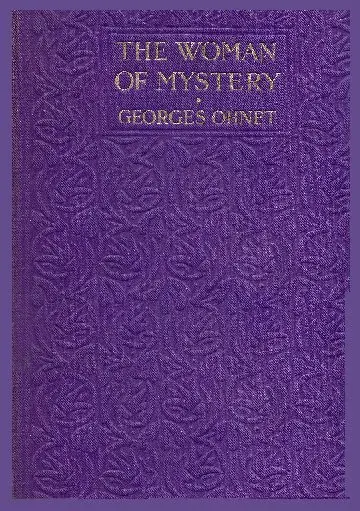
THE CLASSIC COLLECTION · 1904
"The Woman of Mystery" by Georges Ohnet is a novel written in the early 20th century. The story revolves around themes of intrigue, political machinations, and the mysterious circumstances surrounding the death of a prominent general. The narrative is set against a backdrop of military and scientific endeavors, hinting at elements of suspense and potential betrayal. The opening of the novel introduces the Minister of War, who is in a state of agitation due to the mysterious explosion at the residence of General de Trémont, which resulted in his death. Colonel Vallenot reports to the Minister about the chaotic scene and strange findings, including a severed arm discovered amidst the ruins. As the investigation unfolds, various characters—including detectives and the General's loyal servant, Baudoin—converge around the sinister elements at play, implying that the tragedy may not have been a mere accident but rather a calculated crime involving espionage. Through this scene, the story sets a tone of intrigue that foreshadows the complex relationships and motivations that will be explored throughout the novel.
Introduction adapted from the source catalogue; source summaries may be automatically generated.
Free to read · English · 106,778 words · No account needed
MAKE TIME FOR A GOOD BOOK
On by default. Untick to stop anonymous reading totals. Each page counts after 10 seconds in view. How this works.
Anonymous counting is on unless you have switched it off.
“Do you intend to leave us, then?”
“Yes. I am tired of living on robbery, and being clothed in rags!”
“Then pay for your freedom.”
“I have no money. Wait, and some day the hussar will give me my hands
full of money.”
At these words, Zambo gave a terrible imprecation, and leapt towards the
child with the words—
“That is the last word you shall ever speak!”
And, brandishing a long dagger, he threw himself on Milona. At that critical moment the Baroness Sophia gave a shrill, whistling sound, which drew the attention of the whole band, and speaking in their own tongue, she said—
“That is quite enough. I intend to send for the police. You, old man, would you like to sell the girl?”
“Yes, your ladyship.”
“How much?”
“Twenty golden ducats.”
“You thief!”
“I cannot take less, your Excellency!”
A purse fell into the courtyard at the patriarch’s feet. He picked it up with the rapidity of a juggler, counted the money, and, after bowing to the Baroness, said to Milona—
“Thank your noble benefactress. She has paid; you are free!”
“Come up here, little one,” said Sophia.
Immediately Milona, followed by the imprecations of her disconcerted lover, flew into the inn. The window of the Baroness was closed, and the gipsies, with vehement words and exaggerated gestures, tried to give Zambo to understand that girls were far less rare than ducats, and that, though his love remained to him on account, the till of the troupe would be filled for a whole year. Ever since this strange introduction, Milona had become attached, with a wild and savage affection, to her deliverer. She had served her indefatigably, and, with the exception of those terrible secrets which Sophia entrusted to no one, she knew the life-story of her mistress.
Sophia exhaled a puff of blue smoke, and hesitated before the combination
of her cards—
“King of hearts, nine of spades, and knave of clubs,” said Milona, calmly, her finger pointing to the spotted cards. “And then, queen of clubs, knave of hearts, and seven of spades. Still the same reply. You will not succeed!”
Sophia raised her bold though beautiful eyes up to her companion, and, in her ordinary accents, which were different from those in which she spoke Italian, said—
“I must succeed, I tell you, I must, Milona: do you hear?”
“Shall we try the water test?”
Your reading position is saved on this browser. Take it to another device with a library code. Reading pages adapt to text, rather than matching a printed edition.
BEHIND THE BOOK
This eBook is for the use of anyone anywhere in the United States and most other parts of the world at no cost and with almost no restrictions whatsoever. You may copy it, give it away or re-use it under the terms of the Project Gutenberg License included with this eBook or online at www.gutenberg.org. If you are not located in the United States, you will have to check the laws of the country where you are located before using this eBook. Read the source licence.
The original source file, including credits and licence, is retained by this library. Request an original-format copy at no charge. Please include the book title and Project Gutenberg identifier #69149.
KEEP YOUR CURIOSITY GOING
Coulson Kernahan

Maurice Baring
Frances Wright
Cécile Tormay

Frederic Jesup Stimson

W. H. P. (William Henry Pope) Jarvis