THE CLASSIC COLLECTION✦A dead man’s diaryCLASSIC FREE BOOKS
A dead man’s diary
Coulson Kernahan
THE CLASSIC COLLECTION · 1904
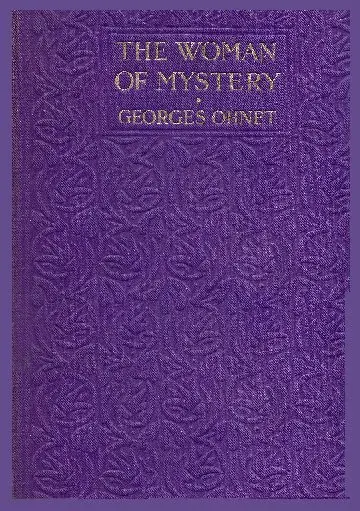
"The Woman of Mystery" by Georges Ohnet is a novel written in the early 20th century. The story revolves around themes of intrigue, political machinations, and the mysterious circumstances surrounding the death of a prominent general. The narrative is set against a backdrop of military and scientific endeavors, hinting at elements of suspense and potential betrayal. The opening of the novel introduces the Minister of War, who is in a state of agitation due to the mysterious explosion at the residence of General de Trémont, which resulted in his death. Colonel Vallenot reports to the Minister about the chaotic scene and strange findings, including a severed arm discovered amidst the ruins. As the investigation unfolds, various characters—including detectives and the General's loyal servant, Baudoin—converge around the sinister elements at play, implying that the tragedy may not have been a mere accident but rather a calculated crime involving espionage. Through this scene, the story sets a tone of intrigue that foreshadows the complex relationships and motivations that will be explored throughout the novel.
Introduction adapted from the source catalogue; source summaries may be automatically generated.
Free to read · English · 106,778 words · No account needed
MAKE TIME FOR A GOOD BOOK
On by default. Untick to stop anonymous reading totals. Each page counts after 10 seconds in view. How this works.
Anonymous counting is on unless you have switched it off.
IT was about half-past nine, and Uncle Graff had dined in the Rue de Provènce as usual. Baudoin approached him, and whispered in his ear—
“Two ladies have called, and one of them wishes to speak to M. Marcel.”
“What kind of a woman is she?” asked the uncle.
“A very respectable-looking person, sir. The other must be a governess or
a lady’s maid.”
“Where are they?”
“In the ante-chamber.”
“Turn on the electricity in my room, and show them in.”
Baudoin did as he was ordered. Uncle Graff continued his descent,
murmuring to himself—
“Another of Marcel’s escapades! I wonder what it is this time.”
On approaching his room he saw, standing by the door, a young lady dressed in black, and wearing a veil. Uncle Graff’s first impression was a favourable one. Pointing to a seat, he said kindly—
“My nephew, madame, is not at home. Cannot I—”
He was not allowed to finish the sentence. The young lady said in
beseeching tones—
“Monsieur, it is a question of life or death.”
“For whom?” asked Uncle Graff, anxiously.
“For your nephew!”
“How have you been informed of this? And who are you?”
The visitor replied immediately—
“I am Mademoiselle Lichtenbach, monsieur, and I place myself entirely at
your disposal.”
As she spoke she removed her veil. Uncle Graff, stupefied, recognized the daughter of his enemy. She was pale and trembling, but resolute.
“Who has sent you?” he asked.
“My father! He thought that if he came himself, perhaps you would not receive him. At this very moment, perhaps, your nephew is running the most serious danger. My father, who has just received news of it, begged me to come and tell you.”
“But how did he receive his information?” asked Graff, suspiciously.
“Ah, monsieur! begin by taking the necessary measures to help M. Marcel,” said Marianne, eagerly. “Afterwards you may ask what questions you please.”
“At whose hands lies the peril?”
“At the hands of the same band which killed General de Trémont. My father has been informed of these intrigues. Act without losing a moment.”
“But what can we do?” exclaimed Uncle Graff, carried away by the young
lady’s eagerness.
“I will explain to you. Wait a moment.”
Passing her hand over her forehead, she said in piteous accents—
“Yes, that was it. A woman he knew at Ars.”
“The Italian?”
“Yes, doubtless. He loved her, and they knew he would be pleased to see
her again.”
She paused. The pallor of her face increased. What she was relating
seemed to torture her.
Your reading position is saved on this browser. Take it to another device with a library code. Reading pages adapt to text, rather than matching a printed edition.
BEHIND THE BOOK
This eBook is for the use of anyone anywhere in the United States and most other parts of the world at no cost and with almost no restrictions whatsoever. You may copy it, give it away or re-use it under the terms of the Project Gutenberg License included with this eBook or online at www.gutenberg.org. If you are not located in the United States, you will have to check the laws of the country where you are located before using this eBook. Read the source licence.
The original source file, including credits and licence, is retained by this library. Request an original-format copy at no charge. Please include the book title and Project Gutenberg identifier #69149.
KEEP YOUR CURIOSITY GOING
Coulson Kernahan

Maurice Baring
Frances Wright
Cécile Tormay

Frederic Jesup Stimson

W. H. P. (William Henry Pope) Jarvis