THE CLASSIC COLLECTION✦The long wayCLASSIC FREE BOOKS
The long way
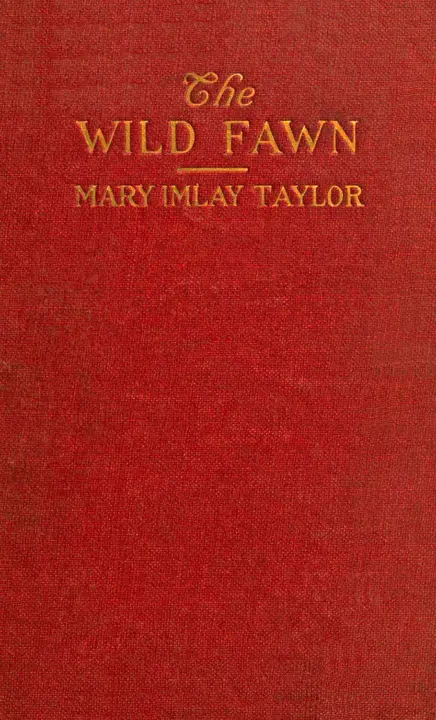
Mary Imlay Taylor
THE CLASSIC COLLECTION · 1920
"The Wild Fawn" by Mary Imlay Taylor is a novel written in the early 20th century. The story seems to revolve around the Carter family and their complex dynamics following the unexpected marriage of their eldest son, William, to a French girl named Fanchon la Fare. The narrative explores themes of familial loyalty, social expectations, and the tensions that arise from sudden changes in relationship status, particularly as it impacts the family’s social standing. At the start of the novel, we are introduced to Mrs. Carter, who is anxiously awaiting news from her son, William, who has been in Japan for over a year and is expected to return soon. The family dynamics become evident as Mrs. Carter's worries about his silence in correspondence are interspersed with her husband’s dismissive attitude. When Mrs. Carter finally receives a letter from William revealing his marriage to Fanchon, the family's reactions reveal a mix of shock, disbelief, and concern about their reputation and expectations. The story sets the stage for deeper conflicts as characters like Daniel, William's brother, grapple with their feelings about this new family member, and the social implications of William's impulsive decision. The opening chapters effectively establish a tone of familial tension and societal scrutiny that will likely unfold throughout the narrative.
Introduction adapted from the source catalogue; source summaries may be automatically generated.
Free to read · English · 79,192 words · No account needed
MAKE TIME FOR A GOOD BOOK
On by default. Untick to stop anonymous reading totals. Each page counts after 10 seconds in view. How this works.
Anonymous counting is on unless you have switched it off.
“Oui, I danced! Mais que voulez vous? Am I not a dancer? You--it is you who are ashamed, mon ami!” she added bitterly. “Why you marry me, then?”
He threw himself back in his chair, his clenched hand falling on the table with a gesture as poignant as it was desperate.
“You’ve let the cat out of the bag! This place--these provincials! Why, this place is full of it by now. Did you think you were in Paris?”
“In Paris?” she laughed wildly. “Mon Dieu, non! ‘O Paris, c’est chez toi qu’il est doux de vivre, c’est chez toi que je veux mourir!’”
“Drop that chatter!” he said harshly. “You speak English as well as I
do.”
She did not answer for a moment; then she leaned across the table, looking at him, her face white and her eyes sparkling.
“You’re ashamed that you married me, a dancer--n’est-ce-pas?”
He averted his face. She caught only the haggard whiteness of the profile, and she saw his hand, stretched on the table, clench and unclench nervously. She drew a long breath.
“You’re ashamed of me,” she said in a low, quivering voice, recoiling from him. “I--I see it!”
“I loved you,” said William passionately. “I loved you, I asked you to consider me, and--you do this!”
“You loved me!” she repeated the words slowly. “You--loved--me!”
She let the accent fall on the past tense, but he was deaf to the
implied appeal.
“Fanchon, you knew what they’d think of it here--you must have known. Why did you do it?” he cried impatiently. “It’s like your cigarette in the streets--you like to do these things!”
“Mais oui, I like to do them!” she replied softly. She laughed lightly. “I’m naughty, William, but”--she leaned toward him again, looking at him with her fawn-like eyes--“I’m sorry!”
Her look, her voice, her very attitude expressed surrender, and the softness of her tone appeased him. He turned his head reluctantly and looked at her. The light was behind her, making a nimbus behind her lovely head, her soft, dark hair, and her white forehead, and the beauty of her eyes. Her dress, too, the dancer’s silky, shimmering, clinging robe, seemed to reveal just enough of her white neck and arms. She was a thing so young, so exquisite, and so subtly charming that he caught his breath. She looked as she had looked the first time he saw her, when he lost his heart and his head. Her dark eyes clung to his. “Et toi?” she murmured softly, exquisitely, her lips trembling a little.
Your reading position is saved on this browser. Take it to another device with a library code. Reading pages adapt to text, rather than matching a printed edition.
Mary Imlay Taylor

Mary Imlay Taylor

Mary Imlay Taylor

Mary Imlay Taylor
BEHIND THE BOOK
This eBook is for the use of anyone anywhere in the United States and most other parts of the world at no cost and with almost no restrictions whatsoever. You may copy it, give it away or re-use it under the terms of the Project Gutenberg License included with this eBook or online at www.gutenberg.org. If you are not located in the United States, you will have to check the laws of the country where you are located before using this eBook. Read the source licence.
The original source file, including credits and licence, is retained by this library. Request an original-format copy at no charge. Please include the book title and Project Gutenberg identifier #72891.
KEEP YOUR CURIOSITY GOING
Coulson Kernahan

Maurice Baring
Frances Wright
Cécile Tormay

Frederic Jesup Stimson

W. H. P. (William Henry Pope) Jarvis