THE CLASSIC COLLECTION✦The long wayCLASSIC FREE BOOKS
The long way
Mary Imlay Taylor
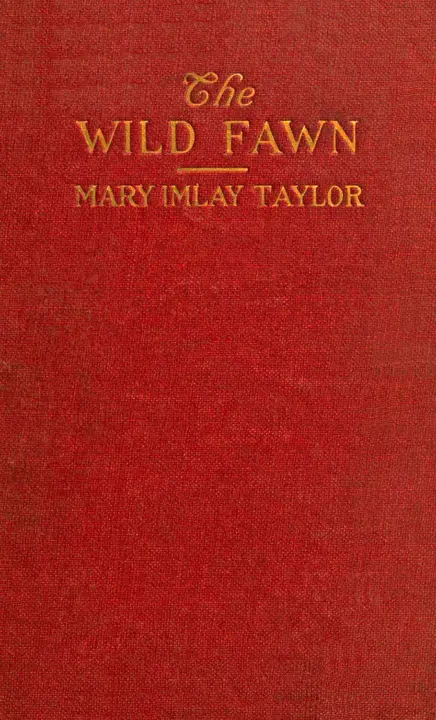
THE CLASSIC COLLECTION · 1920
"The Wild Fawn" by Mary Imlay Taylor is a novel written in the early 20th century. The story seems to revolve around the Carter family and their complex dynamics following the unexpected marriage of their eldest son, William, to a French girl named Fanchon la Fare. The narrative explores themes of familial loyalty, social expectations, and the tensions that arise from sudden changes in relationship status, particularly as it impacts the family’s social standing. At the start of the novel, we are introduced to Mrs. Carter, who is anxiously awaiting news from her son, William, who has been in Japan for over a year and is expected to return soon. The family dynamics become evident as Mrs. Carter's worries about his silence in correspondence are interspersed with her husband’s dismissive attitude. When Mrs. Carter finally receives a letter from William revealing his marriage to Fanchon, the family's reactions reveal a mix of shock, disbelief, and concern about their reputation and expectations. The story sets the stage for deeper conflicts as characters like Daniel, William's brother, grapple with their feelings about this new family member, and the social implications of William's impulsive decision. The opening chapters effectively establish a tone of familial tension and societal scrutiny that will likely unfold throughout the narrative.
Introduction adapted from the source catalogue; source summaries may be automatically generated.
Free to read · English · 79,192 words · No account needed
MAKE TIME FOR A GOOD BOOK
On by default. Untick to stop anonymous reading totals. Each page counts after 10 seconds in view. How this works.
Anonymous counting is on unless you have switched it off.
COLONEL DENBIGH and Virginia had arrived at the corner of the street
after a lengthy discussion.
“I suppose I ought to call,” the colonel had said thoughtfully, pulling
his mustache.
“Of course!” said Virginia. “I’ve called already, but they were all
out.”
“Couldn’t you manage it that way for me, Jinny?”
She laughed, blushing furiously.
“I really wanted to see her, grandpa. They say she’s astonishingly
pretty.”
“Humph! I don’t gossip,” the Colonel grinned; “but Sallie Payson said to me, ‘The bride paints her face!’”
Virginia looked at him absently, her eyes thoughtful.
“I wonder! I met Emily yesterday. You know what a blond child she is? She has short, almost white eyelashes naturally.”
Her grandfather nodded.
“Yes, pig lashes--I remember. What about ’em?”
Virginia laughed weakly.
“She’s painted them. It gives her the most singular look. I can’t think her mother knows!”
“She’s at the monkey age. She’s copying Mrs. William, of course.” He stood a moment, thinking, his thumbs in his waistcoat, and his fine white head bent. “It’s too bad! I--I suppose I’ve got to call, Jinny?”
She hesitated, and he turned his head slowly, looking at her with a fine reluctance. If she was distressed, he did not want to see it. But he was reassured by her face. It was calm; there was only a little higher color in her cheeks, but her eyes sparkled.
After a moment she answered him.
“I don’t see why you have to go. William’s such a young man, and I’ve called and left your card. Perhaps you needn’t--not at once, grandpa.”
“I don’t want them to think----” he stopped with his mouth open, he had come very near to speaking out--“I don’t want to hang back,” he concluded lamely; “but, confound it, Jinny, I don’t want to go alone!”
She laughed a little nervously.
“You needn’t. I’ve got to ask her to sing at the concert on Friday. Emily told me she had a lovely voice, and it’s got around that she’s a sensation--a beauty, you know. Mrs. Payson and Mrs. Barbour made me promise to ask her to sing. It’s for the Carters’ church, anyway, so of course it’s all right.”
“You mean that concert to pay the church debt off?” The colonel looked thoughtful a moment; then suddenly he guffawed. “Going to ask her to sing in a Sunday-school hall--before all those strait-laced people--a girl from Paris? I reckon I’ll go, Jinny!”
Your reading position is saved on this browser. Take it to another device with a library code. Reading pages adapt to text, rather than matching a printed edition.
Mary Imlay Taylor

Mary Imlay Taylor

Mary Imlay Taylor

Mary Imlay Taylor
BEHIND THE BOOK
This eBook is for the use of anyone anywhere in the United States and most other parts of the world at no cost and with almost no restrictions whatsoever. You may copy it, give it away or re-use it under the terms of the Project Gutenberg License included with this eBook or online at www.gutenberg.org. If you are not located in the United States, you will have to check the laws of the country where you are located before using this eBook. Read the source licence.
The original source file, including credits and licence, is retained by this library. Request an original-format copy at no charge. Please include the book title and Project Gutenberg identifier #72891.
KEEP YOUR CURIOSITY GOING
Coulson Kernahan

Maurice Baring
Frances Wright
Cécile Tormay

Frederic Jesup Stimson

W. H. P. (William Henry Pope) Jarvis