THE CLASSIC COLLECTION✦The long wayCLASSIC FREE BOOKS
The long way
Mary Imlay Taylor
THE CLASSIC COLLECTION · 1920
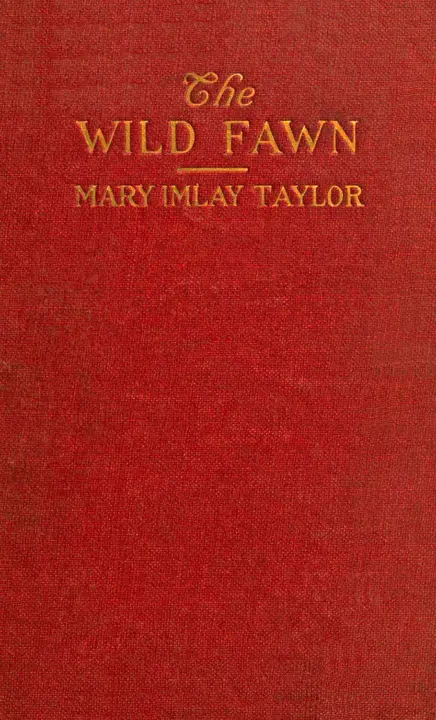
"The Wild Fawn" by Mary Imlay Taylor is a novel written in the early 20th century. The story seems to revolve around the Carter family and their complex dynamics following the unexpected marriage of their eldest son, William, to a French girl named Fanchon la Fare. The narrative explores themes of familial loyalty, social expectations, and the tensions that arise from sudden changes in relationship status, particularly as it impacts the family’s social standing. At the start of the novel, we are introduced to Mrs. Carter, who is anxiously awaiting news from her son, William, who has been in Japan for over a year and is expected to return soon. The family dynamics become evident as Mrs. Carter's worries about his silence in correspondence are interspersed with her husband’s dismissive attitude. When Mrs. Carter finally receives a letter from William revealing his marriage to Fanchon, the family's reactions reveal a mix of shock, disbelief, and concern about their reputation and expectations. The story sets the stage for deeper conflicts as characters like Daniel, William's brother, grapple with their feelings about this new family member, and the social implications of William's impulsive decision. The opening chapters effectively establish a tone of familial tension and societal scrutiny that will likely unfold throughout the narrative.
Introduction adapted from the source catalogue; source summaries may be automatically generated.
Free to read · English · 79,192 words · No account needed
MAKE TIME FOR A GOOD BOOK
On by default. Untick to stop anonymous reading totals. Each page counts after 10 seconds in view. How this works.
Anonymous counting is on unless you have switched it off.
COLONEL DENBIGH was pleasantly detained at the club luncheon. He went home in a taxi late in the afternoon, only about half an hour before his own dinner-time. Plato met him in the hall.
“Miss Jinny ain’t eaten no lunch, no suh, an’ now she’s up in her room. She say she’s got headache, an’ not to wait dinner.”
The colonel deposited his broad-brimmed hat on the table.
“Anybody been here to see me to-day, Plato?”
The old negro shook his head.
“No, suh. Mist’ Wilyum Carter, he came in to see Miss Jinny, but he’s gone ’bout two hours ago.”
A strange expression flitted across the colonel’s face, but he did not show it to his faithful factotum.
“Serve dinner on time, Plato,” he said gravely. “I don’t expect company--lunched in town with Judge Jessup and Mr. Payson.”
“Yessuh, so Miss Jinny tole me. Great trial, suh! Mirandy, Miz Carter’s collud girl, she ’phoned me ’bout it. She say she got so excited she went out in de yard an’ killed the wrong hen fo’ dinner. She killed de bes’ layer dey got, an’ Mist’ Carter he mos’ throw a fit. She say he’s gwine to make Mist’ Wilyum git a divorcement----”
“Plato,” bellowed the colonel, “how often have I got to tell you to stop gossiping? You quit it and get my dinner ready, or I’ll kill you instead of Mrs. Carter’s hen! Hear me?”
Plato giggled disgracefully, but he retired toward the dining-room door.
“Colonel Colfax he used to say----”
“Shut up!” shouted Colonel Denbigh, making for the stairs.
Plato withdrew slowly, still mumbling, and the colonel went up to
Virginia’s room. He hesitated an instant, and then he knocked at the
door.
“Got a bad headache, Jinny?”
She answered without opening the door.
“Very bad, grandpa. Don’t wait dinner--I don’t want any.”
“I’ll ’phone for Dr. Barbour,” he suggested anxiously. “How about it,
Jinny?”
“No, no! It’s just a little headache from the sun. Any news, grandpa?”
The colonel, outside the closed door, stood with his hand at his chin,
thinking.
“Not much, Jinny. I ’phoned everything I could, didn’t I? Dan made a great figure at the trial, and Leigh’s home now--I reckon Mrs. Carter’s got him packed in cotton-batting by this time. There’s one thing--I saw myself----” He hesitated, listening, but there was no interrogation from the other side of the door. “I saw William Carter ignore his wife in open court--after the verdict. It--well, Jinny, it stuck in my throat.”
Your reading position is saved on this browser. Take it to another device with a library code. Reading pages adapt to text, rather than matching a printed edition.
Mary Imlay Taylor

Mary Imlay Taylor

Mary Imlay Taylor

Mary Imlay Taylor
BEHIND THE BOOK
This eBook is for the use of anyone anywhere in the United States and most other parts of the world at no cost and with almost no restrictions whatsoever. You may copy it, give it away or re-use it under the terms of the Project Gutenberg License included with this eBook or online at www.gutenberg.org. If you are not located in the United States, you will have to check the laws of the country where you are located before using this eBook. Read the source licence.
The original source file, including credits and licence, is retained by this library. Request an original-format copy at no charge. Please include the book title and Project Gutenberg identifier #72891.
KEEP YOUR CURIOSITY GOING
Coulson Kernahan

Maurice Baring
Frances Wright
Cécile Tormay

Frederic Jesup Stimson

W. H. P. (William Henry Pope) Jarvis