THE CLASSIC COLLECTION✦The long wayCLASSIC FREE BOOKS
The long way
Mary Imlay Taylor
THE CLASSIC COLLECTION · 1920
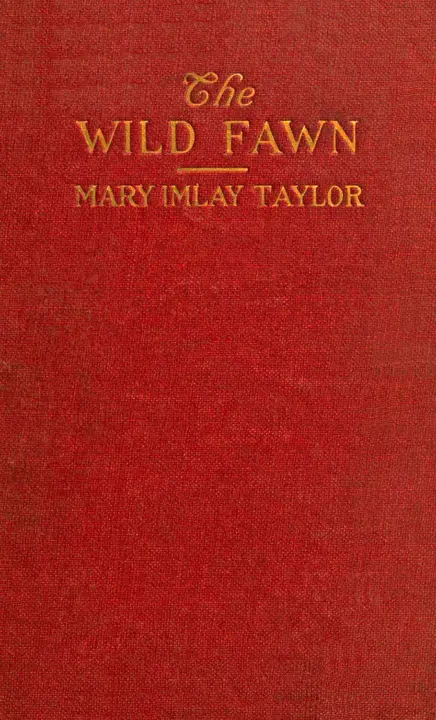
"The Wild Fawn" by Mary Imlay Taylor is a novel written in the early 20th century. The story seems to revolve around the Carter family and their complex dynamics following the unexpected marriage of their eldest son, William, to a French girl named Fanchon la Fare. The narrative explores themes of familial loyalty, social expectations, and the tensions that arise from sudden changes in relationship status, particularly as it impacts the family’s social standing. At the start of the novel, we are introduced to Mrs. Carter, who is anxiously awaiting news from her son, William, who has been in Japan for over a year and is expected to return soon. The family dynamics become evident as Mrs. Carter's worries about his silence in correspondence are interspersed with her husband’s dismissive attitude. When Mrs. Carter finally receives a letter from William revealing his marriage to Fanchon, the family's reactions reveal a mix of shock, disbelief, and concern about their reputation and expectations. The story sets the stage for deeper conflicts as characters like Daniel, William's brother, grapple with their feelings about this new family member, and the social implications of William's impulsive decision. The opening chapters effectively establish a tone of familial tension and societal scrutiny that will likely unfold throughout the narrative.
Introduction adapted from the source catalogue; source summaries may be automatically generated.
Free to read · English · 79,192 words · No account needed
MAKE TIME FOR A GOOD BOOK
On by default. Untick to stop anonymous reading totals. Each page counts after 10 seconds in view. How this works.
Anonymous counting is on unless you have switched it off.
Mr. Carter pursed his lips, moving his feet comfortably about on the rug. He and his wife had been over this ground before, and it irked him. He watched his toes moving inside of his coarse white stockings. There was a silence.
The door-bell rang sharply. Mrs. Carter jumped.
“Oh, Johnson, put on your coat and your shoes,” she cried. “Miranda’s let some one in.”
Mr. Carter began to jam his hot feet into his shoes, which seemed incredibly too small to receive them.
“Drat it!” he said.
He had not got to the coat when Miranda’s amiable chocolate face
appeared at the door.
“Col’nel Denbigh, Mist’ Carter,” she said, and withdrew.
The colonel, carrying his wide hat in his hand, came in. He looked very tall, very thin, and very grave.
“Oh, colonel, is there anything the matter?” Mrs. Carter cried
impulsively, seeing his face.
The colonel stood still, his white head erect and his fine old face
flushing a little.
“I came to see William,” he said. “Is he here?”
Mrs. Carter ran to the door.
“Miranda,” she called after the girl, “go up and tell Mr. William to
come down.”
Meanwhile, Mr. Carter had offered a chair. He was a little startled and perplexed, but he looked keenly at the colonel.
“Do you want us to go, colonel?” he asked bluntly.
Colonel Denbigh lifted a protesting hand.
“No! I want you all to hear what I have to say, especially William. It
concerns William.”
Mrs. Carter, who had returned to her seat, looked frightened. There was an awkward pause, the colonel sitting quietly in the high-backed chair, looking into the crown of his hat.
“It’s--it’s very hot,” ventured Mrs. Carter faintly.
The colonel glanced kindly from one to the other.
“It’s the heat that has made it so bad for--her,” he observed
enigmatically.
Mr. Carter’s mouth tightened and he glanced angrily toward the door. He heard his son coming down-stairs. William entered, looking pale and haggard, and Colonel Denbigh rose. The old man was so tall that he seemed to tower.
“William,” he said grimly, “I came to see you. Virginia sent me. We wanted Dan to tell you, but Dan doesn’t wish to interfere. Your wife is at my house--very ill.”
William turned from white to red. For a moment he seemed nonplused,
then he rallied.
“I have no wife, Colonel Denbigh,” he said slowly. “Fanchon left me weeks ago. I expect to sue her for divorce.”
Colonel Denbigh held up his hand.
Your reading position is saved on this browser. Take it to another device with a library code. Reading pages adapt to text, rather than matching a printed edition.
Mary Imlay Taylor

Mary Imlay Taylor

Mary Imlay Taylor

Mary Imlay Taylor
BEHIND THE BOOK
This eBook is for the use of anyone anywhere in the United States and most other parts of the world at no cost and with almost no restrictions whatsoever. You may copy it, give it away or re-use it under the terms of the Project Gutenberg License included with this eBook or online at www.gutenberg.org. If you are not located in the United States, you will have to check the laws of the country where you are located before using this eBook. Read the source licence.
The original source file, including credits and licence, is retained by this library. Request an original-format copy at no charge. Please include the book title and Project Gutenberg identifier #72891.
KEEP YOUR CURIOSITY GOING
Coulson Kernahan

Maurice Baring
Frances Wright
Cécile Tormay

Frederic Jesup Stimson

W. H. P. (William Henry Pope) Jarvis