THE CLASSIC COLLECTION✦The long wayCLASSIC FREE BOOKS
The long way
Mary Imlay Taylor
THE CLASSIC COLLECTION · 1920
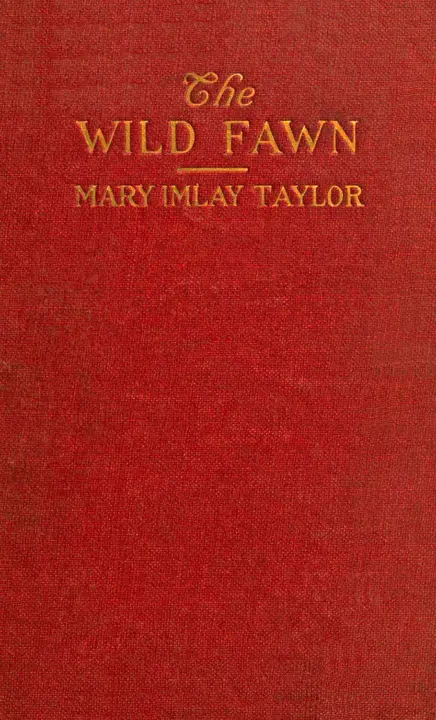
"The Wild Fawn" by Mary Imlay Taylor is a novel written in the early 20th century. The story seems to revolve around the Carter family and their complex dynamics following the unexpected marriage of their eldest son, William, to a French girl named Fanchon la Fare. The narrative explores themes of familial loyalty, social expectations, and the tensions that arise from sudden changes in relationship status, particularly as it impacts the family’s social standing. At the start of the novel, we are introduced to Mrs. Carter, who is anxiously awaiting news from her son, William, who has been in Japan for over a year and is expected to return soon. The family dynamics become evident as Mrs. Carter's worries about his silence in correspondence are interspersed with her husband’s dismissive attitude. When Mrs. Carter finally receives a letter from William revealing his marriage to Fanchon, the family's reactions reveal a mix of shock, disbelief, and concern about their reputation and expectations. The story sets the stage for deeper conflicts as characters like Daniel, William's brother, grapple with their feelings about this new family member, and the social implications of William's impulsive decision. The opening chapters effectively establish a tone of familial tension and societal scrutiny that will likely unfold throughout the narrative.
Introduction adapted from the source catalogue; source summaries may be automatically generated.
Free to read · English · 79,192 words · No account needed
MAKE TIME FOR A GOOD BOOK
On by default. Untick to stop anonymous reading totals. Each page counts after 10 seconds in view. How this works.
Anonymous counting is on unless you have switched it off.
Virginia laughed, and Lucas, thus encouraged, proceeded. He touched the
nigh horse this time.
“Yo’ g’long, Tommy Becket. Yes, Miss Jinny, he’s gwine courtin’--he works ober at Miz Quantah’s, ayonnah”--Lucas pointed his whip--“righ’ over dere in dem trees. Dat’s where Miz Wilyum Carter am now, Miss Jinny.”
Virginia blushed. Involuntarily her eyes followed the flourish of his whip. They had come to the foot-hills, and, in a clearing, she saw a bleak farmhouse, a mere shack it seemed to her. She remembered that the Quantah place was miserable and the woman herself gaunt and poor--a forlorn, forbidding creature.
Then Lucas broke into his monologue again.
“Miz Carter, she’s sick, Miss Jinny--took sick jest after de trial. I did heah she ain’t got any money, an’ Miz Quantah, she’s gwine to turn her out, sick or no sick, she say.”
Virginia sat up suddenly.
“What did you say, Lucas?”
Lucas turned half-way round, driving with one hand, and flourishing the
other as he answered.
“I say Miz Wilyum Carter took sick, an’ she ain’t got any money.” Lucas stopped the horses and pointed.
“I reckon she’s sick in dat room ayonnah--see de blinds open? Ain’t nebber open ’less Miz Quantah got a lodger. Ain’t got noffin to eat at Miz Quantah’s ’cept corn-dodgers an’ rabbits--no, Miss Jinny, dey ain’t.”
“Lucas,” said Virginia earnestly, “do you really mean that Mrs. William Carter is over there now, ill, and without money?”
“Sho, Miss Jinny, she is. I got dat from Miz Quantah’s collud man--yes, miss, I sho did. She’s sick an’ she ain’t got no money.”
Virginia was silent. Her eyes fixed themselves on that distant house, that repulsive, sordid-looking house, and she thought of Fanchon--a small, dainty, bewitching creature--dancing that amazing dance at the church musicale.
Lucas started the horses. The road turned, and before them a low bridge spanned an exquisite stream. The water purled and dashed over stones and slipped, still clamoring, into a lovely pool where lily-pads floated and low willows dipped their swinging boughs.
“Lucas, stop!” cried Virginia.
Lucas pulled the horses up so suddenly that one old fellow looked back
over his shoulder.
“Yes, Miss Jinny?”
“Drive back to Quantah’s place, Lucas.”
Your reading position is saved on this browser. Take it to another device with a library code. Reading pages adapt to text, rather than matching a printed edition.
Mary Imlay Taylor

Mary Imlay Taylor

Mary Imlay Taylor

Mary Imlay Taylor
BEHIND THE BOOK
This eBook is for the use of anyone anywhere in the United States and most other parts of the world at no cost and with almost no restrictions whatsoever. You may copy it, give it away or re-use it under the terms of the Project Gutenberg License included with this eBook or online at www.gutenberg.org. If you are not located in the United States, you will have to check the laws of the country where you are located before using this eBook. Read the source licence.
The original source file, including credits and licence, is retained by this library. Request an original-format copy at no charge. Please include the book title and Project Gutenberg identifier #72891.
KEEP YOUR CURIOSITY GOING
Coulson Kernahan

Maurice Baring
Frances Wright
Cécile Tormay

Frederic Jesup Stimson

W. H. P. (William Henry Pope) Jarvis