THE CLASSIC COLLECTION✦The long wayCLASSIC FREE BOOKS
The long way
Mary Imlay Taylor
THE CLASSIC COLLECTION · 1920
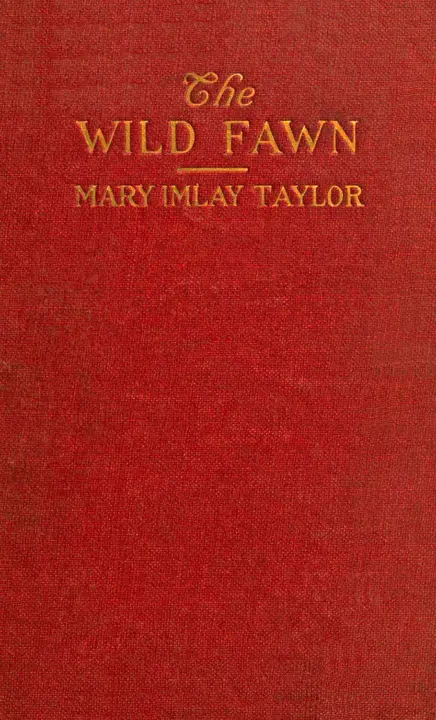
"The Wild Fawn" by Mary Imlay Taylor is a novel written in the early 20th century. The story seems to revolve around the Carter family and their complex dynamics following the unexpected marriage of their eldest son, William, to a French girl named Fanchon la Fare. The narrative explores themes of familial loyalty, social expectations, and the tensions that arise from sudden changes in relationship status, particularly as it impacts the family’s social standing. At the start of the novel, we are introduced to Mrs. Carter, who is anxiously awaiting news from her son, William, who has been in Japan for over a year and is expected to return soon. The family dynamics become evident as Mrs. Carter's worries about his silence in correspondence are interspersed with her husband’s dismissive attitude. When Mrs. Carter finally receives a letter from William revealing his marriage to Fanchon, the family's reactions reveal a mix of shock, disbelief, and concern about their reputation and expectations. The story sets the stage for deeper conflicts as characters like Daniel, William's brother, grapple with their feelings about this new family member, and the social implications of William's impulsive decision. The opening chapters effectively establish a tone of familial tension and societal scrutiny that will likely unfold throughout the narrative.
Introduction adapted from the source catalogue; source summaries may be automatically generated.
Free to read · English · 79,192 words · No account needed
MAKE TIME FOR A GOOD BOOK
On by default. Untick to stop anonymous reading totals. Each page counts after 10 seconds in view. How this works.
Anonymous counting is on unless you have switched it off.
“What about Virginia?” he asked quietly.
Mr. Carter hesitated, then he reddened. “You know how we all love you and Virginia,” he said hurriedly. “We--we hoped there was something--the fact is, Emily says William was--was engaged to Virginia. I--I want to know, Colonel. I want to know if my boy’s behaved like that?”
“You’re mistaken, Mr. Carter,” replied the colonel loftily. “No man who was engaged to Virginia Denbigh could, or would, forget it.”
“But, Colonel, I thought----” Mr. Carter was purple now with
embarrassment.
“You’re mistaken, sir,” the colonel held his head high, “entirely
mistaken.”
Mr. Carter felt like a gold fish splashed out of its globe. He gasped and swallowed hard. He remembered, too, that his wife had told him not to come. “You’ll only make a mess of it, papa,” she had warned him, between her sobs, “You’re always putting your foot in it!”
“I beg your pardon, Colonel. I--well, you see--it was because I think so much of her--of Virginia, I mean, that I came. I--I thought if my boy--my boy, William Henry Carter, had done a thing like that-- Well, sir, I’d feel like disowning him!”
The colonel stood still. He had thrust his thumbs into the armholes of his waistcoat, and his eyes were fixed on the distant road.
“You were mistaken, sir, that’s all. There comes Jinny now.”
Mr. Carter, following his eyes, saw the ancient wagonette entering the old gateway. Lucas was driving placidly, the old grays were ambling up the broad moss-grown driveway to the front door. Alone in the back sat a slim young figure. Virginia was reading a newspaper. Mr. Carter remembered that fearful item in the personals and cold perspiration stood out in beads on his forehead.
“I’ll have to go,” he said thickly. “I’m late now at the office. We’ve been all upset.”
“Better look at this San José scale,” said the colonel grimly, his eyes still on the wagonette.
Lucas had stopped half-way to the house and Virginia jumped down. She was coming toward them now. In one hand she held the newspaper, in the other some hothouse roses. Mr. Carter, making hot-foot for the gate, came full upon her.
“Why, Mr. Carter!” she smiled radiantly. “I didn’t know you were here.”
“I--I stopped by to get a setting of leghorn eggs,” said Mr. Carter, mopping his forehead. “It’s a hot day, Virginia.”
She laughed. “I thought it was cool. Please take this rose to Mrs. Carter from me, won’t you? Mrs. Payson just cut them for me; they’re from her new greenhouse. She calls them ‘Kentucky Sunsets.’”
Your reading position is saved on this browser. Take it to another device with a library code. Reading pages adapt to text, rather than matching a printed edition.
Mary Imlay Taylor

Mary Imlay Taylor

Mary Imlay Taylor

Mary Imlay Taylor
BEHIND THE BOOK
This eBook is for the use of anyone anywhere in the United States and most other parts of the world at no cost and with almost no restrictions whatsoever. You may copy it, give it away or re-use it under the terms of the Project Gutenberg License included with this eBook or online at www.gutenberg.org. If you are not located in the United States, you will have to check the laws of the country where you are located before using this eBook. Read the source licence.
The original source file, including credits and licence, is retained by this library. Request an original-format copy at no charge. Please include the book title and Project Gutenberg identifier #72891.
KEEP YOUR CURIOSITY GOING
Coulson Kernahan

Maurice Baring
Frances Wright
Cécile Tormay

Frederic Jesup Stimson

W. H. P. (William Henry Pope) Jarvis