THE CLASSIC COLLECTION✦Much Ado About PeterCLASSIC FREE BOOKS
Much Ado About Peter
Jean Webster
THE CLASSIC COLLECTION · 1905
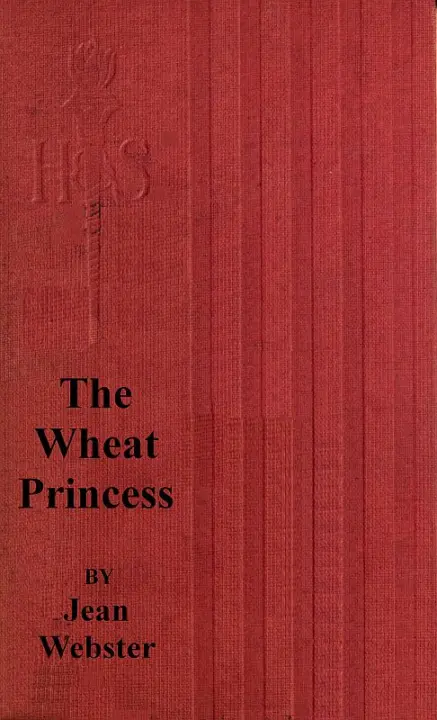
"The Wheat Princess" by Jean Webster is a novel written in the early 20th century. The story revolves around an American family, the Copleys, and their experiences as they spend a summer in an Italian villa, highlighting themes of wealth, privilege, and social responsibility. The main character, Marcia Copley, is introduced as the charming and spirited daughter of a millionaire wheat magnate, navigating her new life amidst the historical and picturesque backdrop of Castel Vivalanti. At the start of the story, we find Marcia and her aunt arriving at a tea gathering, where she is referred to as "the Wheat Princess" due to her family background. The discussions among the guests reveal the social dynamics and perceptions surrounding Marcia, especially in relation to her wealth and potential marriage prospects. We learn about her family's philanthropic efforts leads to mixed feelings among the attendees. The dialogue vividly sets the stage for the contrast between the Copleys' American millionaire lifestyle and the traditional Italian society they are entering, all while hinting at the complexities of identity, cultural expectations, and personal aspirations that are to unfold as Marcia adapts to her new environment.
Introduction adapted from the source catalogue; source summaries may be automatically generated.
Free to read · English · 99,375 words · No account needed
MAKE TIME FOR A GOOD BOOK
On by default. Untick to stop anonymous reading totals. Each page counts after 10 seconds in view. How this works.
Anonymous counting is on unless you have switched it off.
‘Not much,’ he returned; ‘what would you?’
‘I think that you go a great deal farther in the other extreme!’
‘Not at all,’ he maintained. ‘I am granting that art is a very fine thing; only there are so many more vital issues in life that one doesn’t have time to bother with it much. However, I suppose it’s a phase one has to go through with in Italy. Oh, I’ve been through with it, too,’ he added. ‘I used to feel that Botticelli and Giorgione and the rest of them were really important.’
‘But you got over it?’ she inquired.
‘Yes, I got over it—one does.’
Marcia laughed again. ‘Mr. Sybert,’ she said, ‘I think you are an awfully queer man. You are so sort of unfeeling in some respects and feeling in others.’
‘Miss Marcia, you strike me as an awfully queer young woman for exactly
the same reasons.’
They had come to a curve in the road, and under an over-hanging precipice hollowed out of the rock was a little shrine to the Madonna, and beside it a rough iron cross.
‘Some poor devil has met his fate here,’ said Sybert, and he reined in his horse and leaned from his saddle to make out the blurred inscription traced on the bars. ‘Felice Buconi in the year 1840 at this spot received death at the hand of an assassin. Pray for his soul,’ he translated. ‘Poor fellow! It’s a tragedy in Italy to meet one’s death at the hands of an assassin.’
‘Why more in Italy than in any other place?’
‘Because one dies without receiving the sacrament, and has some trouble about getting into heaven.’
‘Oh!’ she returned. ‘I suppose when Gervasio’s father wished that I might die of an apoplexy he was not only damning me for this world, but for the world to come.’
‘Exactly. An apoplexy in Italy is a comprehensive curse.’
‘I think,’ she commented, ‘that I prefer a religion which doesn’t have
a purgatory.’
‘Purgatory,’ he returned, ‘has always struck me as quite superior to anything the Protestants offer. It really gives one something to die for.’
‘I should think, for the matter of that, that heaven direct would give one something to die for.’
‘What, for instance? Golden paving-stones, eternal sunshine, and
singing angels!’
‘Oh, not necessarily just those things. They’re merely symbolical.’
‘At least,’ said Sybert, ‘perfect peace and beauty and happiness, and nothing beyond. You needn’t tell me, Miss Marcia, that you want to spend an eternity in any such place as that. It might do for a vacation—a villeggiatura—but for ever!’
Your reading position is saved on this browser. Take it to another device with a library code. Reading pages adapt to text, rather than matching a printed edition.
BEHIND THE BOOK
This eBook is for the use of anyone anywhere in the United States and most other parts of the world at no cost and with almost no restrictions whatsoever. You may copy it, give it away or re-use it under the terms of the Project Gutenberg License included with this eBook or online at www.gutenberg.org. If you are not located in the United States, you will have to check the laws of the country where you are located before using this eBook. Read the source licence.
The original source file, including credits and licence, is retained by this library. Request an original-format copy at no charge. Please include the book title and Project Gutenberg identifier #46761.
KEEP YOUR CURIOSITY GOING
Coulson Kernahan

Maurice Baring
Frances Wright
Cécile Tormay

Frederic Jesup Stimson

W. H. P. (William Henry Pope) Jarvis