THE CLASSIC COLLECTION✦Much Ado About PeterCLASSIC FREE BOOKS
Much Ado About Peter
Jean Webster
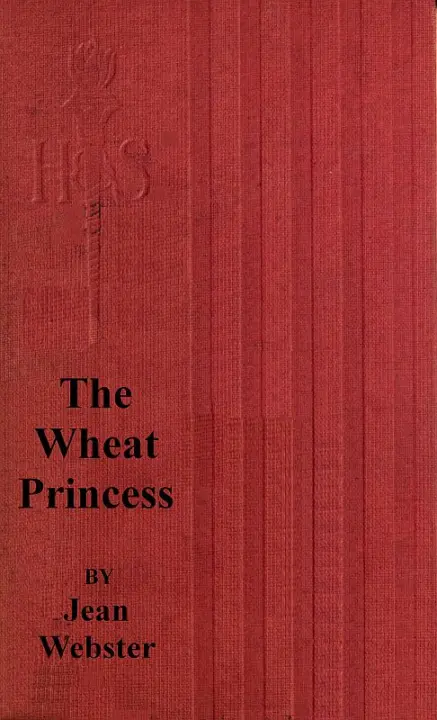
THE CLASSIC COLLECTION · 1905
"The Wheat Princess" by Jean Webster is a novel written in the early 20th century. The story revolves around an American family, the Copleys, and their experiences as they spend a summer in an Italian villa, highlighting themes of wealth, privilege, and social responsibility. The main character, Marcia Copley, is introduced as the charming and spirited daughter of a millionaire wheat magnate, navigating her new life amidst the historical and picturesque backdrop of Castel Vivalanti. At the start of the story, we find Marcia and her aunt arriving at a tea gathering, where she is referred to as "the Wheat Princess" due to her family background. The discussions among the guests reveal the social dynamics and perceptions surrounding Marcia, especially in relation to her wealth and potential marriage prospects. We learn about her family's philanthropic efforts leads to mixed feelings among the attendees. The dialogue vividly sets the stage for the contrast between the Copleys' American millionaire lifestyle and the traditional Italian society they are entering, all while hinting at the complexities of identity, cultural expectations, and personal aspirations that are to unfold as Marcia adapts to her new environment.
Introduction adapted from the source catalogue; source summaries may be automatically generated.
Free to read · English · 99,375 words · No account needed
MAKE TIME FOR A GOOD BOOK
On by default. Untick to stop anonymous reading totals. Each page counts after 10 seconds in view. How this works.
Anonymous counting is on unless you have switched it off.
‘But I don’t see that it makes any difference what you are contented with so long as you are contented.’
He looked at her with a half-smile.
‘Nonsense, Miss Marcia; you know better than that. When people are contented with their lot, does their lot ever improve? Do you think the Italian people ought to be happy? You have seen the way they live, or—no,’ he broke off, ‘you don’t know anything about it.’
‘Yes, I do,’ she returned. ‘I know they’re poor—horribly poor—but they seem to get a good deal of pleasure out of life in spite of it.’
He shook his head. ‘You can’t convince me with that argument. Have you never heard of a holy discontent? That’s what these people need—and,’ he added grimly, ‘some of them have got it.’
‘A holy discontent,’ she repeated. ‘What a terrible thing to have! It’s like living for revenge.’
‘Oh, well,’ he shrugged, ‘a man must live for something besides his
three meals a day.’
‘He can live for his family,’ she suggested.
‘Yes, if he has one. Otherwise he must live for an idea.’
She glanced at him sidewise. She would have liked to ask what idea he lived for, but it was a question she did not dare to put. Instead she commented: ‘It’s queer, isn’t it, how the ideas that men used to live for have passed away? Chivalry and crusading and going to war and living as hermits—I really don’t see what’s left.’
‘The most of the old ideals are exploded,’ he agreed. ‘But we have new ones to-day—sufficiently bad—to meet the needs of the present century. A man can make a god of his business, for instance.’
Marcia shifted her seat a trifle uneasily as she thought of her father, who certainly did make a god of his business. It may have struck Sybert that it was not a propitious subject, for he added almost instantly—
‘And there’s always art to fall back upon.’
‘But you don’t object to that,’ she remonstrated.
‘No, it’s good enough in its way,’ he agreed; ‘but it doesn’t go very
deep.’
‘Artists would tell you then that it isn’t the true art.’
‘I dare say,’ he shrugged; ‘but at best there are a good many truer
things.’
‘What, for instance?’
‘Well, three meals a day.’
Marcia laughed, and then she inquired—
‘Suppose you knew a person, Mr. Sybert, who didn’t care for anything but art—who just wanted to have the world beautiful and nothing else, what would you think?’
Your reading position is saved on this browser. Take it to another device with a library code. Reading pages adapt to text, rather than matching a printed edition.
BEHIND THE BOOK
This eBook is for the use of anyone anywhere in the United States and most other parts of the world at no cost and with almost no restrictions whatsoever. You may copy it, give it away or re-use it under the terms of the Project Gutenberg License included with this eBook or online at www.gutenberg.org. If you are not located in the United States, you will have to check the laws of the country where you are located before using this eBook. Read the source licence.
The original source file, including credits and licence, is retained by this library. Request an original-format copy at no charge. Please include the book title and Project Gutenberg identifier #46761.
KEEP YOUR CURIOSITY GOING
Coulson Kernahan

Maurice Baring
Frances Wright
Cécile Tormay

Frederic Jesup Stimson

W. H. P. (William Henry Pope) Jarvis