THE CLASSIC COLLECTION✦Much Ado About PeterCLASSIC FREE BOOKS
Much Ado About Peter
Jean Webster
THE CLASSIC COLLECTION · 1905
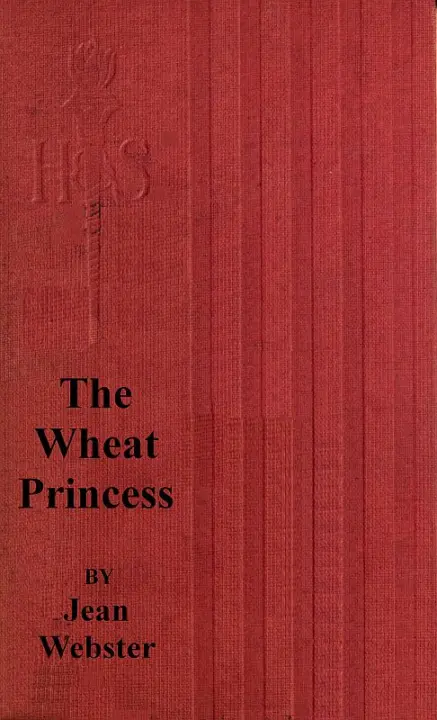
"The Wheat Princess" by Jean Webster is a novel written in the early 20th century. The story revolves around an American family, the Copleys, and their experiences as they spend a summer in an Italian villa, highlighting themes of wealth, privilege, and social responsibility. The main character, Marcia Copley, is introduced as the charming and spirited daughter of a millionaire wheat magnate, navigating her new life amidst the historical and picturesque backdrop of Castel Vivalanti. At the start of the story, we find Marcia and her aunt arriving at a tea gathering, where she is referred to as "the Wheat Princess" due to her family background. The discussions among the guests reveal the social dynamics and perceptions surrounding Marcia, especially in relation to her wealth and potential marriage prospects. We learn about her family's philanthropic efforts leads to mixed feelings among the attendees. The dialogue vividly sets the stage for the contrast between the Copleys' American millionaire lifestyle and the traditional Italian society they are entering, all while hinting at the complexities of identity, cultural expectations, and personal aspirations that are to unfold as Marcia adapts to her new environment.
Introduction adapted from the source catalogue; source summaries may be automatically generated.
Free to read · English · 99,375 words · No account needed
MAKE TIME FOR A GOOD BOOK
On by default. Untick to stop anonymous reading totals. Each page counts after 10 seconds in view. How this works.
Anonymous counting is on unless you have switched it off.
‘MAY I come in for tea, Cousin Marcia?’ Gerald inquired, with a note of anxiety in his voice, as they climbed the stone staircase of the Palazzo Rosicorelli. They had been spending the afternoon in the Borghese gardens, and the boy’s very damp sailor-suit bore witness to the fact that he had been indulging in the forbidden pleasure of catching goldfish in the fountain.
‘Indeed you may not,’ she returned emphatically. ‘You may go with Marietta and have some dry clothes put on before your mother sees you.’
Gerald, realizing the wisdom of this course, allowed himself to be quietly spirited off the back way, in spite of the fact that he heard the alluring sound of Sybert’s voice in the direction of the salon. Marcia went on in without waiting to take off her hat, and she met the Melvilles in the ante-room, on the point of leaving.
‘Good afternoon. Why do you go so early?’ she asked.
‘Oh, we are coming back later; we are just going home to dress. Your uncle is giving a dinner to-night—a very formal affair.’
‘Is that so?’ she laughed. ‘I have not been invited.’
‘You will be; don’t feel hurt. It’s a general invitation issued to all
comers.’
Marcia found no one within but her aunt and uncle and Mr. Sybert.
‘What is this I hear about your giving a dinner to-night, Aunt Katherine?’ she asked as she settled herself in a wicker chair and stretched out her hand for a cup of tea.
‘You must ask your uncle. I have nothing to do with it,’ Mrs. Copley disclaimed. ‘He invited the guests, and he must provide the menu.’
‘What is it, Uncle Howard?’
‘Merely a little farewell dinner. I thought we ought to put on a bright face our last night, you know.’
‘One would think you were going to be led to execution at dawn.’
‘We will hope it’s nothing worse than exile,’ said Sybert.
‘Who are your guests, and when were they invited?’
‘My guests are the people who dropped in late to tea; I did not think of it early enough to make the invitation very general. The list, I believe, includes the Melvilles, Signora Androit and the Contessa Torrenieri, Sidney Carthrope the sculptor, and a certain young Frenchman, a most alluring youth, who called with him, but whose name for the moment escapes me.’
‘Adolphe Benoit,’ said Sybert.
‘The Prix de Rome?’ asked Marcia. ‘Oh, I know him! I met him a few weeks ago at a tea; he’s very entertaining. I suppose,’ she added, considering the list, ‘that he will fall to my share?’
‘Unless you prefer Mr. Sybert.’
Your reading position is saved on this browser. Take it to another device with a library code. Reading pages adapt to text, rather than matching a printed edition.
BEHIND THE BOOK
This eBook is for the use of anyone anywhere in the United States and most other parts of the world at no cost and with almost no restrictions whatsoever. You may copy it, give it away or re-use it under the terms of the Project Gutenberg License included with this eBook or online at www.gutenberg.org. If you are not located in the United States, you will have to check the laws of the country where you are located before using this eBook. Read the source licence.
The original source file, including credits and licence, is retained by this library. Request an original-format copy at no charge. Please include the book title and Project Gutenberg identifier #46761.
KEEP YOUR CURIOSITY GOING
Coulson Kernahan

Maurice Baring
Frances Wright
Cécile Tormay

Frederic Jesup Stimson

W. H. P. (William Henry Pope) Jarvis