THE CLASSIC COLLECTION✦The Countess FannyCLASSIC FREE BOOKS
The Countess Fanny
Marjorie Bowen
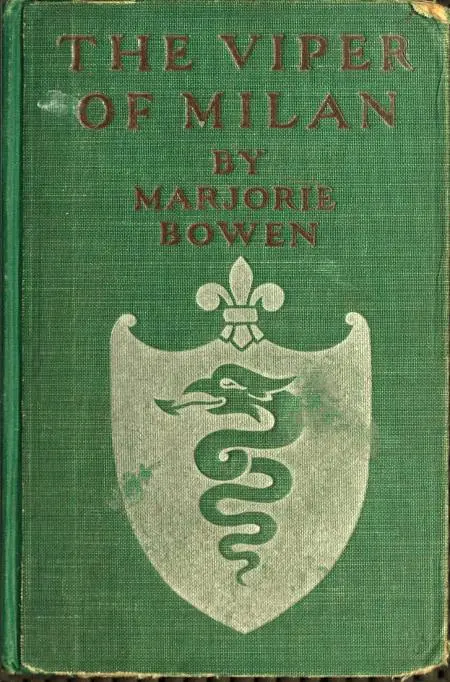
THE CLASSIC COLLECTION · 1906
"The Viper of Milan: A Romance of Lombardy" by Marjorie Bowen is a historical novel written in the early 20th century. Set in the tumultuous and politically charged environment of 14th-century Italy, the narrative focuses on the rise of Gian Galeazzo Maria Visconti, the Duke of Milan, and intertwines themes of tyranny, romance, and rebellion. The story follows characters caught in the gripping turmoil of their time, particularly highlighting the experiences of young travelers Tomaso and Vittore, as well as the infamous Visconti family. At the start of the novel, readers are introduced to the beauty of Lombardy, juxtaposed with the stark reality of peasant life under the oppressive rule of the Visconti. The opening scene captures a moment of tension as a cavalcade led by the Duke passes a group of downtrodden peasants, eliciting fear and awe. Young Tomaso is injured during a harrowing encounter with the Duke's enforcers, thrusting his cousin Vittore into a desperate search for help. The visceral emotions of hopelessness and longing for freedom set the tone for the unfolding drama, while establishing the malevolent presence of the Visconti as a catalyst for the characters' struggles.
Introduction adapted from the source catalogue; source summaries may be automatically generated.
Free to read · English · 96,562 words · No account needed
MAKE TIME FOR A GOOD BOOK
On by default. Untick to stop anonymous reading totals. Each page counts after 10 seconds in view. How this works.
Anonymous counting is on unless you have switched it off.
And as Visconti passed on, more than one Frenchman raised his eyebrows and shrugged his shoulders expressively as the sweep of his scarlet train disappeared.
Among the throng the ever-ready secretary waited for Visconti's eye to fall on him, and the Duke, dismissing the pages, beckoned him forward.
"No news from Verona, or Mantua?" he asked.
"None, my lord."
"None? The messengers are late. But after all why should they haste?" said Visconti. "Della Scala will hardly be in the field yet," he added with a smile.
"If ever, my lord," replied the secretary smoothly.
The two had withdrawn into the embrasure of one of the great open windows, and Visconti, glancing through it, turned his gaze there where, clear in the blue summer night, rose the outline of an abutting building, grim and dark and silent: Isotta's prison.
"See the guards be doubled there," he said. The secretary bowed.
"As to the Lady Valentine, my lord," he said insinuatingly, "she is safe and well, and at her prayers with her women. I have kept guard upon her slightest motion."
Visconti drew a ring from his finger. He was in a generous mood to-night, a rare one enough, as Giannotto thought with bitterness.
"Take this for thy pains," he said. "And now I will relieve thee of thy watch; she can hardly escape under my very eyes and with her bridegroom waiting. Let the guests know I bring the bride, Giannotto."
Visconti withdrew the length of one of the corridors, and paused there at a door before which stood two soldiers, the guard of his sister's apartments. At his soft approach they stood back, and, opening the folding doors, Visconti passed through, and quickly threaded the deserted ante-rooms until he reached the chapel that the lady used.
The place was dim, lit by red lamps that cast more shadow than gave light, and with high, stained windows, now scarcely showing color, and seated on the floor under one of them, her head against a carved wall, her hands listless in her lap, was Valentine.
She wore a dress of flame-colored satin, and her hair was elaborately dressed with rubies and pearls. She made no movement at her brother's entrance.
The air was heavy with incense and the perfume of some white roses that faded across the altar steps.
"We wait for thee, Valentine," said Visconti.
A couple of her women moved forward from the shadows, and whispered to
the Duke they could do nothing with her. He motioned to them to
withdraw.
Your reading position is saved on this browser. Take it to another device with a library code. Reading pages adapt to text, rather than matching a printed edition.
Marjorie Bowen
Marjorie Bowen
Marjorie Bowen
Marjorie Bowen
BEHIND THE BOOK
This eBook is for the use of anyone anywhere in the United States and most other parts of the world at no cost and with almost no restrictions whatsoever. You may copy it, give it away or re-use it under the terms of the Project Gutenberg License included with this eBook or online at www.gutenberg.org. If you are not located in the United States, you will have to check the laws of the country where you are located before using this eBook. Read the source licence.
The original source file, including credits and licence, is retained by this library. Request an original-format copy at no charge. Please include the book title and Project Gutenberg identifier #48963.
KEEP YOUR CURIOSITY GOING
Cécile Tormay

Moritz Busch
Coulson Kernahan
John L. Ransom

Maurice Baring
Frances Wright