THE CLASSIC COLLECTION✦The Countess FannyCLASSIC FREE BOOKS
The Countess Fanny
Marjorie Bowen
THE CLASSIC COLLECTION · 1906
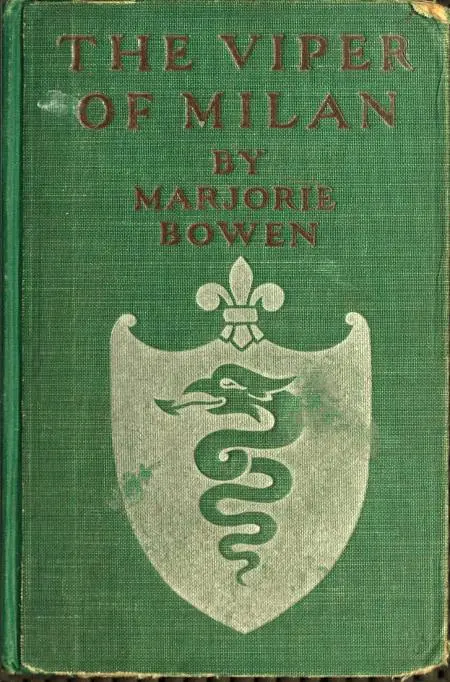
"The Viper of Milan: A Romance of Lombardy" by Marjorie Bowen is a historical novel written in the early 20th century. Set in the tumultuous and politically charged environment of 14th-century Italy, the narrative focuses on the rise of Gian Galeazzo Maria Visconti, the Duke of Milan, and intertwines themes of tyranny, romance, and rebellion. The story follows characters caught in the gripping turmoil of their time, particularly highlighting the experiences of young travelers Tomaso and Vittore, as well as the infamous Visconti family. At the start of the novel, readers are introduced to the beauty of Lombardy, juxtaposed with the stark reality of peasant life under the oppressive rule of the Visconti. The opening scene captures a moment of tension as a cavalcade led by the Duke passes a group of downtrodden peasants, eliciting fear and awe. Young Tomaso is injured during a harrowing encounter with the Duke's enforcers, thrusting his cousin Vittore into a desperate search for help. The visceral emotions of hopelessness and longing for freedom set the tone for the unfolding drama, while establishing the malevolent presence of the Visconti as a catalyst for the characters' struggles.
Introduction adapted from the source catalogue; source summaries may be automatically generated.
Free to read · English · 96,562 words · No account needed
MAKE TIME FOR A GOOD BOOK
On by default. Untick to stop anonymous reading totals. Each page counts after 10 seconds in view. How this works.
Anonymous counting is on unless you have switched it off.
A gleam of hope sent Vittore forward. Here was some one who, alone and on foot, must know the perils of travel, and might be kind-hearted; though, with Tomaso dead, what even pity could do for him he scarcely knew. Then again the boy's heart failed him. Perhaps this was no more than some wandering robber. He paused, drew back, and the traveler came on not noticing him, his gaze fixed keenly on the distant city.
By the roadside some boulders, half-hidden in violets and golden with moss, offered a seat, and half-stumbling over them, the stranger abruptly withdrew his eyes from Milan and saw for the first time the boy, who from a few paces off was timorously observing him.
He was a powerful man of gigantic size, clothed in coarse leather, undressed, patched, slashed, and travel-worn. His legs were bound with straw and thongs of skin, the feet encased in rough wooden shoes stuffed with grass.
A battered leathern cap covered his head, and from his shoulder hung a ragged scarlet cloak. A dagger and a sword were stuck in his belt, a leather pouch hung at his side. The man's face and bearing belied his dress. He was not handsome, and a peculiar effect was given to the expression by the half-shut brown eyes, but he had a grave and stately bearing, and as he a little unclosed a searching gaze upon Vittore, the boy felt renewed encouragement.
"Sir," cried the lad advancing, "I am in great distress. My cousin lies there dead, or dying. Help me to get him to some shelter."
"I am a stranger here," replied the traveler, "and have no shelter for
myself to-night."
His accent, like his bearing, again belied his dress. He spoke in the refined Tuscan tongue, the language of the better classes, and to Vittore, who was gently nurtured, more familiar than the rough dialect of Lombardy, which he and Tomaso could only badly comprehend.
"But what I can find for myself," he added, "thou art welcome to share.
Where is thy cousin?"
Vittore pointed to the recumbent figure half-hidden in the bank; the man glanced across, then around him. The sun was almost set, a whole flock of delicate little pink clouds lay trembling over Milan, its noble outline already half in shadow.
"It will be dark soon," he said, "and perchance--" he broke off abruptly. "Thy cousin, didst thou say?--what has happened to him? Wounded in some roadside fray?"
He rose as he spoke and crossed over to the fallen boy. "And what are you two doing traveling alone?" he demanded sternly.
"Alas, messer, we were going to Verona."
"To Verona, by way of Milan?"
Your reading position is saved on this browser. Take it to another device with a library code. Reading pages adapt to text, rather than matching a printed edition.
Marjorie Bowen
Marjorie Bowen
Marjorie Bowen
Marjorie Bowen
BEHIND THE BOOK
This eBook is for the use of anyone anywhere in the United States and most other parts of the world at no cost and with almost no restrictions whatsoever. You may copy it, give it away or re-use it under the terms of the Project Gutenberg License included with this eBook or online at www.gutenberg.org. If you are not located in the United States, you will have to check the laws of the country where you are located before using this eBook. Read the source licence.
The original source file, including credits and licence, is retained by this library. Request an original-format copy at no charge. Please include the book title and Project Gutenberg identifier #48963.
KEEP YOUR CURIOSITY GOING
Cécile Tormay

Moritz Busch
Coulson Kernahan
John L. Ransom

Maurice Baring
Frances Wright