THE CLASSIC COLLECTION✦The Countess FannyCLASSIC FREE BOOKS
The Countess Fanny
Marjorie Bowen
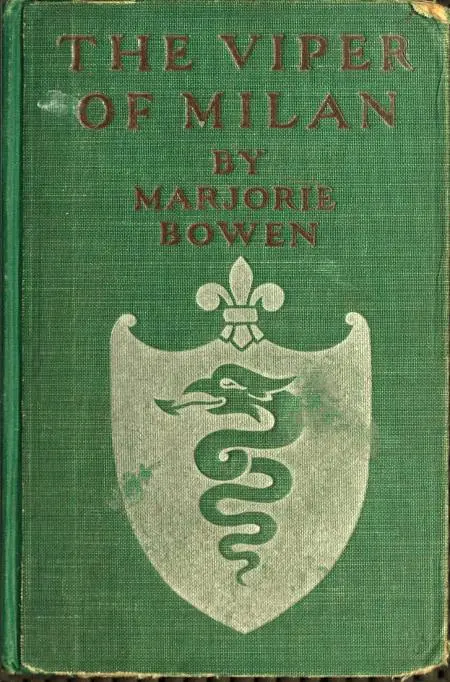
THE CLASSIC COLLECTION · 1906
"The Viper of Milan: A Romance of Lombardy" by Marjorie Bowen is a historical novel written in the early 20th century. Set in the tumultuous and politically charged environment of 14th-century Italy, the narrative focuses on the rise of Gian Galeazzo Maria Visconti, the Duke of Milan, and intertwines themes of tyranny, romance, and rebellion. The story follows characters caught in the gripping turmoil of their time, particularly highlighting the experiences of young travelers Tomaso and Vittore, as well as the infamous Visconti family. At the start of the novel, readers are introduced to the beauty of Lombardy, juxtaposed with the stark reality of peasant life under the oppressive rule of the Visconti. The opening scene captures a moment of tension as a cavalcade led by the Duke passes a group of downtrodden peasants, eliciting fear and awe. Young Tomaso is injured during a harrowing encounter with the Duke's enforcers, thrusting his cousin Vittore into a desperate search for help. The visceral emotions of hopelessness and longing for freedom set the tone for the unfolding drama, while establishing the malevolent presence of the Visconti as a catalyst for the characters' struggles.
Introduction adapted from the source catalogue; source summaries may be automatically generated.
Free to read · English · 96,562 words · No account needed
MAKE TIME FOR A GOOD BOOK
On by default. Untick to stop anonymous reading totals. Each page counts after 10 seconds in view. How this works.
Anonymous counting is on unless you have switched it off.
"Francisco will be pleased at a helper such as thou, father," said Tomaso proudly; "thou wilt be of more service in his venture than the German Count."
"And when this Francisco returns presently, the plan is that we set forth at once for Ferrara?" asked Ligozzi.
"And meanwhile rest, father, and I will bring thee food. We have already
eaten."
"I, too, my son," answered Ligozzi; but he seated himself on one of the rough wooden stools and watched Tomaso affectionately, as he brought the poor horn lantern from the wall. He lit and set it on the table, where it cast a straggling and wretched light.
"Francisco is surely overlong," he said; "suppose the soldiers think to search again on their way home from some outlying district?"
"Then there will be another fight," said Vittore, "but Francisco will
get the best of it."
Ligozzi laughed.
"I owe this Francisco much," he said; "he must be a brave man, an his care saved you both. From Verona, didst thou say?"
"From Verona, father. He said he knew thee, thy name; he is di Coldra; he knew thee, he has said, and the Della Scala also!"
At Della Scala's name Ligozzi's eyes filled with tears, and his voice
trembled when he spoke.
"I at least knew Della Scala well," he said, "and loved him too." He paused. "Next to thee, Tomaso," he continued sadly, "his memory has filled my heart during these weary weeks. I hoped, hope against hope, he might have escaped even as I did, but there comes no sign he lives."
"Then thou didst not see him perish?" asked Tomaso softly.
"On that fearful night on which Verona fell," answered Ligozzi, "Della Scala himself defended the gates, fighting like a lion. But he was betrayed, Tomaso, by a dastard in his pay, and the Visconti's soldiers poured in through the breach, secretly, and seized the palace, the Duke unwitting till it was too late and the palace flaming. I had to carry him the news; may I never have to do the like again. The palace was a sheet of fire, the Duchess was within, and the Visconti's soldiers swarming. The Prince rushed like a madman through the streets, a little group of us behind him. Too late! The Duchess was too great a prize, the miscreants had lost no time, and she was gone. A tale had reached the Duke while he still struck about him frantically that Gian Visconti himself had led the onset, and was still within the precincts with his prisoner. But it was a trap, Tomaso, set by a traitor. Della Scala, rushing where the pikeman pointed, was led beneath a burning stairway. It crashed in. I was behind the Duke; a beam struck me down, I thought among the dead, but some friars found me and brought me back to life; of Della Scala they knew nothing." He paused, and hid his eyes a moment in his hands.
Your reading position is saved on this browser. Take it to another device with a library code. Reading pages adapt to text, rather than matching a printed edition.
Marjorie Bowen
Marjorie Bowen
Marjorie Bowen
Marjorie Bowen
BEHIND THE BOOK
This eBook is for the use of anyone anywhere in the United States and most other parts of the world at no cost and with almost no restrictions whatsoever. You may copy it, give it away or re-use it under the terms of the Project Gutenberg License included with this eBook or online at www.gutenberg.org. If you are not located in the United States, you will have to check the laws of the country where you are located before using this eBook. Read the source licence.
The original source file, including credits and licence, is retained by this library. Request an original-format copy at no charge. Please include the book title and Project Gutenberg identifier #48963.
KEEP YOUR CURIOSITY GOING
Cécile Tormay

Moritz Busch
Coulson Kernahan
John L. Ransom

Maurice Baring
Frances Wright