THE CLASSIC COLLECTION✦The Countess FannyCLASSIC FREE BOOKS
The Countess Fanny
Marjorie Bowen
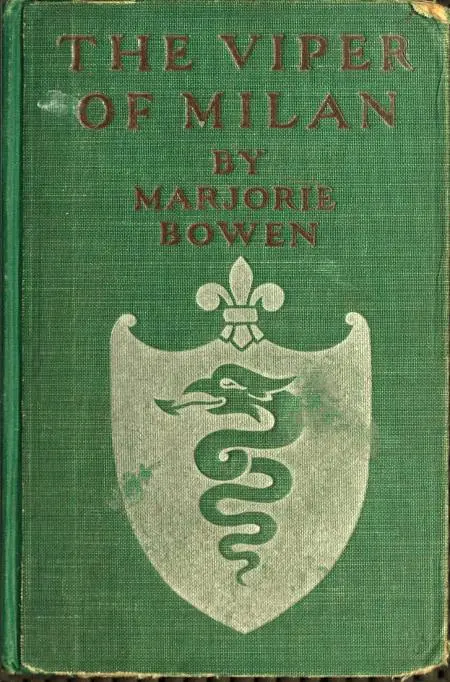
THE CLASSIC COLLECTION · 1906
"The Viper of Milan: A Romance of Lombardy" by Marjorie Bowen is a historical novel written in the early 20th century. Set in the tumultuous and politically charged environment of 14th-century Italy, the narrative focuses on the rise of Gian Galeazzo Maria Visconti, the Duke of Milan, and intertwines themes of tyranny, romance, and rebellion. The story follows characters caught in the gripping turmoil of their time, particularly highlighting the experiences of young travelers Tomaso and Vittore, as well as the infamous Visconti family. At the start of the novel, readers are introduced to the beauty of Lombardy, juxtaposed with the stark reality of peasant life under the oppressive rule of the Visconti. The opening scene captures a moment of tension as a cavalcade led by the Duke passes a group of downtrodden peasants, eliciting fear and awe. Young Tomaso is injured during a harrowing encounter with the Duke's enforcers, thrusting his cousin Vittore into a desperate search for help. The visceral emotions of hopelessness and longing for freedom set the tone for the unfolding drama, while establishing the malevolent presence of the Visconti as a catalyst for the characters' struggles.
Introduction adapted from the source catalogue; source summaries may be automatically generated.
Free to read · English · 96,562 words · No account needed
MAKE TIME FOR A GOOD BOOK
On by default. Untick to stop anonymous reading totals. Each page counts after 10 seconds in view. How this works.
Anonymous counting is on unless you have switched it off.
Since Verona fell, Tomaso had mourned his father as dead, and he, in his turn, had wandered far, searching for the pair who had started out to find him.
With stifled sobs of joy, Tomaso clung about his father's neck, and was clasped to him in frenzied pleasure.
"They said thou wert dead, father!" broke out the youth at last. "I never thought to see thy face again."
"I thought the same of thee, my son," returned Ligozzi tenderly. "I have been searching for traces of thee long and wearily. I thought thou must have perished on thy long journey, having found out Verona had fallen. But is this Vittore?" He drew to him paternally the boy who, so far, had watched the scene with wide-eyed curiosity.
"And now, what art thou doing--and where staying?"
As if he feared to lose him, Tomaso held his father tightly by the sleeve, over which the bridle had been slipped, and Vittore clinging to the other hand, they drew him forward between them to the place from which they had come.
"I am glad thou art not dead," said Vittore; "Tomaso grieved for thee
sorely, and so did I."
Tomaso laughed happily. "Grieve! Aye, did we! But now we can rejoice."
"But why this haste?" Ligozzi asked, "where dost thou hurry me?"
"Back, father, whence we came, for I was left in trust. It is a path thy horse can follow, and I will tell thee what has happened as we go."
Ligozzi followed without further question, too full of joy for speech, and taking so much pleasure in that it was his son who spoke as for the moment not to heed too keenly what he said.
But when Tomaso, beginning, boy-fashion, with the last, and not the first, came to mention of the Visconti's blow, Ligozzi roused to fury.
"Methought I saw a scar across thy face," he said, "yet in this light I could not see too well. It is only one more wrong to set against the Visconti's name, one deed the more to be avenged."
Tomaso took the clenched hand and covered it with kisses.
"I can forgive him now," he said, "since thou were not slain when Verona
fell."
"'Twas no fault of the Visconti's that any living soul escaped," returned his father. "Still, go on with thy tale, Tomaso; who is this Francisco, that thou nam'st so oft?"
Tomaso, eager and suddenly light of heart, told all he knew, and ere his recital ended they had reached the open, and found everything as they had left it. The horses safe, nothing seemingly disturbed.
Your reading position is saved on this browser. Take it to another device with a library code. Reading pages adapt to text, rather than matching a printed edition.
Marjorie Bowen
Marjorie Bowen
Marjorie Bowen
Marjorie Bowen
BEHIND THE BOOK
This eBook is for the use of anyone anywhere in the United States and most other parts of the world at no cost and with almost no restrictions whatsoever. You may copy it, give it away or re-use it under the terms of the Project Gutenberg License included with this eBook or online at www.gutenberg.org. If you are not located in the United States, you will have to check the laws of the country where you are located before using this eBook. Read the source licence.
The original source file, including credits and licence, is retained by this library. Request an original-format copy at no charge. Please include the book title and Project Gutenberg identifier #48963.
KEEP YOUR CURIOSITY GOING
Cécile Tormay

Moritz Busch
Coulson Kernahan
John L. Ransom

Maurice Baring
Frances Wright