THE CLASSIC COLLECTION✦Search-Light LettersCLASSIC FREE BOOKS
Search-Light Letters
Robert Grant

THE CLASSIC COLLECTION · 1904
"The Undercurrent" by Robert Grant is a novel written in the early 20th century. The book explores the complexities of love, ambition, and societal expectations through the story of Constance Forbes, a young woman who marries Emil Stuart, a man striving for success in a rapidly growing city. As they navigate their relationship and their individual ambitions, the story delves into themes of disillusionment and the challenges faced in a changing societal landscape. The opening of the narrative presents the wedding of Constance and Emil, highlighting Constance's mixed feelings about her choice to marry, reflecting on the sacrifices she makes for love and her aspirations in the field of education. The couple's dynamic is established through their conversation and interactions, revealing Emil's ambition and Constance's support as they settle into married life. However, as Emil confronts the harsh realities of business and eventually faces failure, the strain on their relationship becomes apparent, setting the stage for deeper conflicts around personal aspirations and societal pressures. This beginning hints at the tumultuous journey the couple will face as they grapple with their dreams and the realities of life together.
Introduction adapted from the source catalogue; source summaries may be automatically generated.
Free to read · English · 127,500 words · No account needed
MAKE TIME FOR A GOOD BOOK
On by default. Untick to stop anonymous reading totals. Each page counts after 10 seconds in view. How this works.
Anonymous counting is on unless you have switched it off.
Accordingly on the days which followed the wedding Mrs. Wilson shut herself up in her study, and with the aid of her private secretary proceeded to dispose of her accumulated correspondence, and to put her personal affairs to rights. June was the fag end of the social year. Many of those who had been energetic in social enterprises since the autumn were now a little jaded and on the eve of departure for the country, the Lakes, the Atlantic coast or Europe, in search of that respite from the full pressure of modern life which all who can afford it in our large cities now endeavor to procure for themselves. Nevertheless it was the best time to look the field over and to sow the seeds of new undertakings by broaching them to those whose support she desired by a short note of suggestion which could be mulled over during the summer. It was not the season to extract definite promises from allies or to enlist new recruits, but essentially that for exploiting ideas which might bear fruit later when the brains and sensibilities of Benham's best element had been rested and refreshed. Mrs. Wilson had numerous charities, clubs in furtherance of knowledge and classes promoting hygienic or æsthetic development to be pondered. For some of these--the struggling annual charities--methods like a fair or theatricals must be devised in order to raise fresh annual funds. The progressive courses of the past winter, such as the practical talks to young mothers, with live babies as object-lessons, and lectures on the relaxation of the muscles, must be superseded by others no less instructive and alluring. Then again new blood must be introduced into the various coteries which worked for the regeneration and enlightenment of the poor to make good the losses caused by matrimony or fickleness, and new schemes originated for retaining the attention of the meritorious persons to be benefited. In this last connection the idea of a course which should emphasize the importance to every woman of learning something on which she could fall back for self-support, suggested by Mrs. Stuart's plight, now recurred to her as timely. And besides these public interests there were the--perhaps more absorbing because more flattering--numerous personal demands on her sympathies and time made by other women--women largely of her own, but of every walk. Here it seemed to her was her most precious vineyard, for here the opportunity was given for soul to compass soul in an affinity which blessed both the giver and the receiver of spiritual benefits. Sometimes the need which sought her was that of the sinful woman, eager to rehabilitate herself. Sometimes that of the friendless, aspiring student seeking recognition or guidance; but oftener than any that of the blossoming maid or wife of her own class whose yearning nature, reaching out to hers as the flower to the sun and breeze, received the mysterious quickening which is the essence of the higher life, and gave to her in return a love which was like sexual passion in its ardor, but savoring only of the spirit. If she were thus able by the unconscious gifts or grace which were in her to relieve the necessities and attune the aspirations of these choice--and it seemed to her that often the neediest were the choicest--natures, was it strange that she should cherish and even cultivate this involuntary power? Mrs. Wilson's theory in regard to this personal influence was that it was the grateful product of her allegiance to, and passion for, beauty so far as she could lay claim to any merit in the matter. She accepted it as a heaven-sent and heaven-kissing gift which was to be rejoiced in and administered as a trust. Since her talent had turned out to be that of a leader to point the way by virtue of sympathetic intelligence--or, to quote her own mental simile, the electric medium which opened to eager, groping souls the realm of spirit--was not the mission the most congenial which could have been offered her, and in the direct line of her tastes and ambitions? Consequently her private correspondence with those who sought counsel and inspiration in return for adoring fealty was a labor of care as well as of love. Just the right words must be written, and the individual personal touch imparted to each message of criticism, revelation, homely advice, or mere greeting. To be true to beauty and to maintain her individuality by the free outpouring of herself from day to day in felicitous speech of tongue and pen was her glowing task. In the pursuance of it she had acquired mannerisms which were now a part of herself. Her phrases of endearment, her chirography, her note-paper, her method of signing herself, had severally a distinction or peculiarity of their own. All this was now a second nature; but at the outset she had been conscious of it, and, though never challenged, she had once written in vindication in one of her heart-to-heart missives that the mysterious forces of the universe through which God talks with man wear not the garb of conforming plainness, but have each its special exquisiteness; witness the moon-bathed summer night, the mountain peak at sunrise, the lightening glare among the forest pines, the lordly ocean in its many moods. She had a memory for birthdays and anniversaries. In the hour of bereavement her unique words of consolation were the first to arrive. She was prodigal of flowers, and her proselytes, knowing her affection for the rose and the lily, were apt to transform her study into a bower on the slightest excuse. She never wrote without flowers within her range of vision. In the evening of one of these days following her daughter's wedding, Mrs. Wilson was interrupted in her correspondence by the entrance of her maid with the bewildering news that a baby had been left on the doorsteps, and that a woman, presumably its mother, had, in the act of stealing away after ringing the bell, run into the arms of one of the servants, and was now a prisoner below stairs. The maid was agitated. Should they send for a policeman, or what was to be done? The course to adopt had not been clear to those in authority in the kitchen, and the solution had been left to the mistress whose eleemosynary tendencies had to be taken into account.
Your reading position is saved on this browser. Take it to another device with a library code. Reading pages adapt to text, rather than matching a printed edition.
Robert Grant
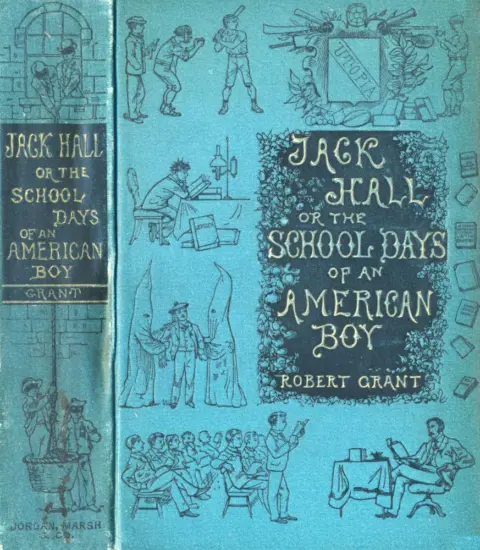
Robert Grant
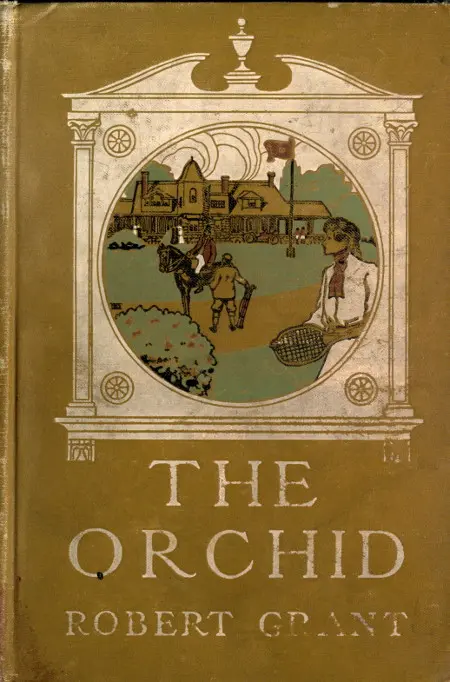
Robert Grant
Robert Grant
BEHIND THE BOOK
This eBook is for the use of anyone anywhere in the United States and most other parts of the world at no cost and with almost no restrictions whatsoever. You may copy it, give it away or re-use it under the terms of the Project Gutenberg License included with this eBook or online at www.gutenberg.org. If you are not located in the United States, you will have to check the laws of the country where you are located before using this eBook. Read the source licence.
The original source file, including credits and licence, is retained by this library. Request an original-format copy at no charge. Please include the book title and Project Gutenberg identifier #56310.
KEEP YOUR CURIOSITY GOING
Coulson Kernahan

Maurice Baring
Frances Wright
Cécile Tormay

Frederic Jesup Stimson

W. H. P. (William Henry Pope) Jarvis