THE CLASSIC COLLECTION✦Search-Light LettersCLASSIC FREE BOOKS
Search-Light Letters
Robert Grant

THE CLASSIC COLLECTION · 1904
"The Undercurrent" by Robert Grant is a novel written in the early 20th century. The book explores the complexities of love, ambition, and societal expectations through the story of Constance Forbes, a young woman who marries Emil Stuart, a man striving for success in a rapidly growing city. As they navigate their relationship and their individual ambitions, the story delves into themes of disillusionment and the challenges faced in a changing societal landscape. The opening of the narrative presents the wedding of Constance and Emil, highlighting Constance's mixed feelings about her choice to marry, reflecting on the sacrifices she makes for love and her aspirations in the field of education. The couple's dynamic is established through their conversation and interactions, revealing Emil's ambition and Constance's support as they settle into married life. However, as Emil confronts the harsh realities of business and eventually faces failure, the strain on their relationship becomes apparent, setting the stage for deeper conflicts around personal aspirations and societal pressures. This beginning hints at the tumultuous journey the couple will face as they grapple with their dreams and the realities of life together.
Introduction adapted from the source catalogue; source summaries may be automatically generated.
Free to read · English · 127,500 words · No account needed
MAKE TIME FOR A GOOD BOOK
On by default. Untick to stop anonymous reading totals. Each page counts after 10 seconds in view. How this works.
Anonymous counting is on unless you have switched it off.
In parting with the Rev. Mr. Prentiss without personal rancor and yet with an open avowal of his conviction that Constance would marry him in the end, Gordon Perry both made an admission and issued a challenge. His admission on the surface was simply that he recognized the rector's sincerity. In his own consciousness it went further; he recognized the validity of the conflict between them to an extent which he had up to this time failed to perceive, or at least to acknowledge.
The effect of this was to intensify the ardor of his convictions, but at the same time to cause him as a lawyer to respect his opponent's position, though he believed it to be utterly false. The interview had been absorbing to him sociologically, for it had crystallized in his own mind as concrete realities certain drifts or tendencies of which he had been aware, but which he had hitherto never formulated in words. Now that the occasion was come for doing so, the indictment--for it was that--had risen spontaneously to his lips. It was clear to him, as he had informed Mr. Prentiss, that there was a direct strife in American social evolution between those who sought eternal truth through the free processes of the human spirit and those who accepted it distilled through an hierarchy.
Just as in his sociological perplexities Gordon, yearning to be a sane spirit, had abstained from radicalism and had sought relief in concrete practical activities, he had watched the theological firmament and had felt his way. If he realized that the Christian organizations which saw in the human soul a dignity which rejected mediation were merely holding their own as formal bodies, he comforted himself with the knowledge that the thousands of men and women who rarely entered the churches--among them many of the most thoughtful and busiest workers in the land--were to a unit sympathizers with the creed of soul-freedom and soul-development. Not merely this; he knew that among orthodox worshippers the secret belief of the majority of the educated already rejected as superfluous or antiquated most of the old dogmas. But with his reverence for religion as an institution, Gordon had no ambition to outstrip his generation; simply to be in the van of it. There was no attraction for him in iconoclasm; he craved illumination, yet not at the expense of rationalism. Now suddenly the practical issue of the Church's interference with the State, of the Church's imposition on mankind of a cruel, inflexible ideal, labelled as superior purity, had become both an immediate and a personal concern. His soul felt seared as by an iron; all his instincts of sympathy with common humanity, the helpless victims of an arbitrary aim to preserve the family at the expense of the blameless individual, were aroused and intensified. Viewed as a general issue, Gordon felt no question as to the outcome. Was it not already decided? The Church had never ceased to deplore as usurpation society's constantly louder claim the world over of the right to regulate marriage, but without avail. It was only abuse by the State which had produced a reaction and given sacerdotalism another chance. But the particular, the personal issue, was a very different matter. For him it meant everything, and his whole being revolted at the possibility of losing the great joy of life through such a misapprehension of spiritual duty on the part of her who, so far as he was concerned, was the one woman in existence. Yet during the next weeks following the interview with the clergyman he experienced a sense of flatness which was almost despondency, for he realized that he had exhausted his resources. Mr. Prentiss had refused to aid him; on the contrary, had virtually defied him by expressing a triumphant conviction that Constance's decision was final. Could it be that she, whose lucidity of mind he had been wont to admire, would refuse to understand that the barrier which seemed to separate them was but an illusion? Surely it was not for the good of the world that true love--its most vital force--should be starved because the marriage tie was played fast and loose with by others. And yet he appreciated apprehensively the subtlety of this plea for the world's good; how modern it was, and how attractive to woman when made the motive for the exercise of renunciation. Truly, the priest had argued shrewdly, yet Gordon refused to admit that Constance could be deceived for long. That seemed too incompatible with her previous outlook and their delightful comradeship which had held love in disguise.
Your reading position is saved on this browser. Take it to another device with a library code. Reading pages adapt to text, rather than matching a printed edition.
Robert Grant
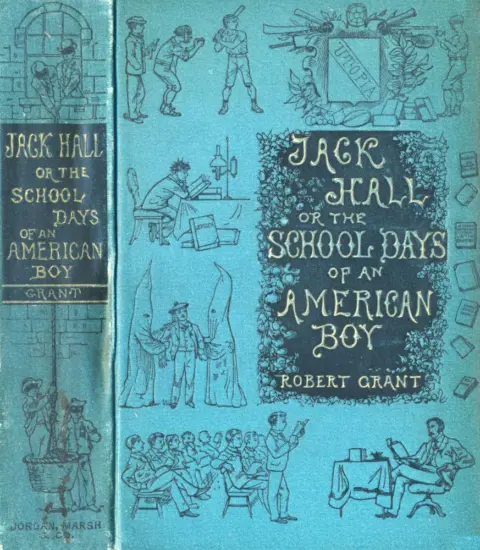
Robert Grant
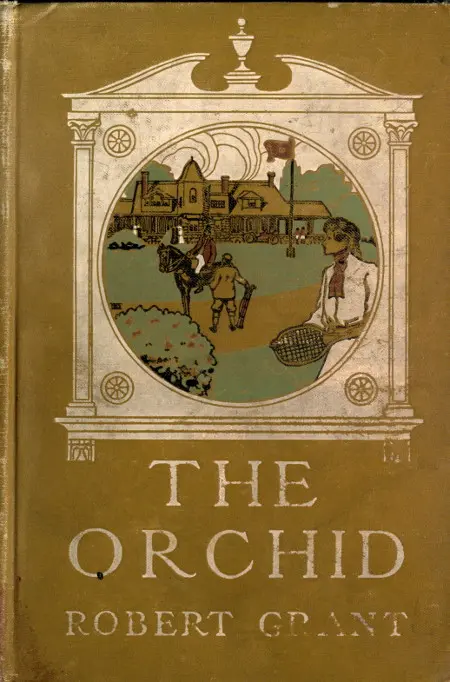
Robert Grant
Robert Grant
BEHIND THE BOOK
This eBook is for the use of anyone anywhere in the United States and most other parts of the world at no cost and with almost no restrictions whatsoever. You may copy it, give it away or re-use it under the terms of the Project Gutenberg License included with this eBook or online at www.gutenberg.org. If you are not located in the United States, you will have to check the laws of the country where you are located before using this eBook. Read the source licence.
The original source file, including credits and licence, is retained by this library. Request an original-format copy at no charge. Please include the book title and Project Gutenberg identifier #56310.
KEEP YOUR CURIOSITY GOING
Coulson Kernahan

Maurice Baring
Frances Wright
Cécile Tormay

Frederic Jesup Stimson

W. H. P. (William Henry Pope) Jarvis