THE CLASSIC COLLECTION✦Search-Light LettersCLASSIC FREE BOOKS
Search-Light Letters
Robert Grant

THE CLASSIC COLLECTION · 1904
"The Undercurrent" by Robert Grant is a novel written in the early 20th century. The book explores the complexities of love, ambition, and societal expectations through the story of Constance Forbes, a young woman who marries Emil Stuart, a man striving for success in a rapidly growing city. As they navigate their relationship and their individual ambitions, the story delves into themes of disillusionment and the challenges faced in a changing societal landscape. The opening of the narrative presents the wedding of Constance and Emil, highlighting Constance's mixed feelings about her choice to marry, reflecting on the sacrifices she makes for love and her aspirations in the field of education. The couple's dynamic is established through their conversation and interactions, revealing Emil's ambition and Constance's support as they settle into married life. However, as Emil confronts the harsh realities of business and eventually faces failure, the strain on their relationship becomes apparent, setting the stage for deeper conflicts around personal aspirations and societal pressures. This beginning hints at the tumultuous journey the couple will face as they grapple with their dreams and the realities of life together.
Introduction adapted from the source catalogue; source summaries may be automatically generated.
Free to read · English · 127,500 words · No account needed
MAKE TIME FOR A GOOD BOOK
On by default. Untick to stop anonymous reading totals. Each page counts after 10 seconds in view. How this works.
Anonymous counting is on unless you have switched it off.
"Talk of the devil! It's a messenger from Mr. Perry's. Somebody's ill and I'm wanted. The boy's coming up."
Somebody ill! It must be Mrs. Perry. The few moments of suspense which elapsed before the district messenger-boy arrived seemed interminable to Constance. Loretta had opened the door and the tramp of his ascent sounded leisurely. When he appeared he thrust his hand into his breast-pocket and produced a letter.
"It's for Mrs. Stuart," he said, guardedly.
"I'm Mrs. Stuart," said Constance.
"I was told to ring at your bell first, and if you was asleep or didn't answer the tube to try the other lady."
Constance read the brief contents of the note with perturbation. It was from Mr. Perry, informing her that on his return home he had found his mother stricken with paralysis, that the doctor was in attendance, and that a trained nurse was necessary. He had thought of Loretta; would Constance send her if disengaged?
"Oh, Loretta, dear Mrs. Perry is seriously ill--a stroke of paralysis. Mr. Perry asks you to come to her at once."
"I'll be ready to start in a few minutes," answered Loretta, briskly.
"We will both go," added Constance, as though to herself. "There may be something I can do." She turned to the messenger: "Return as quickly as you can, and tell the gentleman that we--wait a moment." She tore the sheet of note-paper apart and seating herself at the table wrote hastily on the blank half in pencil: "Loretta will come at once, and I shall accompany her. My heart grieves for you, my dear friend." She folded it and bent down one corner. "Give him this," she said, "and please make haste."
At this time in Benham the doctrine that sewage must be diverted from the sources of water supply used for drinking purposes was firmly established, and the doctrine that not every woman able to read and write is qualified to teach school was being gradually, if grudgingly, admitted to be not altogether un-American. So swift had been the change of attitude toward special knowledge that there had even been a revolution in regard to the theory advocated by the original board of trustees of the Silas S. Parsons Free Hospital that every woman is a born nurse, and is competent, after a fortnight's training at the utmost, to take charge of the sickest patients. Those familiar with affairs in Benham will recall that the original ruling spirit of that institution was Mrs. Selma Lyons, wife of United States Senator Lyons. She disapproved of special training and was a strong champion of the principle that an American woman with aspirations is more likely to be fettered than helped by conventional standards, and that individuality should be given free play in order to attain brilliant results. Yet though this principle was reverenced at first in the employment of nurses for the hospital, progress, that stern derider even of the American woman, gradually set it at naught during the period when Mrs. Lyons was resident in Washington and unable to give that close personal attention to the affairs of the institution which she desired. It so happened that after her husband's defeat at the end of his first term through the hostility of Horace Elton, one of the financial magnates of that section of the country, who harbored a grudge against him for alleged duplicity when Governor, the President of the United States threw a sop to the defeated candidate in the form of the Spanish mission. Selma, who was still engaged in the effort to chastise her enemies and to reëstablish what she regarded as true American social principles, was sorry to leave Washington, but she found some consolation in the thought of introducing American ethical standards at a foreign court, especially of dealing a death-blow to bull-fights by her personal influence. She was obliged, however, to relax considerably her vigilance in regard to the hospital; even, to consent to an enlargement of the board of trustees. This in its new form presently adopted what the members regarded as modern methods. Mrs. Wilson had been one of the recent additions to the body. Yet, under her regimen, though every applicant for a nurse's diploma was obliged to serve a rigorous apprenticeship of two years at the hospital, the idea of scrutinizing the antecedents and previous education of the young women offering themselves was still novel. Selma would have regarded an inquiry of this kind as aristocratic and hostile to the free development of the individual. Now--but a few years later--such a system of scrutiny is in vogue in Benham; but at the date of Loretta Davis's admittance to the Silas S. Parsons Free Hospital, though it doubtless occurred to Mrs. Wilson that her candidate was not ideal, she had not demurred. On the contrary, she had welcomed the opportunity of giving the girl a chance to redeem herself in this field of usefulness.
Your reading position is saved on this browser. Take it to another device with a library code. Reading pages adapt to text, rather than matching a printed edition.
Robert Grant
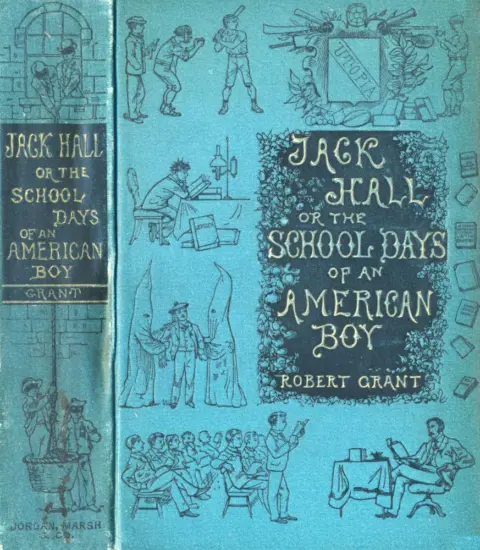
Robert Grant
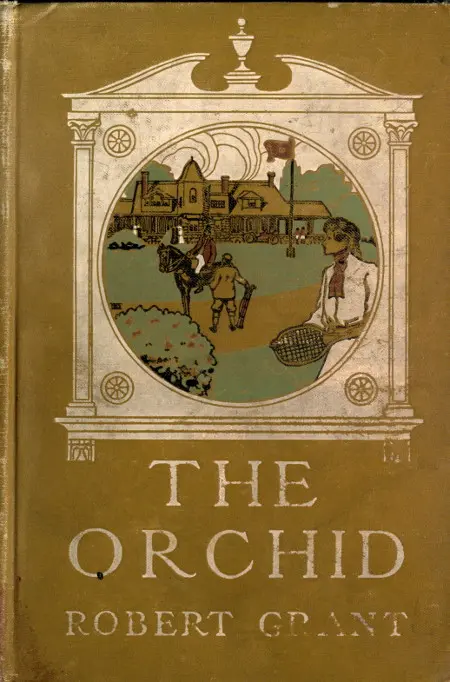
Robert Grant
Robert Grant
BEHIND THE BOOK
This eBook is for the use of anyone anywhere in the United States and most other parts of the world at no cost and with almost no restrictions whatsoever. You may copy it, give it away or re-use it under the terms of the Project Gutenberg License included with this eBook or online at www.gutenberg.org. If you are not located in the United States, you will have to check the laws of the country where you are located before using this eBook. Read the source licence.
The original source file, including credits and licence, is retained by this library. Request an original-format copy at no charge. Please include the book title and Project Gutenberg identifier #56310.
KEEP YOUR CURIOSITY GOING
Coulson Kernahan

Maurice Baring
Frances Wright
Cécile Tormay

Frederic Jesup Stimson

W. H. P. (William Henry Pope) Jarvis