THE CLASSIC COLLECTION✦Eline VereCLASSIC FREE BOOKS
Eline Vere
Louis Couperus
THE CLASSIC COLLECTION · 1920
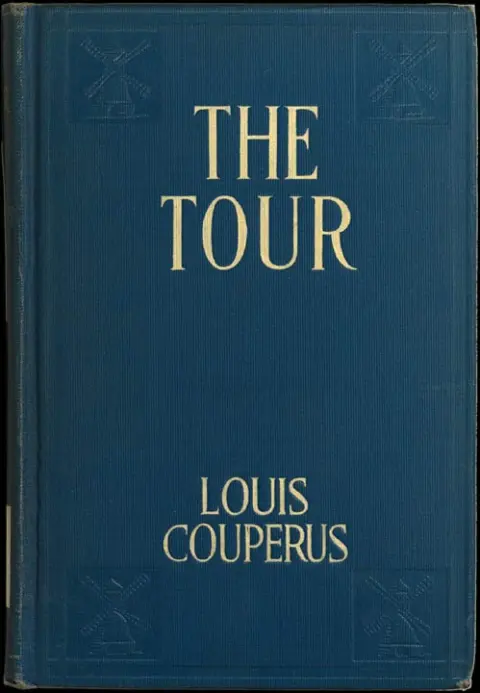
"The Tour: A Story of Ancient Egypt" by Louis Couperus is a historical novel written in the early 20th century." The narrative follows Publius Lucius Sabinus, a young and wealthy Roman noble, as he embarks on a journey to Egypt, wrestling with immense grief over the disappearance of his beloved slave, Ilia. As Lucius navigates this exotic land filled with splendor and mystery, he grapples with his emotions, seeking solace and distraction amid the vibrant culture and rich history of Alexandria. "The opening of the novel sets a hauntingly beautiful scene aboard a ship gliding through the night, where Lucius listens to the melancholic songs of rowers and sailors." As he reflects on his sorrow, the narrative introduces his loyal tutor, Thrasyllus, who attempts to comfort him over Ilia's mysterious disappearance, believed to be at the hands of pirates. Despite the chatter of his companions, Lucius is consumed by despair, culminating in a desperate cry for Ilia. The melancholy atmosphere foreshadows the inner turmoil Lucius will face as he ventures through Egypt, intermingling themes of love, loss, and the pursuit of wisdom against an opulent backdrop.
Introduction adapted from the source catalogue; source summaries may be automatically generated.
Free to read · English · 49,251 words · No account needed
MAKE TIME FOR A GOOD BOOK
On by default. Untick to stop anonymous reading totals. Each page counts after 10 seconds in view. How this works.
Anonymous counting is on unless you have switched it off.
After five days and nights, Lucius knew. Pale, tired and enlightened, he sought out his followers, Thrasyllus, Caleb and Tarrar, who were staying in the great, cavernous rooms of the temple. And he was calm, peaceful and dignified. He bathed and ate and slept. And at night, in the silence of the temple-grounds, which wove itself into one mystic atmosphere with the golden gleam of the stars, he woke Tarrar and said:
"Take this sycamore box."
It was a small casket of delicate workmanship, which had always accompanied him wherever he went.
Tarrar, heavy with sleep, took up the little box.
"Follow me," said Lucius.
The little slave, in astonishment, followed his master. Lucius passed through the shadow-haunted temple-precincts, which stretched endlessly in every direction. He went through the parks, which were haunted with sphinxes and obelisks and thick with the sultry heat of datura-scent. He went through the whole oasis, under the grove of palm-trees and past the huts of the natives.
Tarrar followed him. The little slave felt, inquisitively, that the sycamore casket was not locked. He opened it for an instant; and by the flickering starlight Tarrar saw a small woman's sandal, which he knew. The little slave wondered and wondered. But he continued to follow his master, faithfully; he would have followed him to the death.
They came to the desert. The master entered the desert; and Tarrar continued to wonder. The starry night now spread its dome over their heads; the silvery sands lay outstretched before him.
"Dig," Lucius commanded, suddenly turning round.
Tarrar gave a start. He put down the casket in the sand and dug a
hole with his hands.
"Deeper," Lucius commanded. "Dig deeper."
The little slave dug; quickly, like a little monkey, he dug the hole
deep with his two hands.
"Put the casket in the hole," Lucius commanded.
Tarrar did so and looked at his master.
"Cover the casket up with sand."
Tarrar did as his master commanded. Then Lucius said:
"Now come back."
And he went back to the oasis; but Tarrar, before following him, stamped down the sand under which the casket lay buried and overwhelmed it, amid violent gestures of delight, with native curses, curses not to be averted, in the Libyan tongue.
Your reading position is saved on this browser. Take it to another device with a library code. Reading pages adapt to text, rather than matching a printed edition.
BEHIND THE BOOK
This eBook is for the use of anyone anywhere in the United States and most other parts of the world at no cost and with almost no restrictions whatsoever. You may copy it, give it away or re-use it under the terms of the Project Gutenberg License included with this eBook or online at www.gutenberg.org. If you are not located in the United States, you will have to check the laws of the country where you are located before using this eBook. Read the source licence.
The original source file, including credits and licence, is retained by this library. Request an original-format copy at no charge. Please include the book title and Project Gutenberg identifier #37497.
KEEP YOUR CURIOSITY GOING
Cécile Tormay

Moritz Busch
Coulson Kernahan
John L. Ransom

Maurice Baring
Frances Wright

