THE CLASSIC COLLECTION✦Eline VereCLASSIC FREE BOOKS
Eline Vere
Louis Couperus
THE CLASSIC COLLECTION · 1920
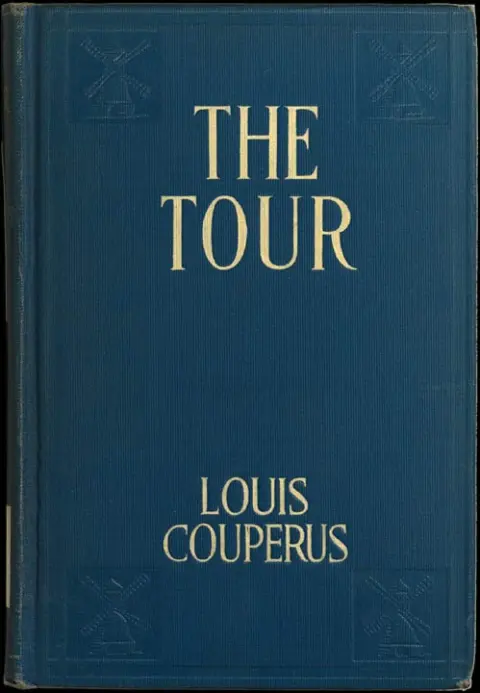
"The Tour: A Story of Ancient Egypt" by Louis Couperus is a historical novel written in the early 20th century." The narrative follows Publius Lucius Sabinus, a young and wealthy Roman noble, as he embarks on a journey to Egypt, wrestling with immense grief over the disappearance of his beloved slave, Ilia. As Lucius navigates this exotic land filled with splendor and mystery, he grapples with his emotions, seeking solace and distraction amid the vibrant culture and rich history of Alexandria. "The opening of the novel sets a hauntingly beautiful scene aboard a ship gliding through the night, where Lucius listens to the melancholic songs of rowers and sailors." As he reflects on his sorrow, the narrative introduces his loyal tutor, Thrasyllus, who attempts to comfort him over Ilia's mysterious disappearance, believed to be at the hands of pirates. Despite the chatter of his companions, Lucius is consumed by despair, culminating in a desperate cry for Ilia. The melancholy atmosphere foreshadows the inner turmoil Lucius will face as he ventures through Egypt, intermingling themes of love, loss, and the pursuit of wisdom against an opulent backdrop.
Introduction adapted from the source catalogue; source summaries may be automatically generated.
Free to read · English · 49,251 words · No account needed
MAKE TIME FOR A GOOD BOOK
On by default. Untick to stop anonymous reading totals. Each page counts after 10 seconds in view. How this works.
Anonymous counting is on unless you have switched it off.
"Child of the foam, great goddess of love,
Aphrodite, look down from above!
Thou, who dost madden the gods with desire,
Thou, who fulfillest men's hearts with thy fire,
All but the heart of my lord that I crave,
Hark to thy slave!
"Spill this hot blood that courses in vain for him, Darken these eyes that are heavy with pain for him, Smite the parched lips that he sees but to spurn them, The hands stretched in love ... take them, break them and burn them!
"Then, in the place where lately he strode,
Mingle mine ash with the dust of the road;
Thus, though I win not a glance from his eye,
Thus, though as ever he pass me by
Careless, unseeing, at least my lord's heel
Cannot but touch me, at least I shall feel
The embrace of his foot; and his sandall'd sole
Shall kiss my dust and make me whole.
"Then let the heart that he has press'd,
The ashen lips by him caressed
Sink low in the lowly dust of the road
Lest another tread where late he trod.
"Mother of Eros, hear thy slave!
"Child of the foam, great goddess of love,
Aphrodite, look down from above!
Thou, who dost madden the gods with desire,
Thou, who fulfillest men's hearts with thy fire,
All but the heart of my lord that I crave,
Hark to thy slave!"
Cora's song rang through the falling night. Her clear voice, tinkling as though with little golden bells, at first soft and hushed, rose throbbing in passion and then broke like a crystal ray and melted in mournfulness and plaintive prayer.
The shadows lay heaped under the palm-trees. Outside the doors of their apartments, in the galleries of the diversorium, sat the travelling merchants, squatting or lying on mat or rug, listening. Uncle Catullus lay in a hammock and Thrasyllus sat beside him and looked up at the stars, which were beginning to show like silver daisies in wide, blue meadows.
"You have sung beautifully, Cora," said Uncle Catullus to the slave, who was sitting on the ground with the four-stringed harp before her.
"Thank you, my lord," said the slave.
"Why not call me uncle?" said Catullus, good-naturedly.
"I should not dare," said Cora, smiling.
"Ilia used to call me uncle."
"I am not Ilia, my lord."
Tarrar appeared in the pillared portico.
But his appearance was a surprise. For Tarrar, no longer bandaged, looked like a little savage: he wore his Libyan festive garment; a girdle of feathers hung round his waist; he was crowned with a head-dress of feathers. And he stood grinning.
Your reading position is saved on this browser. Take it to another device with a library code. Reading pages adapt to text, rather than matching a printed edition.
BEHIND THE BOOK
This eBook is for the use of anyone anywhere in the United States and most other parts of the world at no cost and with almost no restrictions whatsoever. You may copy it, give it away or re-use it under the terms of the Project Gutenberg License included with this eBook or online at www.gutenberg.org. If you are not located in the United States, you will have to check the laws of the country where you are located before using this eBook. Read the source licence.
The original source file, including credits and licence, is retained by this library. Request an original-format copy at no charge. Please include the book title and Project Gutenberg identifier #37497.
KEEP YOUR CURIOSITY GOING
Cécile Tormay

Moritz Busch
Coulson Kernahan
John L. Ransom

Maurice Baring
Frances Wright

