THE CLASSIC COLLECTION✦Eline VereCLASSIC FREE BOOKS
Eline Vere
Louis Couperus
THE CLASSIC COLLECTION · 1920
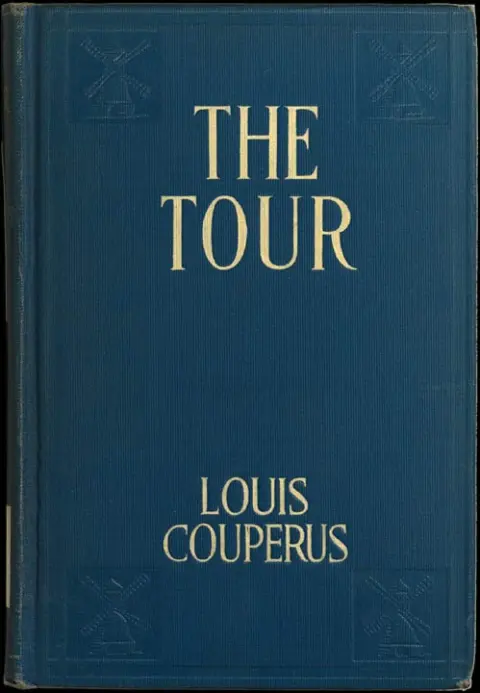
"The Tour: A Story of Ancient Egypt" by Louis Couperus is a historical novel written in the early 20th century." The narrative follows Publius Lucius Sabinus, a young and wealthy Roman noble, as he embarks on a journey to Egypt, wrestling with immense grief over the disappearance of his beloved slave, Ilia. As Lucius navigates this exotic land filled with splendor and mystery, he grapples with his emotions, seeking solace and distraction amid the vibrant culture and rich history of Alexandria. "The opening of the novel sets a hauntingly beautiful scene aboard a ship gliding through the night, where Lucius listens to the melancholic songs of rowers and sailors." As he reflects on his sorrow, the narrative introduces his loyal tutor, Thrasyllus, who attempts to comfort him over Ilia's mysterious disappearance, believed to be at the hands of pirates. Despite the chatter of his companions, Lucius is consumed by despair, culminating in a desperate cry for Ilia. The melancholy atmosphere foreshadows the inner turmoil Lucius will face as he ventures through Egypt, intermingling themes of love, loss, and the pursuit of wisdom against an opulent backdrop.
Introduction adapted from the source catalogue; source summaries may be automatically generated.
Free to read · English · 49,251 words · No account needed
MAKE TIME FOR A GOOD BOOK
On by default. Untick to stop anonymous reading totals. Each page counts after 10 seconds in view. How this works.
Anonymous counting is on unless you have switched it off.
"On the farm belonging to my father, who is a land-owner," replied the pleasant young priest, smiling mischievously. "I am a land-owner's son; and, when Apis was born in our stables, my father dedicated me to Osiris, that I might take care of the god. I came here with him; I have been here hardly a month; I came with him."
And he smiled, glad, young and happy; his fresh, young cheeks were still bronzed with the sun and his arms and hands were sturdy as those of a young peasant and shepherd.
The singing priests drew themselves up before a secos, a square plot of grass surrounded by columns.
"My lords," said the pleasant-looking priest, "this is the secos of the mother of Apis and we are going to show her to you."
"So she also comes from your father's farm?" asked Uncle Catullus.
"Most certainly, my lord," replied the priest, roguishly.
"That of course goes without saying," commented Uncle Catullus.
The young priest opened the gate of the secos. At the far end was the sacred stall, like the wide interior of a temple. The priest, vanished in the shadow.
And, when he reappeared, he was leading, merely by pressing his hand against her snow-white flank, a handsome, sleek cow.
He led her to the strangers. She shone, well-tended and well-fed. She had placid eyes of bluish gold, beautiful, large, soft and womanly, the eyes of Hera herself. Her horns were gilded and her hoofs were painted red.
The pleasant-looking priest led her to the strangers and was glad and happy because Apis' mother was so comely:
"Is she not handsome?" he asked proudly.
The strangers smiled and agreed that she was very handsome; and the priest, with respectful familiarity, stroked her snow-white flank and pointed out that she had one black foot. Then he kissed her, fondly and reverently, on her moist muzzle and led her back, with the pressure of his hand, to the temple that was her stall. She went, solemnly, as though aware of her high, sacred dignity, which existed only because of the strangers and their fee.
The priest, still smiling, returned; and the other priests sang
their hymn.
And, by the priest's pleasant manner, Lucius seemed to observe that he ought to pay. He beckoned to Caleb; and there were mutual, smiling, roguish negotiations between Caleb and the priest. For Caleb always tried to pay the fees which he distributed on Lucius' behalf a little less liberally than he set them down on the long papyrus scroll of his bill; and he generally succeeded.
Your reading position is saved on this browser. Take it to another device with a library code. Reading pages adapt to text, rather than matching a printed edition.
BEHIND THE BOOK
This eBook is for the use of anyone anywhere in the United States and most other parts of the world at no cost and with almost no restrictions whatsoever. You may copy it, give it away or re-use it under the terms of the Project Gutenberg License included with this eBook or online at www.gutenberg.org. If you are not located in the United States, you will have to check the laws of the country where you are located before using this eBook. Read the source licence.
The original source file, including credits and licence, is retained by this library. Request an original-format copy at no charge. Please include the book title and Project Gutenberg identifier #37497.
KEEP YOUR CURIOSITY GOING
Cécile Tormay

Moritz Busch
Coulson Kernahan
John L. Ransom

Maurice Baring
Frances Wright

