THE CLASSIC COLLECTION✦Eline VereCLASSIC FREE BOOKS
Eline Vere
Louis Couperus
THE CLASSIC COLLECTION · 1920
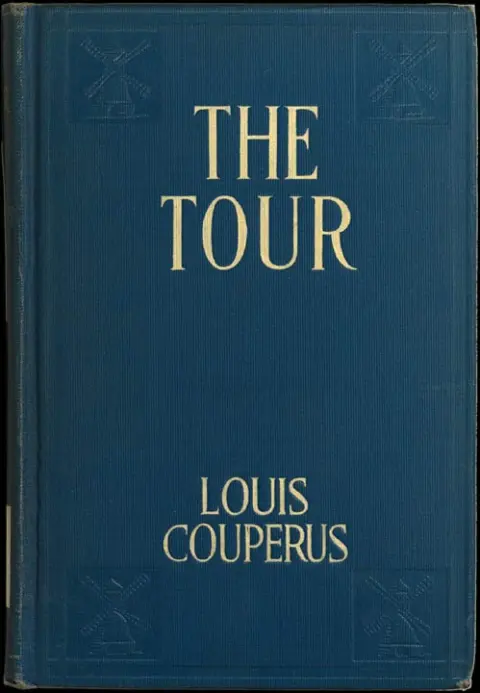
"The Tour: A Story of Ancient Egypt" by Louis Couperus is a historical novel written in the early 20th century." The narrative follows Publius Lucius Sabinus, a young and wealthy Roman noble, as he embarks on a journey to Egypt, wrestling with immense grief over the disappearance of his beloved slave, Ilia. As Lucius navigates this exotic land filled with splendor and mystery, he grapples with his emotions, seeking solace and distraction amid the vibrant culture and rich history of Alexandria. "The opening of the novel sets a hauntingly beautiful scene aboard a ship gliding through the night, where Lucius listens to the melancholic songs of rowers and sailors." As he reflects on his sorrow, the narrative introduces his loyal tutor, Thrasyllus, who attempts to comfort him over Ilia's mysterious disappearance, believed to be at the hands of pirates. Despite the chatter of his companions, Lucius is consumed by despair, culminating in a desperate cry for Ilia. The melancholy atmosphere foreshadows the inner turmoil Lucius will face as he ventures through Egypt, intermingling themes of love, loss, and the pursuit of wisdom against an opulent backdrop.
Introduction adapted from the source catalogue; source summaries may be automatically generated.
Free to read · English · 49,251 words · No account needed
MAKE TIME FOR A GOOD BOOK
On by default. Untick to stop anonymous reading totals. Each page counts after 10 seconds in view. How this works.
Anonymous counting is on unless you have switched it off.
"Lucius," said Thrasyllus, sitting spell-bound at the feet of the young Roman, who sat on a raised throne and gazed in front of him like a priest, full of longing for his dream of that night, "Lucius, my Lord Catullus, look! We have passed Nicopolis, with its amphitheatre and stadium; and yonder lies Taposiris, with Cape Zephyrium; and on a height I can see the temple of Aphrodite Arsinoe."
"I see," said Lucius, turning his eyes towards the temple, which
was lit with lines of fire and rose above the water like a mansion
in Olympus.
"I see," echoed Uncle Catullus, seated by Lucius' side.
"I was reading," Thrasyllus explained, "that at the same place where that temple now stands there once stood the city of Thonis, named after the king who hospitably entreated Menelaus and Helen. Homer mentions it and speaks of the secret herbs and precious balsams which Helen received from Queen Polydamna, Thonis' spouse."
"You know everything, Thrasyllus," said Uncle Catullus, warmly, "and it is a joy to travel with you."
"Tell the slave from Cos to sing the Hymn to Aphrodite as we row past the goddess' temple," said Lucius.
Thrasyllus went to Cora and communicated the master's order. Forthwith a group of singers and dancers rose to their feet. Cora herself struck the resounding chords. And she sang:
"Mother of Eros, hear thy slave!
"Child of the foam, great goddess of love,
Aphrodite, look down from above!
Thou, who dost madden the gods with desire,
Thou, who fulfillest men's hearts with thy fire,
All but the heart of my lord that I crave,
Hark to thy slave!"
She stood as one inspired while she sang, with her fingers on the chords, facing the temple. Around her the girls danced to the song. The movements of their lithe bodies, light as the ripple of a silken scarf in the breeze, met and dissolved in picture after picture with each word of the song. The singer's voice swelled crystal-clear. From the bank of the canal, from the open houses, on the temple-steps the people listened to her song. In the tall reeds lay smaller boats, wherein a man and woman embraced in love. Their hands thrust aside the yielding stems; and their smiles glanced at Cora.
"All but the heart of my lord that I crave,
Hark to thy slave!"
the other singers now sang after her.
"She sings well," said Lucius.
Cora heard him. She blushed crimson between the great rose-coloured flowers at her temples. But she behaved as though she had heard nothing. And she sat down quietly among her companions, at the foot of the silver statue of Aphrodite.
Your reading position is saved on this browser. Take it to another device with a library code. Reading pages adapt to text, rather than matching a printed edition.
BEHIND THE BOOK
This eBook is for the use of anyone anywhere in the United States and most other parts of the world at no cost and with almost no restrictions whatsoever. You may copy it, give it away or re-use it under the terms of the Project Gutenberg License included with this eBook or online at www.gutenberg.org. If you are not located in the United States, you will have to check the laws of the country where you are located before using this eBook. Read the source licence.
The original source file, including credits and licence, is retained by this library. Request an original-format copy at no charge. Please include the book title and Project Gutenberg identifier #37497.
KEEP YOUR CURIOSITY GOING
Cécile Tormay

Moritz Busch
Coulson Kernahan
John L. Ransom

Maurice Baring
Frances Wright

