THE CLASSIC COLLECTION✦Eline VereCLASSIC FREE BOOKS
Eline Vere
Louis Couperus
THE CLASSIC COLLECTION · 1920
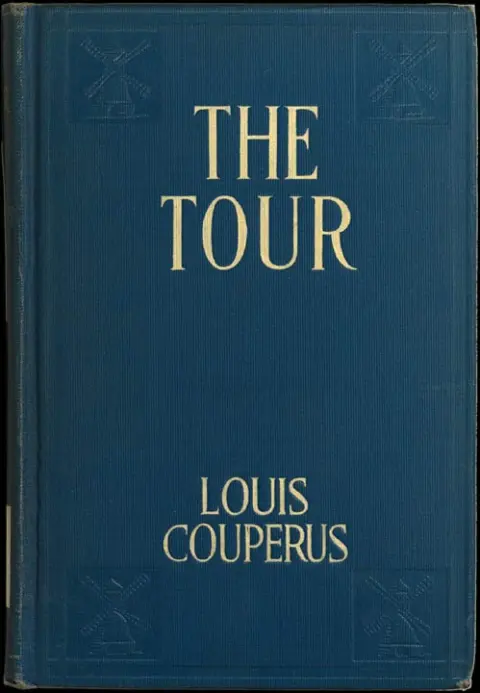
"The Tour: A Story of Ancient Egypt" by Louis Couperus is a historical novel written in the early 20th century." The narrative follows Publius Lucius Sabinus, a young and wealthy Roman noble, as he embarks on a journey to Egypt, wrestling with immense grief over the disappearance of his beloved slave, Ilia. As Lucius navigates this exotic land filled with splendor and mystery, he grapples with his emotions, seeking solace and distraction amid the vibrant culture and rich history of Alexandria. "The opening of the novel sets a hauntingly beautiful scene aboard a ship gliding through the night, where Lucius listens to the melancholic songs of rowers and sailors." As he reflects on his sorrow, the narrative introduces his loyal tutor, Thrasyllus, who attempts to comfort him over Ilia's mysterious disappearance, believed to be at the hands of pirates. Despite the chatter of his companions, Lucius is consumed by despair, culminating in a desperate cry for Ilia. The melancholy atmosphere foreshadows the inner turmoil Lucius will face as he ventures through Egypt, intermingling themes of love, loss, and the pursuit of wisdom against an opulent backdrop.
Introduction adapted from the source catalogue; source summaries may be automatically generated.
Free to read · English · 49,251 words · No account needed
MAKE TIME FOR A GOOD BOOK
On by default. Untick to stop anonymous reading totals. Each page counts after 10 seconds in view. How this works.
Anonymous counting is on unless you have switched it off.
"I want to go to the sibyl," Lucius repeated, panting and with his clenched fists pushing away two women who were hanging on to his arms.
Lucius and Caleb now hurried through a reek of wine past the open brothels and reeking taverns. Caleb stopped in front of a small, narrow door and knocked. It was opened by a little Greek girl, pretty and delicate as a Tanagra figurine, with very large black eyes.
"Is Herophila within?" asked Caleb. "A distinguished foreigner wishes
to consult her."
"I will tell her," said the girl.
They entered a very narrow little chamber. A woman came from behind a curtain. She was shrouded in a white veil, like a phantom; she carried an earthenware lamp; and it was not possible to see if she was young or old.
"Do you wish to know the future?" she asked, in a hollow voice.
"No," said Lucius, "I want to know the past and the present. I want to know where a girl named Ilia is and how she vanished from my house. Here is the sandal which she left behind: the only trace of her. If she ... is dead, can you make her appear before me, so that I may ask her?"
"Yes," said the sibyl, "I can. For I am descended from the witch
of En-dor."
"Who was she?" asked Lucius.
"The witch who made Samuel appear before Saul...."
"I never heard of them," said Lucius.
"And another of my forbears was my honoured namesake, Herophila
of Erythrae."
"Who was she?" asked Lucius.
"She was the custodian of the shrine of Apollo Smintheus, the divine rat-killer. She prophesied to Hecuba the calamity which would cause the death of her son Paris, whom she was bearing in her womb."
"I never heard of her before," Lucius repeated. "Tell me if Ilia
is dead."
The sibyl pressed the blue-leather sandal to her head; and her other hand pressed Lucius' forehead.
"She is not dead!" she cried, in a voice of rapture.
"She is not dead?"
"No, Ilia lives!"
"Where? Where is she?"
The sibyl, in a trance, muttered incomprehensible sounds:
"She appears ... she appears," she stammered, at length.
Suddenly, behind her, the curtains parted. There was nothing there but a smoking tripod. Thick fumes filled the apartment and rolled on high like a heavy curtain.
"She appears ... she appears," the sibyl went on stammering.
Lucius stared breathlessly.
Suddenly, in the fumes, a figure was vaguely outlined as of a dainty woman, flimsy and thin, a shade that moved to and fro.
"I see her!" cried Lucius. "Ilia, Ilia! Speak one word to me! Come back to me! I cannot live without you!"
Your reading position is saved on this browser. Take it to another device with a library code. Reading pages adapt to text, rather than matching a printed edition.
BEHIND THE BOOK
This eBook is for the use of anyone anywhere in the United States and most other parts of the world at no cost and with almost no restrictions whatsoever. You may copy it, give it away or re-use it under the terms of the Project Gutenberg License included with this eBook or online at www.gutenberg.org. If you are not located in the United States, you will have to check the laws of the country where you are located before using this eBook. Read the source licence.
The original source file, including credits and licence, is retained by this library. Request an original-format copy at no charge. Please include the book title and Project Gutenberg identifier #37497.
KEEP YOUR CURIOSITY GOING
Cécile Tormay

Moritz Busch
Coulson Kernahan
John L. Ransom

Maurice Baring
Frances Wright

