THE CLASSIC COLLECTION✦Eline VereCLASSIC FREE BOOKS
Eline Vere
Louis Couperus
THE CLASSIC COLLECTION · 1920
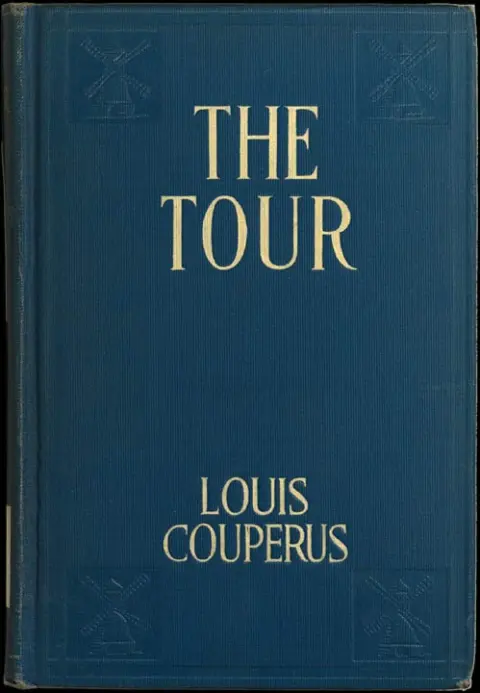
"The Tour: A Story of Ancient Egypt" by Louis Couperus is a historical novel written in the early 20th century." The narrative follows Publius Lucius Sabinus, a young and wealthy Roman noble, as he embarks on a journey to Egypt, wrestling with immense grief over the disappearance of his beloved slave, Ilia. As Lucius navigates this exotic land filled with splendor and mystery, he grapples with his emotions, seeking solace and distraction amid the vibrant culture and rich history of Alexandria. "The opening of the novel sets a hauntingly beautiful scene aboard a ship gliding through the night, where Lucius listens to the melancholic songs of rowers and sailors." As he reflects on his sorrow, the narrative introduces his loyal tutor, Thrasyllus, who attempts to comfort him over Ilia's mysterious disappearance, believed to be at the hands of pirates. Despite the chatter of his companions, Lucius is consumed by despair, culminating in a desperate cry for Ilia. The melancholy atmosphere foreshadows the inner turmoil Lucius will face as he ventures through Egypt, intermingling themes of love, loss, and the pursuit of wisdom against an opulent backdrop.
Introduction adapted from the source catalogue; source summaries may be automatically generated.
Free to read · English · 49,251 words · No account needed
MAKE TIME FOR A GOOD BOOK
On by default. Untick to stop anonymous reading totals. Each page counts after 10 seconds in view. How this works.
Anonymous counting is on unless you have switched it off.
And through these two choirs, through the melancholy singing of the rowers and the jubilant seamen's song, a delicate female voice let fall clear, love-yearning notes, always with a playful and wanton final phrase. It was--while as it were golden beads tinkled from twanged harp-strings: those very bright gold beads which tinkle from the strings of the little four-stringed Lesbian harp--a hymn to the goddess Aphrodite, whose name constantly rang back, plaintively and wantonly, in the singer's Greek, exotically soft against the harder Latin of the men's joy-song and the melodious melancholy phrase of the lower deck....
Publius Lucius Sabinus lay on the prow in a pavilion of Tyrian red-silk curtains and listened. The music sounding up from his ship in the silver-pure, windless night, through the blissful, wide-pure, star-strewn air, brought him a moment's respite from grief. He lay calmer now, sated with despair, with his soul of sorrow as it were bathed in the melodious music. He stared, as though without thinking, now almost free from grief, at the silver statue of Aphrodite, the patroness of his ship, in front of which an alabaster lamp burned, while a light spiral of nard curled around the goddess' feet from an incense-boat.
It was not possible to feel always, always, the same vehement grief. To-morrow, nay, in an hour, the sorrow would resume its violence; now, in this night of coolness and melody, there was just a brief rest, a moment of annihilation, almost a sense of wistful well-being. And, in this calmer mood, Lucius felt a need to speak a friendly word to his old friend and tutor, as he had not done since the voyage began.
He struck the gong beside his couch; and a little black slave appeared.
"Tarrar," said Lucius, "find Thrasyllus for me and tell him that I
await him."
The little Libyan slave, looking like a monkey in his scanty, many-coloured coat, made a drolly serious movement of reverence, crept backwards and disappeared. It was not long before he lifted the hanging and Thrasyllus stepped into the presence of his young master, Publius Lucius Sabinus.
The pedagogue, or tutor, was an elderly freedman, tall, lean, serious, grey-haired and grey-bearded. His eyes were kindly; his mouth wore a fatherly smile.
Lucius, without rising, stretched out his hand to him:
"Thrasyllus," he said, "forgive me if I have been unkind."
This was all that he said. His voice sounded deep, manly and earnest. The old tutor had taken a seat on a footstool beside his master's couch. And, holding the other's hand for a moment in his own, he said:
Your reading position is saved on this browser. Take it to another device with a library code. Reading pages adapt to text, rather than matching a printed edition.
BEHIND THE BOOK
This eBook is for the use of anyone anywhere in the United States and most other parts of the world at no cost and with almost no restrictions whatsoever. You may copy it, give it away or re-use it under the terms of the Project Gutenberg License included with this eBook or online at www.gutenberg.org. If you are not located in the United States, you will have to check the laws of the country where you are located before using this eBook. Read the source licence.
The original source file, including credits and licence, is retained by this library. Request an original-format copy at no charge. Please include the book title and Project Gutenberg identifier #37497.
KEEP YOUR CURIOSITY GOING
Cécile Tormay

Moritz Busch
Coulson Kernahan
John L. Ransom

Maurice Baring
Frances Wright

