THE CLASSIC COLLECTION✦Eline VereCLASSIC FREE BOOKS
Eline Vere
Louis Couperus
THE CLASSIC COLLECTION · 1920
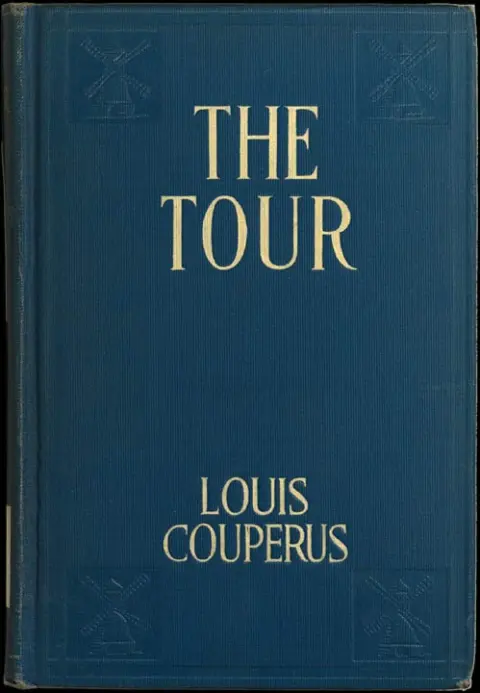
"The Tour: A Story of Ancient Egypt" by Louis Couperus is a historical novel written in the early 20th century." The narrative follows Publius Lucius Sabinus, a young and wealthy Roman noble, as he embarks on a journey to Egypt, wrestling with immense grief over the disappearance of his beloved slave, Ilia. As Lucius navigates this exotic land filled with splendor and mystery, he grapples with his emotions, seeking solace and distraction amid the vibrant culture and rich history of Alexandria. "The opening of the novel sets a hauntingly beautiful scene aboard a ship gliding through the night, where Lucius listens to the melancholic songs of rowers and sailors." As he reflects on his sorrow, the narrative introduces his loyal tutor, Thrasyllus, who attempts to comfort him over Ilia's mysterious disappearance, believed to be at the hands of pirates. Despite the chatter of his companions, Lucius is consumed by despair, culminating in a desperate cry for Ilia. The melancholy atmosphere foreshadows the inner turmoil Lucius will face as he ventures through Egypt, intermingling themes of love, loss, and the pursuit of wisdom against an opulent backdrop.
Introduction adapted from the source catalogue; source summaries may be automatically generated.
Free to read · English · 49,251 words · No account needed
MAKE TIME FOR A GOOD BOOK
On by default. Untick to stop anonymous reading totals. Each page counts after 10 seconds in view. How this works.
Anonymous counting is on unless you have switched it off.
And they waved again and again; and Cora, with her harp pressed to her bosom, sang the song of welcome to the ship; and her voice sounded jubilant and clear, full of happiness and full of gladness. The ropes were flung ashore, the ship lay moored....
But what was the anxiety that covered the faces of all on board, who were now preparing to walk across the gangway to the jetty? Why did Uncle Catullus lift his hands on high and shake his head, pinned round so comically in his travelling-veil? And what was it that Vettius and Rufus were saying to each other with much gesticulation and why did they now all land with such embarrassed faces?
"Well, Lucius," said Uncle Catullus, embracing him, "you're looking splendid, my dear fellow, splendid, brown and bronzed as a Nimrod; and your arms feel hard and your eyes are bright and your mouth is laughing happily and you look very different from what you were when we left Baiae.... Ah, my dear, dear Lucius! Fortune is blind and fate is a riddle and we poor mortals are the playthings of the cruel gods; and we never know, in the midst of our delight and gladness, what is hanging over our heads ... especially when travelling, dear boy: my dear boy, especially when travelling!"
"But why especially when travelling, my dear uncle?" asked Lucius,
laughing.
And he led his uncle into the diversorium; and his uncle was now weeping; and his slaves unpinned his travelling-veil for him and relieved him of his travelling-cloak; and Vettius and Rufus also looked so strange and so gloomy and solemn; and it was as though the air were filled with dread.
"But, Uncle Catullus," said Lucius, "what has happened?"
"My dear, dear boy," Uncle Catullus kept on tediously repeating, "I ... I really can not tell you."
And he wrung his hands and wept; and Thrasyllus turned pale and Cora turned pale and Rufus looked gloomy.
"No," repeated Uncle Catullus, "I really can not tell Lucius. You tell him, Vettius, you tell him."
"My Lord Catullus," said Vettius, at last, in despair, "how can I tell my Lord Lucius? If I do, he will fly into a passion and kill me; but, perhaps, if Rufus will tell him ..."
"I will not, I will not," said Rufus, warding off the suggestion with both hands. "By all the gods, Vettius, I will not tell him."
"Nor will I," said Uncle Catullus, moaning and weeping.
Lucius now knitted his brows and said:
Your reading position is saved on this browser. Take it to another device with a library code. Reading pages adapt to text, rather than matching a printed edition.
BEHIND THE BOOK
This eBook is for the use of anyone anywhere in the United States and most other parts of the world at no cost and with almost no restrictions whatsoever. You may copy it, give it away or re-use it under the terms of the Project Gutenberg License included with this eBook or online at www.gutenberg.org. If you are not located in the United States, you will have to check the laws of the country where you are located before using this eBook. Read the source licence.
The original source file, including credits and licence, is retained by this library. Request an original-format copy at no charge. Please include the book title and Project Gutenberg identifier #37497.
KEEP YOUR CURIOSITY GOING
Cécile Tormay

Moritz Busch
Coulson Kernahan
John L. Ransom

Maurice Baring
Frances Wright

