Fortune
J. C. (John Collis) Snaith
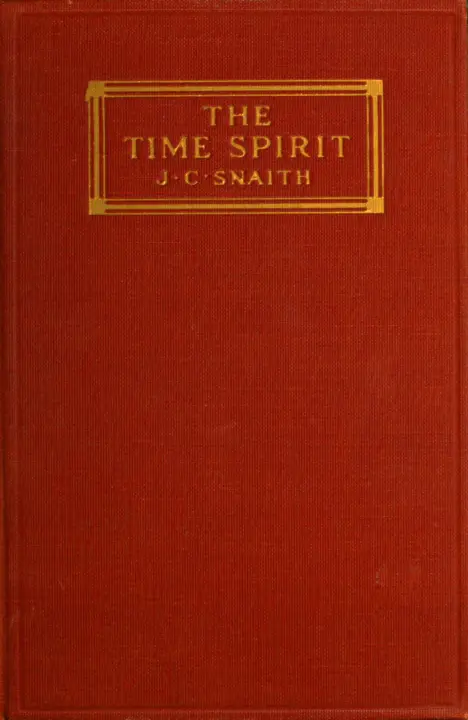
THE CLASSIC COLLECTION · 1918
"The Time Spirit: A Romantic Tale" by J. C. Snaith is a novel written in the early 20th century. This romantic tale unfolds within the context of Victorian England, focusing on the life of Harriet Sanderson, a striking young housekeeper for the Duke of Bridport, as she navigates familial relationships, societal expectations, and her own ambitions. Central to the story are her interactions with her sister Eliza and a charming young constable named Dugald Maclean, who seems to have romantic designs on Harriet. At the start of the novel, a foggy November evening leads Harriet to the welcoming embrace of her sister Eliza, where comforting tea and chatter ensue. Harriet, recovering from a recent illness and returning to her significant new role at Buntisford Hall, is met with the admiration of Eliza, who marvels at her sister's accomplishments. The dynamic shifts when a young police constable named Dugald arrives, attempting to make his mark with a poem dedicated to Harriet. This sets the stage for both comedic and romantic tension, introducing themes of social class, personal ambition, and the complications of love in a time of strict societal norms. The opening chapters establish character depth and lay the groundwork for the unfolding relationships, hinting at the struggles Harriet may face in balancing her duty and desires.
Introduction adapted from the source catalogue; source summaries may be automatically generated.
Free to read · English · 82,647 words · No account needed
MAKE TIME FOR A GOOD BOOK
On by default. Untick to stop anonymous reading totals. Each page counts after 10 seconds in view. How this works.
Anonymous counting is on unless you have switched it off.
Meanwhile his Grace in his favorite chair in his favorite room, was doing his best to envisage “The Outlook for Democracy,” with the aid of the Quarterly Review. Of a sudden the clock on the chimneypiece chimed a quarter past three, and he laid down an article perfect alike in form, taste and scholarship, with the air of one who expects something to happen.
Something did happen. In almost the same moment, the housekeeper, Mrs. Sanderson, came into the room. She carried a tray containing a glass, a spoon, and a bottle.
His Grace shook his head. “I’ve had a glass of Madeira.”
“How could you be so unwise!” It was the gentle, half-smiling tone of a mother who reproves a very dear but willful child.
She measured the draught inflexibly and he drank it like a man. As he returned the glass to the tray he sighed a little, and then with a whimsical glance upwards he said slowly and softly, “She has her mother’s brains.”
As she looked down upon him, he saw the color darkening a strong and beautiful face. “And her father’s eyes.” The warmth of her voice almost stifled the words.
For nearly a minute there was so deep a silence that even the clock on the chimneypiece was lost in it. And then very slowly and gently, as one who thinks aloud, he said, “I am trying to remember those words of Milton.” He closed his eyes with a smile of perplexity. “Ah, yes, yes. I have them now:
“‘He for God only, she for God in him.’”
On pages 43 and 51, Number Five Beaconsfield has been changed to Number
Five, Beaconsfield.
On page 53, universed has been changed to unversed.
On page 58, spirt has been changed to spirit.
On page 59, réclamce has been changed to réclame.
On pages 72 and 218, a period has been added to Mrs.
On page 88, Majorie has been changed to Marjorie.
On page 90, Majorie’s has been changed to Marjorie’s.
On pages 97, 107 and 117, commonsense has been changed to common sense.
On page 102, the single quote has been removed from America’s.
On page 130, the single quote has been removed from Wren’s.
On page 143, decidely has been changed to decidedly.
On page 163, cause has been changed to course.
On page 188, the single quote has been removed from Parington’s.
On page 235, Panjandram has been changerd to Panjandrum.
On page 239, efficiency has been changed to efficiently.
On page 259, redoutable has been changed to redoubtable.
On page 266, a closing double quote has been added to “Whom do you mean?.
On page 267, familar has been changed to familiar.
Your reading position is saved on this browser. Take it to another device with a library code. Reading pages adapt to text, rather than matching a printed edition.
J. C. (John Collis) Snaith

J. C. (John Collis) Snaith
J. C. (John Collis) Snaith

J. C. (John Collis) Snaith
BEHIND THE BOOK
This eBook is for the use of anyone anywhere in the United States and most other parts of the world at no cost and with almost no restrictions whatsoever. You may copy it, give it away or re-use it under the terms of the Project Gutenberg License included with this eBook or online at www.gutenberg.org. If you are not located in the United States, you will have to check the laws of the country where you are located before using this eBook. Read the source licence.
The original source file, including credits and licence, is retained by this library. Request an original-format copy at no charge. Please include the book title and Project Gutenberg identifier #68398.
KEEP YOUR CURIOSITY GOING
Coulson Kernahan

Maurice Baring
Frances Wright
Cécile Tormay

Frederic Jesup Stimson

W. H. P. (William Henry Pope) Jarvis