Fortune
J. C. (John Collis) Snaith
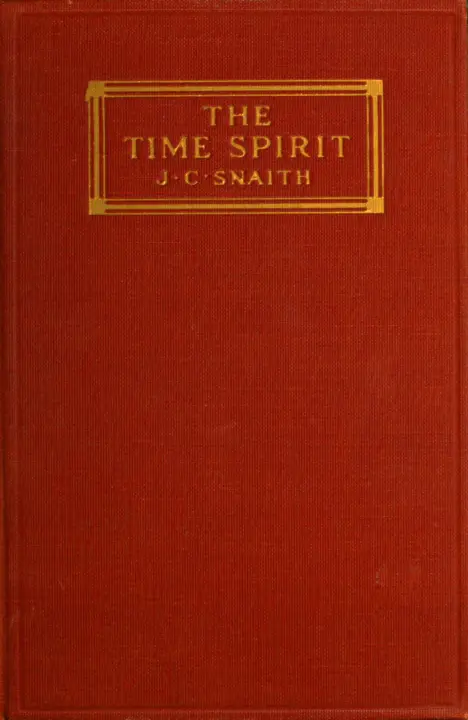
THE CLASSIC COLLECTION · 1918
"The Time Spirit: A Romantic Tale" by J. C. Snaith is a novel written in the early 20th century. This romantic tale unfolds within the context of Victorian England, focusing on the life of Harriet Sanderson, a striking young housekeeper for the Duke of Bridport, as she navigates familial relationships, societal expectations, and her own ambitions. Central to the story are her interactions with her sister Eliza and a charming young constable named Dugald Maclean, who seems to have romantic designs on Harriet. At the start of the novel, a foggy November evening leads Harriet to the welcoming embrace of her sister Eliza, where comforting tea and chatter ensue. Harriet, recovering from a recent illness and returning to her significant new role at Buntisford Hall, is met with the admiration of Eliza, who marvels at her sister's accomplishments. The dynamic shifts when a young police constable named Dugald arrives, attempting to make his mark with a poem dedicated to Harriet. This sets the stage for both comedic and romantic tension, introducing themes of social class, personal ambition, and the complications of love in a time of strict societal norms. The opening chapters establish character depth and lay the groundwork for the unfolding relationships, hinting at the struggles Harriet may face in balancing her duty and desires.
Introduction adapted from the source catalogue; source summaries may be automatically generated.
Free to read · English · 82,647 words · No account needed
MAKE TIME FOR A GOOD BOOK
On by default. Untick to stop anonymous reading totals. Each page counts after 10 seconds in view. How this works.
Anonymous counting is on unless you have switched it off.
It was clear from the Duke’s manner that as far as he was concerned the interview was at an end. But Sir Dugald had made up his mind to carry the matter a step farther. He was a bold man, his position was stronger than his Grace had reason to guess, moreover, a powerful will had been reënforced by a growing animosity.
“Before I go,” said Sir Dugald, “there is one last word, and to me it seems of great importance.”
The Duke sat silent, a stony eye fixed upon his visitor.
“First, let me say as one man of the world to another, that your objection to my marrying Lady Muriel is injudicious.”
“No doubt--from your point of view. But we won’t go into that.”
“On the contrary, I think we had better. As I say, it is injudicious. We have fully made up our minds to marry. You can’t hinder us, you know--so why make things uncomfortable?”
“Because I dislike it, sir--I dislike it intensely!” His Grace was suddenly overwhelmed by his feelings.
“Do you mind stating the grounds of your objection?”
“It would be tedious to enumerate them.”
“Well, I’d like you to realize the advantages of letting things go on
as they are.”
“There are none so far as one can see at the moment.”
“We are coming to them now,” said Sir Dugald blandly. “In the first place, has it occurred to you that I may know the history of Mr. Dinneford’s fiancée?”
The Duke stared fixedly at the man before him. “What do you mean?” he
said.
“Suppose one happens to know her secret?”
“Her secret!”
“Her origin and early history.”
“What do you mean?”
“Is there really any need to ask the question?”
The Duke shook his head perplexedly. “I’m afraid I don’t follow you.”
“Well,” said Sir Dugald coolly, “it happens that you are the one man in the world who is in a position to answer the question I have ventured to ask.”
They looked at each other. A rather deadly silence followed.
“The question you have ventured to ask.” The Duke repeated the words slowly, but with a reluctance and a venom he could not conceal.
“You know perfectly well what I mean.” The tone, direct and cool, was
exasperating.
“Are you trying to blackmail me?” There was an ugly light in the Duke’s
eyes.
Sir Dugald laughed. “Why put the matter so crudely?” he said. “I am merely anxious that justice should be done. You ought to be grateful to Providence for giving you this opportunity.”
“Opportunity?”
“To right the wrong that has been committed.”
“I don’t understand.”
Your reading position is saved on this browser. Take it to another device with a library code. Reading pages adapt to text, rather than matching a printed edition.
J. C. (John Collis) Snaith
J. C. (John Collis) Snaith
J. C. (John Collis) Snaith
J. C. (John Collis) Snaith
BEHIND THE BOOK
This eBook is for the use of anyone anywhere in the United States and most other parts of the world at no cost and with almost no restrictions whatsoever. You may copy it, give it away or re-use it under the terms of the Project Gutenberg License included with this eBook or online at www.gutenberg.org. If you are not located in the United States, you will have to check the laws of the country where you are located before using this eBook. Read the source licence.
The original source file, including credits and licence, is retained by this library. Request an original-format copy at no charge. Please include the book title and Project Gutenberg identifier #68398.
KEEP YOUR CURIOSITY GOING
Coulson Kernahan

Maurice Baring
Frances Wright
Cécile Tormay

Frederic Jesup Stimson

W. H. P. (William Henry Pope) Jarvis