THE CLASSIC COLLECTION✦The haunts of menCLASSIC FREE BOOKS
The haunts of men
Robert W. (Robert William) Chambers
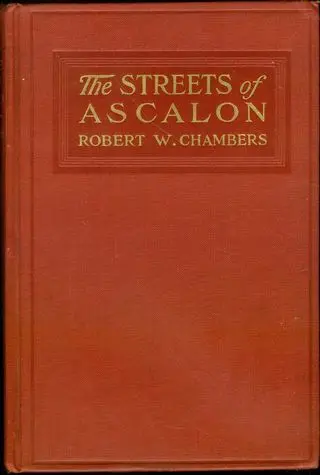
THE CLASSIC COLLECTION · 1912
"The Streets of Ascalon: Episodes in the Unfinished Career of Richard Quarren" by Robert W. Chambers is a novel written in the early 20th century. This work chronicles the life and social entanglements of Richard Quarren, a young man navigating the complexities and distractions of upper-class society in New York City. The theme centers around Quarren's struggles with financial instability and the influence of a glamorous yet superficial social circle that threatens to derail his ambitions. The opening of the novel introduces readers to Quarren's world through a casual gathering of friends at their residence, humorously dubbed the "Irish Legation." Here, his friends Lacy and O'Hara express their concern for Quarren's careless attitude towards finance as they prepare for a tea visit from two women, one of whom is the recently widowed and captivating Strelsa Leeds. The conversation reveals the dynamics of male camaraderie while highlighting Quarren's carefree nature and the growing apprehension of his friends regarding his social choices. The dialogue sets the stage for exploring Quarren’s character and foreshadows his impending relationship with Strelsa, marking the beginning of deeper interpersonal conflicts and societal critiques.
Introduction adapted from the source catalogue; source summaries may be automatically generated.
Free to read · English · 107,952 words · No account needed
MAKE TIME FOR A GOOD BOOK
On by default. Untick to stop anonymous reading totals. Each page counts after 10 seconds in view. How this works.
Anonymous counting is on unless you have switched it off.
Into the long stables at South Linden, that afternoon, Langly Sprowl's trembling horse was led limping, his velvet flanks all torn by spurs and caked with mud, his tender mouth badly lacerated.
As for his master, it seemed that the ruin of the expensive hunter and four hours' violent and capricious exercise in his reeking saddle had merely whetted his appetite for more violence; and he had been tramping for an hour up and down the length of the library in his big sprawling house when Mr. Kyte, his confidential secretary, came in without knocking.
Sprowl hearing his step swung on him savagely, but Kyte coolly closed the door behind him and turned the key.
"Ledwith is here," he said.
"Ledwith," repeated Sprowl, mechanically.
"Yes, he's on the veranda. They said you were not at home. He said he'd wait. I thought you ought to know. He acts queerly."
Langly's protruding eyes became utterly expressionless.
"All right," he said in dismissal.
Kyte still lingered:
"Is there anything I can say or do?"
"If there was I'd tell you, wouldn't I?"
Kyte's lowered gaze stole upward toward his employer, sustained his expressionless glare for a second, then shifted.
"Very well," he said unlocking the library door; "I thought he might be
armed, that's all."
"Kyte!"
Mr. Kyte turned on the door-sill.
"What do you mean by saying that?"
"Saying what?"
"That you think this fellow Ledwith may be armed?"
Kyte stood silent.
"I ask you again," repeated Sprowl, "why you infer that this man might have armed himself to visit this house?"
Kyte's eyes stole upward, were instantly lowered. Sprowl walked over to
him.
"You're paid to act, not think; do you understand?" he said in a husky, suppressed voice; but his long fingers were twitching.
"I understand," said Kyte.
Sprowl's lean head jerked; Kyte went; and the master of the house strode back into the library and resumed his pacing.
Boots, spurs, the skirts of his riding coat, even his stock were stained with mud and lather; and there was a spot or two across his sun-tanned cheeks.
Presently he walked to the bay-window which commanded part of the west veranda, and looking out through the lace curtains saw Ledwith sitting there, his sunken eyes fixed on the westering sun.
The man's clothing hung loosely on his frame, showing bony angles at elbow and knee. Burrs and black swamp-mud stuck to his knickerbockers and golf-stockings; he sat very still save for a constant twitching of the muscles.
Your reading position is saved on this browser. Take it to another device with a library code. Reading pages adapt to text, rather than matching a printed edition.
Robert W. (Robert William) Chambers
Robert W. (Robert William) Chambers

Robert W. (Robert William) Chambers
Robert W. (Robert William) Chambers
BEHIND THE BOOK
This eBook is for the use of anyone anywhere in the United States and most other parts of the world at no cost and with almost no restrictions whatsoever. You may copy it, give it away or re-use it under the terms of the Project Gutenberg License included with this eBook or online at www.gutenberg.org. If you are not located in the United States, you will have to check the laws of the country where you are located before using this eBook. Read the source licence.
The original source file, including credits and licence, is retained by this library. Request an original-format copy at no charge. Please include the book title and Project Gutenberg identifier #35233.
KEEP YOUR CURIOSITY GOING
Coulson Kernahan

Maurice Baring
Frances Wright
Cécile Tormay

Frederic Jesup Stimson

W. H. P. (William Henry Pope) Jarvis