THE CLASSIC COLLECTION✦An outlaw’s diary: the CommuneCLASSIC FREE BOOKS
An outlaw’s diary: the Commune
Cécile Tormay
THE CLASSIC COLLECTION · 1905
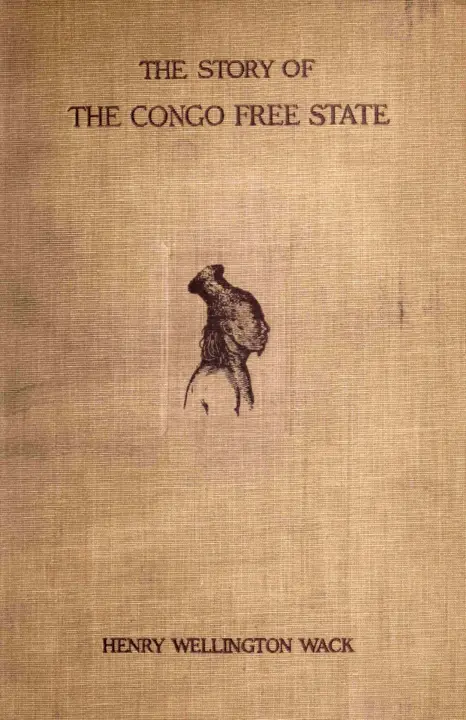
"The Story of the Congo Free State: Social, Political, and Economic Aspects of the Belgian System of Government in Central Africa" by Henry Wellington Wack is a historical account written in the early 20th century. This work delves into the intricate founding and operations of the Congo Free State, highlighting the perceived humanitarian motives behind King Leopold II's governance while addressing the ensuing controversies and criticisms. The book provides a comprehensive overview of the socio-political dynamics during this period of colonization. The opening of the book introduces Wack's motivations for writing, stating his aim to present a balanced and factual account of the Congo Free State amidst growing criticism of King Leopold II's regime. Wack recounts his observations of an organized campaign against the Congo government during his time in the UK and the United States, feeling an obligation to counter the negative narratives about the state. He describes gaining access to archival documents from King Leopold's administration to ensure the authenticity of his account, aiming to clarify the benevolent intentions attributed to the establishment of the Congo Free State. This introduction sets the stage for a detailed exploration of the complexities surrounding the administration of the area, tangled in both altruistic ambition and imperialistic pursuits.
Introduction adapted from the source catalogue; source summaries may be automatically generated.
Free to read · English · 200,810 words · No account needed
MAKE TIME FOR A GOOD BOOK
On by default. Untick to stop anonymous reading totals. Each page counts after 10 seconds in view. How this works.
Anonymous counting is on unless you have switched it off.
Gentlemen, I must limit very closely the observations which I was going to make to you. My learned friend and I had somewhat laboriously prepared ourselves for dealing with all the possible issues of fact that might be raised in this case that were suggested by the accusations against Captain De Keyser. That has passed out of the case, and I must treat very shortly the questions with which I should otherwise have had at some length to deal. It is essential when you are considering the persons against whom, if I prove the publication, your verdict must go, for you to consider who those persons are. The accusations which were made have been made by Captain Burrows and published by the Everetts, and were accusations which concerned the course of government in the Congo Free State, a matter which has attracted great attention from time to time and with regard to which certain very strong statements have been made in this country and elsewhere.
Now, Gentlemen, the Congo Free State is a State which, as a separate and independent State, has not existed very long. It was in the year 1884 or 1885 that that State was constituted under the Government of the King of the Belgians, who is called the King Sovereign of the State, and it has from that time been administered by Belgian authorities as the authority of the Free State. It has been a Government in process of construction, and it was not, perhaps, until the year 1891 that it can be said that there was an organised system of government extending over the Congo Free State. It is an enormous area of over 800,000 square miles. It is an area scantily populated, but populated by savages of almost the lowest type of existence, savages among whom the practice of cannibalism, the practice of mutilation of enemies who have been killed in battle, and of violent punishments as between one tribe and another, had reigned without check until the representatives of civilisation came, in the officers of the Congo Free State, and established some sort of organisation and government throughout that country. The difficulties have been enormous. The difficulty of dealing with an area of more than 800,000 square miles with only a very few hundred white men who were in command of black troops, drawn from the very tribes whose habits I just now referred to, has been enormous. It has been one of the most anxious and difficult tasks that a civilised country ever undertook. That task has been fulfilled—on the whole with signal success. No set of men are absolutely free from reproach. The position of the representatives of the Congo Free State has been an extremely difficult one. At the time when Captain De Keyser went out, a captain and seventy-five men had been killed a few weeks before, very near to the place where he was sent to carry on his work. Every white man is surrounded by hundreds or thousands of black men, and is in a position not only of great responsibility but of great personal danger and of great difficulty, and there may have been here and there a default on the part of now one and now another of the officers in the employ of the Congo Free State. It has not been the fault of that State, for from time to time orders have been issued to the officers of the Free State, by which it has been attempted to prevent any sort of misconduct, and there have been administrative orders by which severe punishments have been inflicted on the natives for cannibalism or for the mutilation of persons who have been killed in battle, and this amelioration of the condition of the people has been going on with great success. Captain Burrows, who wrote against Captain De Keyser these most atrocious libels, has been on two occasions in the employment of the Congo Free State. He was employed there from June, 1894, until September, 1897. He never had an opportunity of seeing or knowing the character of the work which Captain De Keyser did, for they were together only fourteen days in the year 1897. But from 1894 to 1897 Captain Burrows was out in the Congo Free State. He came back to Europe in 1897, and the first interesting circumstance about him is that he became at once the champion of the Congo Free State against allegations made by Captain Salusbury. In 1896 Captain Salusbury had made accusations against certain officers of the Congo Free State, and one of his allegations had been that there were mutilations—hand-cutting and the like. Captain Burrows made himself the defender of the Congo Free State and of its administration. He had had four years’ experience, and he sought an interview with the Étoile Belge, and had a conversation with the representative of that newspaper, which was published; and you will find in a letter from Captain Burrows that he takes to himself the credit for what he had done in getting rid of, or answering, the accusations of Captain Salusbury. I will read a line or two from this statement: “As for his accusations,”—that is, Captain Salusbury’s accusations against the Congo State and the Belgian officers who employ him,—“they fail from the outset. It is without any compulsion that the natives enlist in the public forces. The harvest of ivory and caoutchouc gives rise to no atrocity. I have witnessed none of the odious deeds related by Captain Salusbury, and they certainly would have come to my knowledge if they had been real. I say this for the simple reason that it is true.” Then at the end he says as to the action of the Government: “With such accounts one is silent instead of becoming an accuser. I do not pretend that all is perfect at Congo. It certainly commits errors sometimes, but truth compels me to state that the Government seeks only to redress them, and to punish those who have been guilty of it. The Belgian officers do not use their men brutally at will as Captain Salusbury has affirmed. Indeed, the soldiers are much attached to the greater number of their white chiefs, and the latter can confidently count on their courage and devotion in time of war.”
Your reading position is saved on this browser. Take it to another device with a library code. Reading pages adapt to text, rather than matching a printed edition.
BEHIND THE BOOK
This eBook is for the use of anyone anywhere in the United States and most other parts of the world at no cost and with almost no restrictions whatsoever. You may copy it, give it away or re-use it under the terms of the Project Gutenberg License included with this eBook or online at www.gutenberg.org. If you are not located in the United States, you will have to check the laws of the country where you are located before using this eBook. Read the source licence.
The original source file, including credits and licence, is retained by this library. Request an original-format copy at no charge. Please include the book title and Project Gutenberg identifier #70280.
KEEP YOUR CURIOSITY GOING
Cécile Tormay

Moritz Busch
John L. Ransom
Frances Wright
Cécile Tormay

Mabel Potter Daggett