THE CLASSIC COLLECTION✦An outlaw’s diary: the CommuneCLASSIC FREE BOOKS
An outlaw’s diary: the Commune
Cécile Tormay
THE CLASSIC COLLECTION · 1905
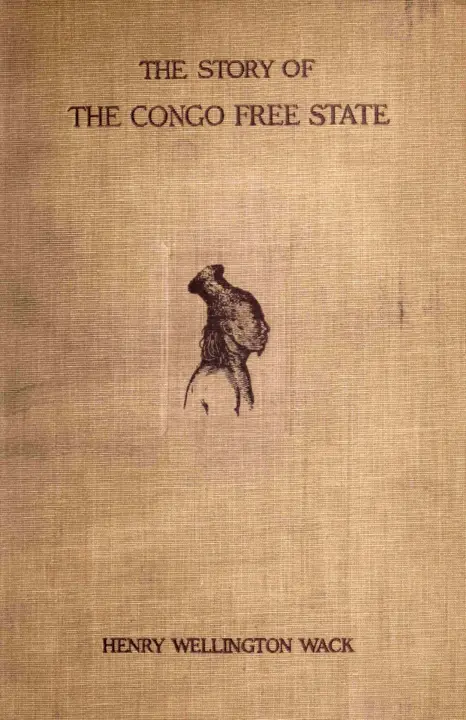
"The Story of the Congo Free State: Social, Political, and Economic Aspects of the Belgian System of Government in Central Africa" by Henry Wellington Wack is a historical account written in the early 20th century. This work delves into the intricate founding and operations of the Congo Free State, highlighting the perceived humanitarian motives behind King Leopold II's governance while addressing the ensuing controversies and criticisms. The book provides a comprehensive overview of the socio-political dynamics during this period of colonization. The opening of the book introduces Wack's motivations for writing, stating his aim to present a balanced and factual account of the Congo Free State amidst growing criticism of King Leopold II's regime. Wack recounts his observations of an organized campaign against the Congo government during his time in the UK and the United States, feeling an obligation to counter the negative narratives about the state. He describes gaining access to archival documents from King Leopold's administration to ensure the authenticity of his account, aiming to clarify the benevolent intentions attributed to the establishment of the Congo Free State. This introduction sets the stage for a detailed exploration of the complexities surrounding the administration of the area, tangled in both altruistic ambition and imperialistic pursuits.
Introduction adapted from the source catalogue; source summaries may be automatically generated.
Free to read · English · 200,810 words · No account needed
MAKE TIME FOR A GOOD BOOK
On by default. Untick to stop anonymous reading totals. Each page counts after 10 seconds in view. How this works.
Anonymous counting is on unless you have switched it off.
Defendants’ counsel opened the case by asking leave of the Court to withdraw his clients’ plea of justification, by which, in popular terms, he stated that Captain Burrows was unable to prove any of the monstrous accusations he had made against Captain De Keyser and his colleagues, in the book which contained the libels complained of. After this dramatic collapse of previous pretence, Sir Edward Clarke proceeded with the case as follows:
May it please your Lordship.—Gentlemen of the Jury, I feel bound to preface the observations that I have to make to you upon this case by just a very short reference to what has taken place this morning. A very sudden transformation has occurred in the condition of the case, and in the issues which are to be put before you. In February last year Captain De Keyser, a gentleman who has served in the Belgian Army, and who has been employed in the Congo Free State, found himself compelled, by circumstances which I shall explain to you in a few minutes, to take the opportunity of bringing this action against Captain Burrows and against some London publishers in respect of accusations against him of the gravest possible kind—accusations dishonouring to his character as a man of honour and as a man of humanity, and dishonouring to him as an officer in the Belgian Army; and he brought his action in February last year. Thereupon, in the course of the year, Captain Burrows puts on a defence in the month of April or May, and Messrs. Everett & Company put on a defence in the month of August, in which they say that those accusations against Captain De Keyser were true; and what were called Particulars, to which, however, I need not now refer, were put in, in which it was alleged that Captain De Keyser had been guilty of infamous conduct as a servant of the Government of the Congo Free State. This case has gone on month after month. There have been questions as to the time when it should be tried, and those who were advising Captain De Keyser and those who are interested in this matter have had the anxious duty of taking care that it never could possibly be said that the Defendants did not have a fair opportunity of trial. The case stood over for a considerable time, and even so lately as when it was before the Lord Chief Justice there was a practical assent on the part of the Plaintiffs to the postponement of the case in order that no one should ever say that the Defendants had not the fullest opportunity of putting their case before you; and now, at this moment, when we come into Court to-day, suddenly, the statement that the accusations are true is absolutely struck out. Not only do the Defendants say that they are not prepared to call witnesses to support the allegation that those allegations are true, but they appear not to be prepared even to challenge Captain De Keyser himself, or to ask him any questions as to his conduct in the Congo Free State. I do not know how far I may be allowed to go—how far it may be possible in the present state of the Pleadings for me to get any absolute vindication of Captain De Keyser in this Court. I daresay my Lord will be indulgent with me with regard to that, looking at the very cruel position in which this gallant officer has been placed by accusations made against him which might affect, and, I believe, have affected him, very seriously in private life—accusations which have come to be known and to be talked about—accusations, as he was prepared to show, which were absolutely untrue, and accusations at the very last moment withdrawn, struck away from the Record, when not only has he been here prepared to give his evidence, but when we have tried to get, and succeeded in getting, as many of those as could be possibly called here who were associated with him in his responsible work in the Congo Free State to carry to a demonstration the proof that he could give that there was not a tittle of foundation for the injurious statements that have been made about him. Now, at the last moment, it comes to a question of publication, and my learned friends have taken the position that if I can prove against them that there was a publication of these libels, then they are without a defence, and are not able to say that there is any truth in the statements that they have made, and must submit to such verdict as you may give in the matter. As to the verdict, I do not know whether, in the ultimate results, the amount of it will matter very much, but you may think, when you hear the statement I have to make to you with regard to the publication of these accusations, that it is a case in which, whether there is ever any possibility of recovering the money or not, at all events there should be a very definite expression of your view with regard to the conduct that these parties have pursued. I shall prove not only a publication, but I shall prove an attempt to blackmail the Belgian authorities, and the authorities of the Congo Free State, by these people in conjunction, Captain Burrows and Everett & Co. I believe I shall prove it up to the hilt, and then it will be for you to say, by your verdict, what you think of the conduct of which they have been guilty.
Your reading position is saved on this browser. Take it to another device with a library code. Reading pages adapt to text, rather than matching a printed edition.
BEHIND THE BOOK
This eBook is for the use of anyone anywhere in the United States and most other parts of the world at no cost and with almost no restrictions whatsoever. You may copy it, give it away or re-use it under the terms of the Project Gutenberg License included with this eBook or online at www.gutenberg.org. If you are not located in the United States, you will have to check the laws of the country where you are located before using this eBook. Read the source licence.
The original source file, including credits and licence, is retained by this library. Request an original-format copy at no charge. Please include the book title and Project Gutenberg identifier #70280.
KEEP YOUR CURIOSITY GOING
Cécile Tormay

Moritz Busch
John L. Ransom
Frances Wright
Cécile Tormay

Mabel Potter Daggett