THE CLASSIC COLLECTION✦An outlaw’s diary: the CommuneCLASSIC FREE BOOKS
An outlaw’s diary: the Commune
Cécile Tormay
THE CLASSIC COLLECTION · 1905
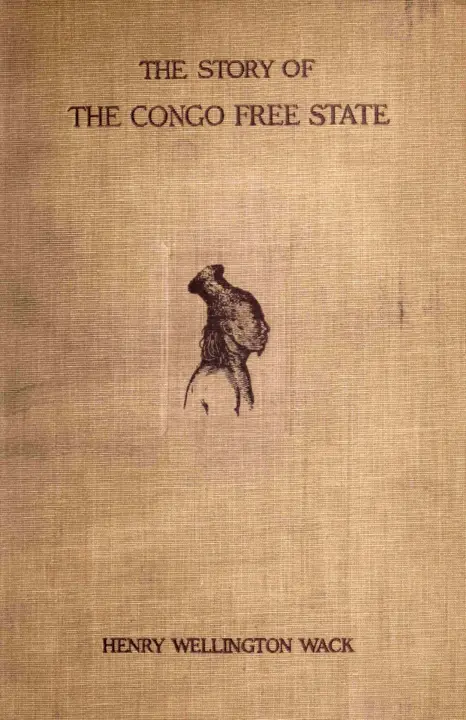
"The Story of the Congo Free State: Social, Political, and Economic Aspects of the Belgian System of Government in Central Africa" by Henry Wellington Wack is a historical account written in the early 20th century. This work delves into the intricate founding and operations of the Congo Free State, highlighting the perceived humanitarian motives behind King Leopold II's governance while addressing the ensuing controversies and criticisms. The book provides a comprehensive overview of the socio-political dynamics during this period of colonization. The opening of the book introduces Wack's motivations for writing, stating his aim to present a balanced and factual account of the Congo Free State amidst growing criticism of King Leopold II's regime. Wack recounts his observations of an organized campaign against the Congo government during his time in the UK and the United States, feeling an obligation to counter the negative narratives about the state. He describes gaining access to archival documents from King Leopold's administration to ensure the authenticity of his account, aiming to clarify the benevolent intentions attributed to the establishment of the Congo Free State. This introduction sets the stage for a detailed exploration of the complexities surrounding the administration of the area, tangled in both altruistic ambition and imperialistic pursuits.
Introduction adapted from the source catalogue; source summaries may be automatically generated.
Free to read · English · 200,810 words · No account needed
MAKE TIME FOR A GOOD BOOK
On by default. Untick to stop anonymous reading totals. Each page counts after 10 seconds in view. How this works.
Anonymous counting is on unless you have switched it off.
The Conventional Basin of the Congo contains about 1,500,000 square miles, of which the Free State occupies 1,000,000, and its neighbours, France, Great Britain, Germany, and Portugal, about 500,000. On the east of the Free State, and divided from it by Lakes Tanganyika, Kivu, and Albert Edward, is German East Africa, on the coast of the Indian Ocean; on the south-east lie British possessions; on the south the Portuguese, and on the east and north-east the French Congo and Soudan; on the north-east, in the Nile Valley, lie the Egyptian Soudan and the Uganda Protectorate, the one on the west, the other on the east bank of the Nile.
The Berlin Conference of 1885 had not dealt with questions of territory except to delimit the area comprised in the Congo Basin. By the Anglo-German Agreements of 1886 and 1890, the borders of German East Africa had been generally defined. France, however, still fostered the hope of acquiring dominion of the Egyptian Soudan and, perhaps, of nearly all of the northern part of Africa. The arrangement with the Sovereign of the Congo Free State, giving her a right of pre-emption of the State over other Powers, would indicate an ambition in this direction. That France endeavoured to achieve her aim in this respect was forcibly demonstrated by the expedition of Captain Marchand and the Fashoda incident. So far as Germany and Portugal were concerned, the Congo Free State’s boundary had been well-nigh firmly established, but with France and Great Britain there was a lack of settlement on this important question which threatened the State with future insecurity.
The first convention on this subject was concluded with Great
Britain, and concerned the Bahr-el-Ghazal, referred to in the
succeeding chapter.
The Franco-Congolese Convention of 14th August, 1894, was of great importance to the young State, albeit the price it paid for the friendly attitude of France may appear greater than the security afforded. The relations which existed between France and the State, when the upper course of the Ubanghi became the object of frontier settlement, were defined by the Convention of 5th February, 1885, and that of 29th April, 1887. In the first, France agreed, in return for the right of pre-emption conferred on her in 1884, to determine her own Congolese limits and those of the Free State, and to guarantee the latter’s neutrality. In the second, the Belgian Congo surrendered a considerable territory to France by substituting the Ubanghi to the 17th degree of east longitude for the boundary defined in the third article of the treaty of 5th February, 1885, and the modification of her right of pre-emption in favour of Belgium in certain contingencies. These negotiations, beginning in 1891, were not settled until 1894, owing to conflicting views as to the course of the Ubanghi. Moreover, the French Government had expostulated vigorously against the British proposal to lease the Bahr-el-Ghazal to the Congo Free State, while Germany protested against British possession of the strip of land between Lakes Tanganyika and Albert Edward, which the Free State intended granting in payment for its lease of the Bahr-el-Ghazal. The article conveying this strip, manifestly intended for the Cape-to-Cairo railway conceived by Mr. Cecil Rhodes, was, in fact, withdrawn by arrangement between the British and Congo Governments on June 22, 1894. Meantime, the French Government had contended that the river Uelle was the true upper course of the Ubanghi, and that the State had no rights north of it, “even though it resulted in moving the State’s frontier line south of the fourth parallel secured to it by the Convention of February, 1885.” There were, however, on the part of the Congo State, the advantages of possession and effective occupation of the territory north of the Uelle and the right bank of the Mbomu, which had now been geographically established as the uppermost course of the Ubanghi. An offer was made by the Congo State to arbitrate the matter in accordance with the provisions of the Berlin Act. France, however, declined to submit the case to such tribunal. Finally, after three years’ delay, a convention between France and the Congo Free State was signed in Paris on 14th August, 1894, which contained six articles. The first conceded part of the Belgian claim by constituting the river Mbomu the upper course of the Ubanghi.
Your reading position is saved on this browser. Take it to another device with a library code. Reading pages adapt to text, rather than matching a printed edition.
BEHIND THE BOOK
This eBook is for the use of anyone anywhere in the United States and most other parts of the world at no cost and with almost no restrictions whatsoever. You may copy it, give it away or re-use it under the terms of the Project Gutenberg License included with this eBook or online at www.gutenberg.org. If you are not located in the United States, you will have to check the laws of the country where you are located before using this eBook. Read the source licence.
The original source file, including credits and licence, is retained by this library. Request an original-format copy at no charge. Please include the book title and Project Gutenberg identifier #70280.
KEEP YOUR CURIOSITY GOING
Cécile Tormay

Moritz Busch
John L. Ransom
Frances Wright
Cécile Tormay

Mabel Potter Daggett