THE CLASSIC COLLECTION✦The Story of ChartresCLASSIC FREE BOOKS
The Story of Chartres
Cecil Headlam
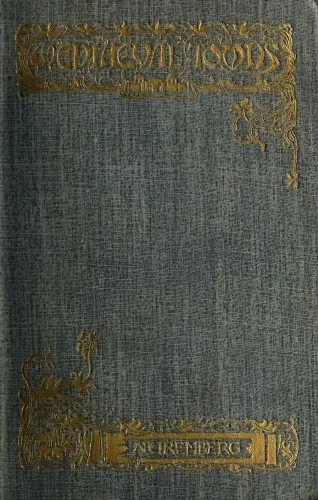
THE CLASSIC COLLECTION · 1899
"The Story of Nuremberg" by Cecil Headlam is a historical account written in the late 19th century. The book explores the rich history of Nuremberg, a medieval town renowned for its art and commerce, aiming to revive readers' affinity for this historic site and encourage visits. It discusses the evolution of the city, its significant figures like Albert Dürer, and its role in various historical events, providing insights into the cultural and architectural heritage of Nuremberg. The opening of the book sets the stage for a detailed exploration of Nuremberg, emphasizing its historical and aesthetic significance. It describes the city as both enchanting and complex, juxtaposed against its gradual transformation from a humble settlement to a bustling center of art and trade. Headlam hints at the vast scope of Nuremberg's past, touching upon the obscurity of its origins and the legends that weave through its history. Through a blend of anecdotal and factual narrative, the author captivates the reader's imagination, suggesting that Nuremberg's allure lies not only in its architectural beauty but also in the historical memories and associations that continue to resonate today.
Introduction adapted from the source catalogue; source summaries may be automatically generated.
Free to read · English · 79,975 words · No account needed
MAKE TIME FOR A GOOD BOOK
On by default. Untick to stop anonymous reading totals. Each page counts after 10 seconds in view. How this works.
Anonymous counting is on unless you have switched it off.
Hans Lechner epitaph, 1466, Death of Mary (south).
Hans Meyer epitaph, 1473, St. Gregory (No. 13, north side).
Berthold Kraft epitaph, 1475, St. Dionisius (opposite Rochus Altar,
south).
Hans Schmidmayer epitaph, 1476, Adoration of the Magi (over stairs leading to Schmidmayer oratory, south).
Leonhard Spengler epitaph, 1488, Christ between SS. Philip and
James (No. 15, north side).
Stör Family epitaph, 1479, Christ treading Blood, and Four
Evangelists, etc. (north-west).
The Rochus Altar, triptych with scenes from the life of St. Rochus, dedicated by six Imhoff brothers, 1499 (No. 7, west of Sacristy),
and the Krellsche Altar, 1483, which may perhaps be by Wolgemut. It is beneath the Frederick window in the choir, and contains a Madonna and Child and various saints, apostles, etc. The background of this picture represents the town of Nuremberg as it was before the last extension of the walls. (Chap. V.)
By Wolgemut and his school there are several characteristic pictures, of which I may mention here the Burial of Christ (No. 2), the Ascension (No. 3), and the Praying Priests (No. 4). The right wing of the St. Catherine altar-piece (No. 8) is by Wolgemut, and the two pictures of St. Vitus, with his parents and denouncing the idol, are signed by R. F., a painter whose touch is visible in part of the Peringsdörffer masterpiece (see p. 287). The Adoration of the Magi (No. 20) is a fine picture: the Angels bringing the child Jesus to the Virgin (No. 1) bears Durer's monogram.
Lastly, the wings of the Nikolaus (No. 6) and of the Annen--or Marien--Altar are by Hans von Kulmbach, 1520(?) (next to the Passion window in the choir).
(Marienkirche, Marienhall)
The Frauenkirche, which occupies the east end of the Haupt Markt, was built, as we have seen (p. 37), under somewhat discreditable circumstances on the site of the old Jewish Synagogue (1355-1361).
The brothers Georg and Friedrich Ruprecht are mentioned as the architects, and the sculptor, Sebald Schonhofer, is responsible for the rich ornamentation of the vestibule. This vestibule (restored with the rest of the church some twenty years ago) is unique of its kind. It is conjectured that this part of the church was intended to serve as a kind of treasure-house for the Imperial Crown jewels and relics, which in the year 1361 were certainly shown, as an object of veneration, from the gallery above the main entrance of the church.
The plan of the west gate is borrowed in the main from the St. Lorenz portal. There the life and work of Christ, here the life and work of Mary are set forth. Many of the figures strongly recall those of the St. Lorenz statues. At the corners of the vestibule are statues of Karl IV. and his consort, and SS. Lorenz and Sebald.
Your reading position is saved on this browser. Take it to another device with a library code. Reading pages adapt to text, rather than matching a printed edition.
BEHIND THE BOOK
This eBook is for the use of anyone anywhere in the United States and most other parts of the world at no cost and with almost no restrictions whatsoever. You may copy it, give it away or re-use it under the terms of the Project Gutenberg License included with this eBook or online at www.gutenberg.org. If you are not located in the United States, you will have to check the laws of the country where you are located before using this eBook. Read the source licence.
The original source file, including credits and licence, is retained by this library. Request an original-format copy at no charge. Please include the book title and Project Gutenberg identifier #46401.
KEEP YOUR CURIOSITY GOING
Wilfrid Scawen Blunt
Wilfrid Scawen Blunt

E. W. (Edgar Watson) Howe
Cécile Tormay

Moritz Busch
John L. Ransom