THE CLASSIC COLLECTION✦The Story of ChartresCLASSIC FREE BOOKS
The Story of Chartres
Cecil Headlam
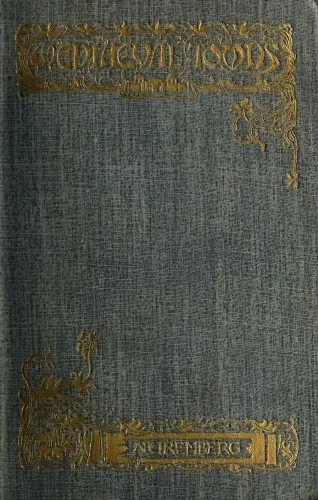
THE CLASSIC COLLECTION · 1899
"The Story of Nuremberg" by Cecil Headlam is a historical account written in the late 19th century. The book explores the rich history of Nuremberg, a medieval town renowned for its art and commerce, aiming to revive readers' affinity for this historic site and encourage visits. It discusses the evolution of the city, its significant figures like Albert Dürer, and its role in various historical events, providing insights into the cultural and architectural heritage of Nuremberg. The opening of the book sets the stage for a detailed exploration of Nuremberg, emphasizing its historical and aesthetic significance. It describes the city as both enchanting and complex, juxtaposed against its gradual transformation from a humble settlement to a bustling center of art and trade. Headlam hints at the vast scope of Nuremberg's past, touching upon the obscurity of its origins and the legends that weave through its history. Through a blend of anecdotal and factual narrative, the author captivates the reader's imagination, suggesting that Nuremberg's allure lies not only in its architectural beauty but also in the historical memories and associations that continue to resonate today.
Introduction adapted from the source catalogue; source summaries may be automatically generated.
Free to read · English · 79,975 words · No account needed
MAKE TIME FOR A GOOD BOOK
On by default. Untick to stop anonymous reading totals. Each page counts after 10 seconds in view. How this works.
Anonymous counting is on unless you have switched it off.
The artist is unknown, but, whoever he was, he had looked upon Nature with loving eyes and worshipped her; and this love of Nature, purified by his deep religious feeling, he had brought to the service of his living faith. Frequently we shall observe in the old Nuremberg artists that this mixture of naivete and reverence in the conception of religious subjects produces too commonplace a representation of them. But here the result is not commonplace, only just towards Nature. The picture, says Dr Janitschek,[60] is like the most beautiful bloom of a period just drawing to a close and already bearing in itself flowers of a more dazzling development.
The Imhoff picture (see below, No. 9) shows similar handling and similar freedom from Flemish influence in the full, soft beauty of the forms. And yet the mastery of Nature displayed in the portraits of the founders reveals to us an artist who was following the same paths as those of the Flemish painters.
5. Epitaph of Agnes Hans Glockengiesserin, 1433. The death of Mary as she knelt in prayer, and portrait of founder. A picture full of tender feeling (No. 11, south side).
6. Theokars Altar (Deocarus Altar, No. 19, north side) 1437, founded by Andreas Volkamer. Christ between six apostles, and below, St. Deocarus between the other six apostles, carved in wood. Below a life-sized painting of the saint.
The wings of the picture, which represent the Transfiguration, the Miraculous Draught of Fishes, the Last Supper, and the Resurrection, and four scenes from the life of St. Deocarus (kneeling before a chapel, healing a blind man, confessing Charlemagne, and on his death-bed), should be compared with the Haller altar-piece of St. Sebald's and the High altar-piece of the Frauenkirche. Though very nearly contemporary with the latter works, this painting is representative of the old school. It exhibits, indeed, great dramatic spirit, though the movements are often awkward, and the
colouring lacks the strength and brilliancy of the Frauenkirche picture.
7 and 8. A saint in armour, and a suffering Christ with gold background and the Saints Henry, Kunigunde, and Lawrence (with the gridiron), are also probably of the same date.
9. Margaret and Anton Imhoff memorial (1446) (numbered 16, on the north wall of the church). Madonna and Child and four angels, and the founder's family--the father with eight sons, and the mother with four daughters.
The further development of the Nuremberg school of painting, as I have sketched it above (pp. 181-4), may be observed in the following memorial pictures in this church:--
H. Gärtner epitaph, 1462, Madonna and Child, SS. Bartholomew and Barbara (south, near doorway).
Erhard Schon epitaph, 1464, St. Wolfgang and other saints.
Friedrich Schon epitaph, 1464, Birth of Christ, Aaron, Moses, etc.
Your reading position is saved on this browser. Take it to another device with a library code. Reading pages adapt to text, rather than matching a printed edition.
BEHIND THE BOOK
This eBook is for the use of anyone anywhere in the United States and most other parts of the world at no cost and with almost no restrictions whatsoever. You may copy it, give it away or re-use it under the terms of the Project Gutenberg License included with this eBook or online at www.gutenberg.org. If you are not located in the United States, you will have to check the laws of the country where you are located before using this eBook. Read the source licence.
The original source file, including credits and licence, is retained by this library. Request an original-format copy at no charge. Please include the book title and Project Gutenberg identifier #46401.
KEEP YOUR CURIOSITY GOING
Wilfrid Scawen Blunt
Wilfrid Scawen Blunt

E. W. (Edgar Watson) Howe
Cécile Tormay

Moritz Busch
John L. Ransom