READ · DISCOVER · ENJOYClassic literature · Always free
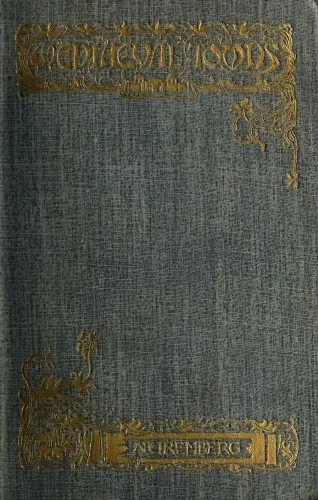
The Story of Nuremberg — digital edition cover

THE CLASSIC COLLECTION · 1899

The Story of Nuremberg

"The Story of Nuremberg" by Cecil Headlam is a historical account written in the late 19th century. The book explores the rich history of Nuremberg, a medieval town renowned for its art and commerce, aiming to revive readers' affinity for this historic site and encourage visits. It discusses the evolution of the city, its significant figures like Albert Dürer, and its role in various historical events, providing insights into the cultural and architectural heritage of Nuremberg. The opening of the book sets the stage for a detailed exploration of Nuremberg, emphasizing its historical and aesthetic significance. It describes the city as both enchanting and complex, juxtaposed against its gradual transformation from a humble settlement to a bustling center of art and trade. Headlam hints at the vast scope of Nuremberg's past, touching upon the obscurity of its origins and the legends that weave through its history. Through a blend of anecdotal and factual narrative, the author captivates the reader's imagination, suggesting that Nuremberg's allure lies not only in its architectural beauty but also in the historical memories and associations that continue to resonate today.

Introduction adapted from the source catalogue; source summaries may be automatically generated.

Start reading ↓

Free to read · English · 79,975 words · No account needed

MAKE TIME FOR A GOOD BOOK

The Story of Nuremberg

On by default. Untick to stop anonymous reading totals. Each page counts after 10 seconds in view. How this works.

Anonymous counting is on unless you have switched it off.

The Story of Nuremberg

Nuremberg and the Thirty Years War

Wallenstein--Gustavus Adolphus--Kaspar Hauser.

The Catholic Reaction was now in full swing. With the determination of Catholicism to regain her ancient dominion came the Thirty Years War, the last and cruellest of the religious wars, which deprived Germany of, some say, half her population, and turned a comparatively rich and prosperous country into a barren desert.

The violence of Duke Maximilian of Bavaria towards the town of Donauwörth (1607), "which had been put under Ban of the Empire for some fault on the part of the populace against a flaring Mass-procession which had no business to be there," filled the free-towns and Protestant communities with dark forebodings of approaching disturbance. An Evangelical League, "The Union," was formed by the towns and princes for the purposes of self-defence against any attacks on religious freedom. Nuremberg joined it in 1610. This step was, of course, distasteful to the Emperor, but Nuremberg was left no choice in the matter. For the bishops of Bamberg and Eichstätt had forced the Nuremberg Evangelical subjects, living in their dioceses, to revert to the old religion. The Catholic communities formed a counter-league. Only a signal was wanted to make the opposing parties draw swords; and in 1618 the Bohemian resistance to the suppression of the Evangelical religion gave the signal for that bloody war, in which Nuremberg was to endure her full share of suffering. But, first, for a long time she endeavoured to pursue her old policy of neutrality, keeping peace with both parties and remaining subject to the Emperor. Meantime, as one after another of the Catholic generals passed through, men were quartered on Nuremberg in ceaseless relays, and she was bled of money and provisions. The treasury was depleted; trade disorganised; and the peasantry suffered cruelly.

In 1629 Ferdinand II. thought the time had come to strike a determined blow for Catholicism, and he published an Edict of Restitution, giving back to the Roman Catholics all the ecclesiastical property and institutions which had been handed over to the Evangelists by the Treaty of Passau and the Peace of Augsburg. This brought matters to a crisis. But even yet Nuremberg did not follow the example of Magdeburg and make a firm stand against religious aggressions. Even when Gustavus Adolphus, the Protestant champion, the Lion of the North, had landed on the Pomeranian coast, and made secret proposals of union with her, she turned a deaf ear to him, and received, with princely honours, Wallenstein, Duke of Friedland, the Catholic General, when on his way to Memmingen. But at a convention of the Evangelical communities at Leipzig, called together by the Elector of Saxony, she did sign a complaint to the Emperor with regard to religious oppression, and also an agreement of the communities to help each other in case of need, and to prevent the unbearable quartering of troops and other exactions of the Emperor. Then in 1631 came the fall of Magdeburg. The subsequent horrors of that two-days' sack struck terror into the hearts of Protestant Germany. Nuremberg gave in at once to the demands of the Emperor. She denounced the Leipzig Convention, dismissed her soldiers, and paid the money required of her. In spite of these concessions, she had reason to fear that the freedom of the town would be forfeited. Tilly's defeat at Breitenfeld, however, prevented the Emperor from carrying out his expressed intention. Inspired by that victory of the Swedes, the Council plucked up courage to refuse almost all Imperial contributions. If they had consulted the wishes of the citizens, they would have joined Gustavus Adolphus forthwith. They still hankered after neutrality, however, and even when Gustavus Adolphus informed them that he would treat neutrals as enemies, they would only promise to be true to the Evangelical faith. The Swedish King continued to press them, and, still in the hope of being able to keep in favour with the Emperor, they sent a sum of money. But Gustavus Adolphus demanded their full and open support. They were still torn between the fear of offending the Emperor and the desire of securing Gustavus' aid. A sharp and menacing letter arrived. At last it was decided to send envoys to Würtzburg with instructions to draw up a treaty, if there was no help for it. The result was that Nuremberg and Bayreuth drew up a treaty with Gustavus Adolphus (October 1631), in which money was promised, and it was arranged that a special alliance should be concluded in two months' time. They agreed to put their resources at his disposal, and to stand by him to the last, whilst he on his side promised to succour them in all danger, and to relieve them if besieged. In November they renounced their allegiance to the Emperor, and lost not a moment in arming themselves. It was not too soon, for the cloud of war which had long been hanging over Franconia broke at last. Tilly took Rothenburg on October 30th, and on the 8th of November Lichtenau surrendered. Negotiations with him were opened by Nuremberg, to gain time, but, when he found how strongly fortified and garrisoned the town was, he drew off. He returned next year, but attempted nothing, for Gustavus Adolphus was now drawing near, to whom Nuremberg, after much shilly-shallying, was persuaded, by dint of threats, to send 1500 men with arms and ammunition. In March 1632, the King, leaving his army near Fürth, entered the town by the Spittlerthor amidst the heart-felt enthusiasm of the people, who had never approved of the pusillanimous policy of the Council. The Defender of the Protestants received a splendid and affecting welcome. The Patricians rode out to meet him before the gates. They presented him with four cannons and, amongst other works of art, two silver globes supported by figures of Atlas and Hercules respectively, which are still to be seen in the Museum at Stockholm. "Tears of joy streamed down the cheeks of bearded men as they welcomed the deliverer from the north, whose ready jest and beaming smile would have gone straight to the popular heart even if his deserts had been less. The picture of Gustavus was soon in every house, and a learned citizen set to work at once to compose a pedigree by which he proved to his own satisfaction that the Swedish King was descended from the old hereditary Burggrafs of the town."[21] The same day, with further reinforcements from Nuremberg, he went on his way south to deliver Donauwörth.

Your reading position is saved on this browser. Take it to another device with a library code. Reading pages adapt to text, rather than matching a printed edition.

More from this author

BEHIND THE WORDS

About Cecil Headlam

Cecil Headlam (1872–1934). Explore The Story of Chartres, The Story of Nuremberg in this collection. These books span history, travel & exploration.

Explore this author’s books →

THE READERS’ VERDICT

How did this story stay with you?

Not rated yet
Your rating for The Story of Nuremberg

Be the first to share your verdict.

One rating per browser, which you can change or remove. A necessary browser identifier remembers your vote. How ratings work

A GOOD STORY DESERVES COMPANY

Pass this book along.

A great read is even better when it’s shared.

SEND A LITTLE INSPIRATION

Share this book

BEHIND THE BOOK

Edition & source details.

Title
The Story of Nuremberg
Author
Cecil Headlam
First publication (Open Library catalogue match)
1899
Digital edition publisher
Project Gutenberg
Gutenberg release date
2014-07-24
Language
English
Source edition imprint
Not stated in source catalogue
Source identifier
Project Gutenberg #46401
Contributors
Helen M. (Helen Mary) James (ill)

Public-domain source & licence

This eBook is for the use of anyone anywhere in the United States and most other parts of the world at no cost and with almost no restrictions whatsoever. You may copy it, give it away or re-use it under the terms of the Project Gutenberg License included with this eBook or online at www.gutenberg.org. If you are not located in the United States, you will have to check the laws of the country where you are located before using this eBook. Read the source licence.

Full source licence and obtaining an original copy

The original source file, including credits and licence, is retained by this library. Request an original-format copy at no charge. Please include the book title and Project Gutenberg identifier #46401.

the full Project Gutenberg License must appear
prominently whenever any copy of a Project Gutenberg work (any work
on which the phrase “Project Gutenberg” appears, or with which the
phrase “Project Gutenberg” is associated) is accessed, displayed,
performed, viewed, copied or distributed:

This eBook is for the use of anyone anywhere in the United States and most
other parts of the world at no cost and with almost no restrictions
whatsoever. You may copy it, give it away or re-use it under the terms
of the Project Gutenberg™ License included with this eBook or online
at www.gutenberg.org. If you
are not located in the United States, you will have to check the laws
of the country where you are located before using this eBook.

1.E.2. If an individual Project Gutenberg electronic work is
derived from texts not protected by U.S. copyright law (does not
contain a notice indicating that it is posted with permission of the
copyright holder), the work can be copied and distributed to anyone in
the United States without paying any fees or charges. If you are
redistributing or providing access to a work with the phrase “Project
Gutenberg” associated with or appearing on the work, you must comply
either with the requirements of paragraphs 1.E.1 through 1.E.7 or
obtain permission for the use of the work and the Project Gutenberg
trademark as set forth in paragraphs 1.E.8 or 1.E.9.

1.E.3. If an individual Project Gutenberg electronic work is posted
with the permission of the copyright holder, your use and distribution
must comply with both paragraphs 1.E.1 through 1.E.7 and any
additional terms imposed by the copyright holder. Additional terms
will be linked to the Project Gutenberg License for all works
posted with the permission of the copyright holder found at the
beginning of this work.

1.E.4. Do not unlink or detach or remove the full Project Gutenberg
License terms from this work, or any files containing a part of this
work or any other work associated with Project Gutenberg.

1.E.5. Do not copy, display, perform, distribute or redistribute this
electronic work, or any part of this electronic work, without
prominently displaying the sentence set forth in paragraph 1.E.1 with
active links or immediate access to the full terms of the Project
Gutenberg License.

1.E.6. You may convert to and distribute this work in any binary,
compressed, marked up, nonproprietary or proprietary form, including
any word processing or hypertext form. However, if you provide access
to or distribute copies of a Project Gutenberg work in a format
other than “Plain Vanilla ASCII” or other format used in the official
version posted on the official Project Gutenberg website
(www.gutenberg.org), you must, at no additional cost, fee or expense
to the user, provide a copy, a means of exporting a copy, or a means
of obtaining a copy upon request, of the work in its original “Plain
Vanilla ASCII” or other form. Any alternate format must include the
full Project Gutenberg License as specified in paragraph 1.E.1.

1.E.7. Do not charge a fee for access to, viewing, displaying,
performing, copying or distributing any Project Gutenberg works
unless you comply with paragraph 1.E.8 or 1.E.9.

1.E.8. You may charge a reasonable fee for copies of or providing
access to or distributing Project Gutenberg electronic works
provided that:

• You pay a royalty fee of 20% of the gross profits you derive from
the use of Project Gutenberg works calculated using the method
you already use to calculate your applicable taxes. The fee is owed
to the owner of the Project Gutenberg trademark, but he has
agreed to donate royalties under this paragraph to the Project
Gutenberg Literary Archive Foundation. Royalty payments must be paid
within 60 days following each date on which you prepare (or are
legally required to prepare) your periodic tax returns. Royalty
payments should be clearly marked as such and sent to the Project
Gutenberg Literary Archive Foundation at the address specified in
Section 4, “Information about donations to the Project Gutenberg
Literary Archive Foundation.”

• You provide a full refund of any money paid by a user who notifies
you in writing (or by e-mail) within 30 days of receipt that s/he
does not agree to the terms of the full Project Gutenberg™
License. You must require such a user to return or destroy all
copies of the works possessed in a physical medium and discontinue
all use of and all access to other copies of Project Gutenberg™
works.

• You provide, in accordance with paragraph 1.F.3, a full refund of
any money paid for a work or a replacement copy, if a defect in the
electronic work is discovered and reported to you within 90 days of
receipt of the work.

• You comply with all other terms of this agreement for free
distribution of Project Gutenberg™ works.


1.E.9. If you wish to charge a fee or distribute a Project
Gutenberg™ electronic work or group of works on different terms than
are set forth in this agreement, you must obtain permission in writing
from the Project Gutenberg Literary Archive Foundation, the manager of
the Project Gutenberg™ trademark. Contact the Foundation as set
forth in Section 3 below.

1.F.

1.F.1. Project Gutenberg volunteers and employees expend considerable
effort to identify, do copyright research on, transcribe and proofread
works not protected by U.S. copyright law in creating the Project
Gutenberg™ collection. Despite these efforts, Project Gutenberg™
electronic works, and the medium on which they may be stored, may
contain “Defects,” such as, but not limited to, incomplete, inaccurate
or corrupt data, transcription errors, a copyright or other
intellectual property infringement, a defective or damaged disk or
other medium, a computer virus, or computer codes that damage or
cannot be read by your equipment.

1.F.2. LIMITED WARRANTY, DISCLAIMER OF DAMAGES - Except for the “Right
of Replacement or Refund” described in paragraph 1.F.3, the Project
Gutenberg Literary Archive Foundation, the owner of the Project
Gutenberg™ trademark, and any other party distributing a Project
Gutenberg™ electronic work under this agreement, disclaim all
liability to you for damages, costs and expenses, including legal
fees. YOU AGREE THAT YOU HAVE NO REMEDIES FOR NEGLIGENCE, STRICT
LIABILITY, BREACH OF WARRANTY OR BREACH OF CONTRACT EXCEPT THOSE
PROVIDED IN PARAGRAPH 1.F.3. YOU AGREE THAT THE FOUNDATION, THE
TRADEMARK OWNER, AND ANY DISTRIBUTOR UNDER THIS AGREEMENT WILL NOT BE
LIABLE TO YOU FOR ACTUAL, DIRECT, INDIRECT, CONSEQUENTIAL, PUNITIVE OR
INCIDENTAL DAMAGES EVEN IF YOU GIVE NOTICE OF THE POSSIBILITY OF SUCH
DAMAGE.

1.F.3. LIMITED RIGHT OF REPLACEMENT OR REFUND - If you discover a
defect in this electronic work within 90 days of receiving it, you can
receive a refund of the money (if any) you paid for it by sending a
written explanation to the person you received the work from. If you
received the work on a physical medium, you must return the medium
with your written explanation. The person or entity that provided you
with the defective work may elect to provide a replacement copy in
lieu of a refund. If you received the work electronically, the person
or entity providing it to you may choose to give you a second
opportunity to receive the work electronically in lieu of a refund. If
the second copy is also defective, you may demand a refund in writing
without further opportunities to fix the problem.

1.F.4. Except for the limited right of replacement or refund set forth
in paragraph 1.F.3, this work is provided to you ‘AS-IS’, WITH NO
OTHER WARRANTIES OF ANY KIND, EXPRESS OR IMPLIED, INCLUDING BUT NOT
LIMITED TO WARRANTIES OF MERCHANTABILITY OR FITNESS FOR ANY PURPOSE.

1.F.5. Some states do not allow disclaimers of certain implied
warranties or the exclusion or limitation of certain types of
damages. If any disclaimer or limitation set forth in this agreement
violates the law of the state applicable to this agreement, the
agreement shall be interpreted to make the maximum disclaimer or
limitation permitted by the applicable state law. The invalidity or
unenforceability of any provision of this agreement shall not void the
remaining provisions.

1.F.6. INDEMNITY - You agree to indemnify and hold the Foundation, the
trademark owner, any agent or employee of the Foundation, anyone
providing copies of Project Gutenberg™ electronic works in
accordance with this agreement, and any volunteers associated with the
production, promotion and distribution of Project Gutenberg™
electronic works, harmless from all liability, costs and expenses,
including legal fees, that arise directly or indirectly from any of
the following which you do or cause to occur: (a) distribution of this
or any Project Gutenberg work, (b) alteration, modification, or
additions or deletions to any Project Gutenberg work, and (c) any
Defect you cause.

Section 2. Information about the Mission of Project Gutenberg

Project Gutenberg is synonymous with the free distribution of
electronic works in formats readable by the widest variety of
computers including obsolete, old, middle-aged and new computers. It
exists because of the efforts of hundreds of volunteers and donations
from people in all walks of life.

Volunteers and financial support to provide volunteers with the
assistance they need are critical to reaching Project Gutenberg’s
goals and ensuring that the Project Gutenberg collection will
remain freely available for generations to come. In 2001, the Project
Gutenberg Literary Archive Foundation was created to provide a secure
and permanent future for Project Gutenberg and future
generations. To learn more about the Project Gutenberg Literary
Archive Foundation and how your efforts and donations can help, see
Sections 3 and 4 and the Foundation information page at www.gutenberg.org.

Section 3. Information about the Project Gutenberg Literary Archive Foundation

The Project Gutenberg Literary Archive Foundation is a non-profit
501(c)(3) educational corporation organized under the laws of the
state of Mississippi and granted tax exempt status by the Internal
Revenue Service. The Foundation’s EIN or federal tax identification
number is 64-6221541. Contributions to the Project Gutenberg Literary
Archive Foundation are tax deductible to the full extent permitted by
U.S. federal laws and your state’s laws.

The Foundation’s business office is located at 41 Watchung Plaza #516,
Montclair NJ 07042, USA, +1 (862) 621-9288. Email contact links and up
to date contact information can be found at the Foundation’s website
and official page at www.gutenberg.org/contact

Section 4. Information about Donations to the Project Gutenberg
Literary Archive Foundation

Project Gutenberg™ depends upon and cannot survive without widespread
public support and donations to carry out its mission of
increasing the number of public domain and licensed works that can be
freely distributed in machine-readable form accessible by the widest
array of equipment including outdated equipment. Many small donations
($1 to $5,000) are particularly important to maintaining tax exempt
status with the IRS.

The Foundation is committed to complying with the laws regulating
charities and charitable donations in all 50 states of the United
States. Compliance requirements are not uniform and it takes a
considerable effort, much paperwork and many fees to meet and keep up
with these requirements. We do not solicit donations in locations
where we have not received written confirmation of compliance. To SEND
DONATIONS or determine the status of compliance for any particular state
visit www.gutenberg.org/donate.

While we cannot and do not solicit contributions from states where we
have not met the solicitation requirements, we know of no prohibition
against accepting unsolicited donations from donors in such states who
approach us with offers to donate.

International donations are gratefully accepted, but we cannot make
any statements concerning tax treatment of donations received from
outside the United States. U.S. laws alone swamp our small staff.

Please check the Project Gutenberg web pages for current donation
methods and addresses. Donations are accepted in a number of other
ways including checks, online payments and credit card donations. To
donate, please visit: www.gutenberg.org/donate.

Section 5. General Information About Project Gutenberg electronic works

Professor Michael S. Hart was the originator of the Project
Gutenberg concept of a library of electronic works that could be
freely shared with anyone. For forty years, he produced and
distributed Project Gutenberg eBooks with only a loose network of
volunteer support.

Project Gutenberg eBooks are often created from several printed
editions, all of which are confirmed as not protected by copyright in
the U.S. unless a copyright notice is included. Thus, we do not
necessarily keep eBooks in compliance with any particular paper
edition.

Most people start at our website which has the main PG search
facility: www.gutenberg.org.

This website includes information about Project Gutenberg,
including how to make donations to the Project Gutenberg Literary
Archive Foundation, how to help produce our new eBooks, and how to
subscribe to our email newsletter to hear about new eBooks.


KEEP YOUR CURIOSITY GOING

Your next chapter awaits.