THE CLASSIC COLLECTION✦An outlaw’s diary: the CommuneCLASSIC FREE BOOKS
An outlaw’s diary: the Commune
Cécile Tormay
THE CLASSIC COLLECTION · 1912
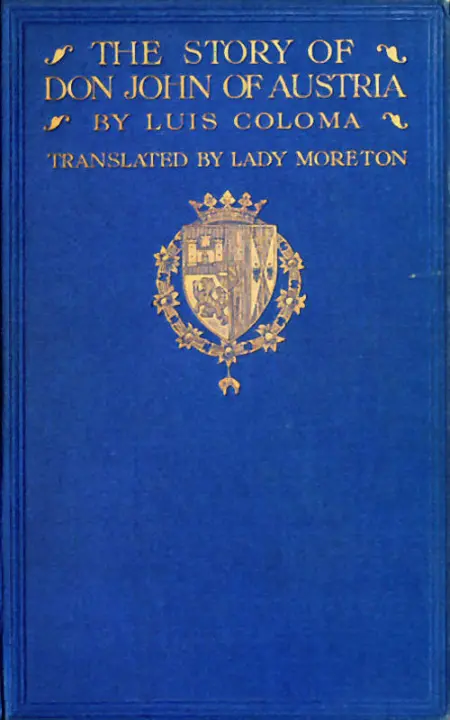
"The Story of Don John of Austria" by Luis Coloma is a historical narrative that appears to have been written in the early 20th century. This work combines elements of novelistic storytelling and historical account, centering around the life of Jeromín, a child with a mysterious parentage. The tale captures his journey from a humble upbringing to his elevated status, posing themes of identity and nobility. The opening of the narrative introduces the young protagonist, Jeromín, who lives in the village of Leganés, Spain. The story begins with an incident that showcases his innocence and the curiosity of childhood when a stranger arrives in a peculiar carriage, seeking Ana de Medina, his caretaker. As the plot unfolds, Jeromín learns that he is actually the son of a nobleman, leading to a significant life change as he is taken under the wing of the esteemed Luis Quijada. This shift in his life sets the stage for Jeromín to navigate new environments, experiences, and responsibilities, gradually revealing the complexities of his heritage and forging connections that will shape his destiny.
Introduction adapted from the source catalogue; source summaries may be automatically generated.
Free to read · English · 154,072 words · No account needed
MAKE TIME FOR A GOOD BOOK
On by default. Untick to stop anonymous reading totals. Each page counts after 10 seconds in view. How this works.
Anonymous counting is on unless you have switched it off.
This adventure made D. John the fashion, as we should say now, a thing which existed in the sixteenth century without being so called. He became the spoilt child of the Court and the idol of the people, to such a degree that many of them wished him to be the heir to the crown, in default of D. Carlos.
D. John's good looks had much to do with this; he was then only nineteen, but was already perfectly developed.
He was of a good height, slim and altogether graceful, because neatness was as much a part of him as flexibility is of fine-tempered steel.
He had fair hair, brushed up to the left in the form of a toupee, a fashion made common by his imitators and called "à la Austriaca"; his beard, the same colour as his hair, was thin; his complexion pale, but rather sunburnt, which gave him a pleasing, manly appearance; big blue eyes, always clear and bright, which could be smiling and loving or grave and severe, as he wished.
He was debonair and very nice in his person, and ostentatious in his dress, which was always in the extreme of fashion, as may be seen in some of his pictures.
That which radiated from him and made him so irresistible was that "je ne sais quoi" belonging to very superior men, which attracts, enchants, and subjugates, and, according to a very profound writer, consists in the mysterious combination of grace, talent, and desire to please.
Such was the attractive figure of D. John when he began to be a real personage at the much-discussed Court of his brother.
Certainly that Court was not then, if it ever was, the gloomy, austere convent, represented to us by those who believe, or seem to believe, in an awesome legendary Philip II, surrounded by holocausts and gallows, and Inquisitors and friars.
Nor was it either the united family of devout maidens and saintly matrons, venerable old men and immaculate pages, which those make out who would, in all good faith, imprison the colossal Philip II in the rickety form of a devout monk.
The Court of Philip II was certainly the strictest of its day, but it was also the most magnificent, sumptuous and full of harmless amusement and the knight errantry of those times, without lacking, as was natural, intrigues, plots and scandals between gallants and ladies. These D. Philip sometimes put down openly with a firm hand, at others corrected secretly, and not a few he pretended not to notice, for reasons which must always remain unknown.
The Court was divided, as nearly always happens, into two absolutely different camps—the courtly and the political.
Your reading position is saved on this browser. Take it to another device with a library code. Reading pages adapt to text, rather than matching a printed edition.
BEHIND THE BOOK
This eBook is for the use of anyone anywhere in the United States and most other parts of the world at no cost and with almost no restrictions whatsoever. You may copy it, give it away or re-use it under the terms of the Project Gutenberg License included with this eBook or online at www.gutenberg.org. If you are not located in the United States, you will have to check the laws of the country where you are located before using this eBook. Read the source licence.
The original source file, including credits and licence, is retained by this library. Request an original-format copy at no charge. Please include the book title and Project Gutenberg identifier #53383.
KEEP YOUR CURIOSITY GOING
Cécile Tormay

Moritz Busch
Coulson Kernahan
John L. Ransom

Maurice Baring
Frances Wright