THE CLASSIC COLLECTION✦An outlaw’s diary: the CommuneCLASSIC FREE BOOKS
An outlaw’s diary: the Commune
Cécile Tormay
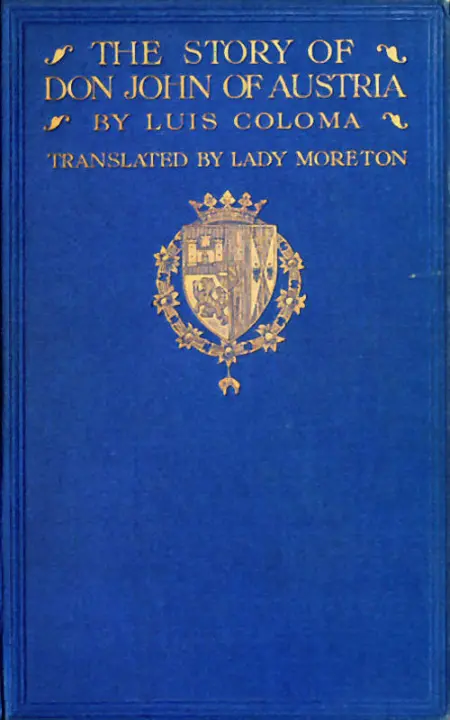
THE CLASSIC COLLECTION · 1912
"The Story of Don John of Austria" by Luis Coloma is a historical narrative that appears to have been written in the early 20th century. This work combines elements of novelistic storytelling and historical account, centering around the life of Jeromín, a child with a mysterious parentage. The tale captures his journey from a humble upbringing to his elevated status, posing themes of identity and nobility. The opening of the narrative introduces the young protagonist, Jeromín, who lives in the village of Leganés, Spain. The story begins with an incident that showcases his innocence and the curiosity of childhood when a stranger arrives in a peculiar carriage, seeking Ana de Medina, his caretaker. As the plot unfolds, Jeromín learns that he is actually the son of a nobleman, leading to a significant life change as he is taken under the wing of the esteemed Luis Quijada. This shift in his life sets the stage for Jeromín to navigate new environments, experiences, and responsibilities, gradually revealing the complexities of his heritage and forging connections that will shape his destiny.
Introduction adapted from the source catalogue; source summaries may be automatically generated.
Free to read · English · 154,072 words · No account needed
MAKE TIME FOR A GOOD BOOK
On by default. Untick to stop anonymous reading totals. Each page counts after 10 seconds in view. How this works.
Anonymous counting is on unless you have switched it off.
The principal personages of the former at that time were two princesses, as remarkable for their virtue as for their beauty, and united by the bonds of the tenderest friendship. They were the Queen Isabel de Valois and the widowed Princess of Portugal, Doña Juana, the first aged only twenty and the other thirty at this date.
Their circle included the numerous ladies of both their suites, belonging to the highest Spanish nobility, although the Queen's included a few Frenchwomen and the Princess's several Portuguese, and these foreigners were always at war with the Spanish women.
The Queen's ladies numbered over fifty, all spinsters, and they only remained at the palace until the King had found advantageous alliances for them.
There were also ten duennas of honour, all widows and ladies of high rank, and at their head the Camarera Mayor, who had to be a lady of quality, and was, at that time, the Dowager Condesa de Urena, Doña Maria de la Cueva, a matron of great judgment and experience and the mother of the first Duque de Osuna.
Princess Juana also had her ladies, her very respectable duennas, and her Camarera Mayor, Doña Isabel de Quiñones. Doña Elenor Mascarenas, her former and beloved and revered governess, had already retired from the Court, and was then founding, in what is to-day the square of Santo Domingo, the convent of the Angels, where, years afterwards, she ended her holy life.
It pleased the Queen to amuse her ladies with riding, hunting, picnics in the groves, balls, masquerades and theatricals in her apartments, in which they all, including the Queen, took part, and where they also played, at times so high, that in one night Prince Carlos, at a game called "el clavo," lost 100 golden crowns, according to the declaration of his barber Ruy Diaz de Quitanilla, who had lent them to the Prince.
To these entertainments the Queen was in the habit of inviting also all the great ladies who had no places at Court, but who lived in Madrid, or those who were only passing through, particularly the Princess of Évoli, of whom she was always a great friend, and the Duquesa de Alba, Doña Maria Enríquez, who was afterwards her Camarera Mayor, and at all times deserved the greatest affection and respect.
Princess Juana for her part was very fond of the country, and often retired to the Pardo, where she had brilliant concerts which were festivals of real pleasure and enjoyment, with many musicians and singers, whom she kept in her service and paid.
Your reading position is saved on this browser. Take it to another device with a library code. Reading pages adapt to text, rather than matching a printed edition.
BEHIND THE BOOK
This eBook is for the use of anyone anywhere in the United States and most other parts of the world at no cost and with almost no restrictions whatsoever. You may copy it, give it away or re-use it under the terms of the Project Gutenberg License included with this eBook or online at www.gutenberg.org. If you are not located in the United States, you will have to check the laws of the country where you are located before using this eBook. Read the source licence.
The original source file, including credits and licence, is retained by this library. Request an original-format copy at no charge. Please include the book title and Project Gutenberg identifier #53383.
KEEP YOUR CURIOSITY GOING
Cécile Tormay

Moritz Busch
Coulson Kernahan
John L. Ransom

Maurice Baring
Frances Wright