THE CLASSIC COLLECTION✦The golden fleeceCLASSIC FREE BOOKS
The golden fleece
A. L. O. E.
THE CLASSIC COLLECTION · 1863
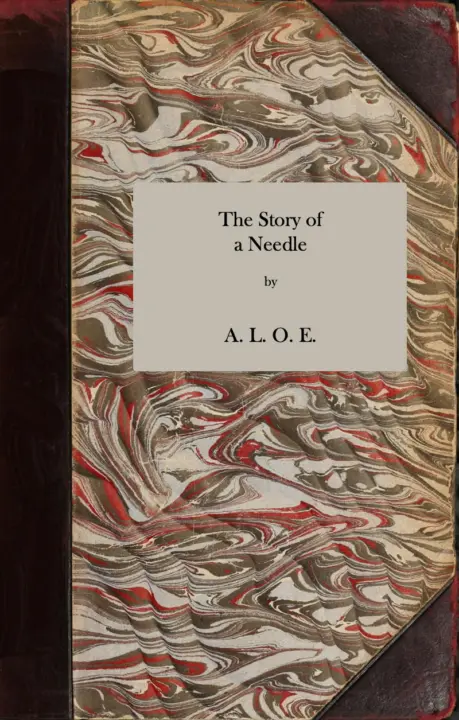
"The Story of a Needle" by A. L. O. E. is a children's narrative written in the late 19th century. This whimsical tale follows the life journey of a needle, exploring its creation, education, and experiences as it interacts with various characters, including human children and other tools. The story delves into themes of purpose, usefulness, and the importance of character development. The beginning of the work introduces the reader to the needle's origins, from its raw state as iron ore to its forging into a functional tool. The needle reflects on its early experiences in a factory, enduring various treatments to attain its final form. As the needle gains consciousness, it observes human characters, particularly children, and begins to ponder its purpose beyond mere existence. This opening sets the stage for a lively exploration of the needle's adventures, interactions, and philosophical musings as it fits into the lives of the family it serves, particularly focusing on the themes of education and growth.
Introduction adapted from the source catalogue; source summaries may be automatically generated.
Free to read · English · 26,618 words · No account needed
MAKE TIME FOR A GOOD BOOK
On by default. Untick to stop anonymous reading totals. Each page counts after 10 seconds in view. How this works.
Anonymous counting is on unless you have switched it off.
“What has man’s reason to do with us?” said I.
“I know not whether I can explain myself clearly,” replied the Thimble, “but I will endeavour to show you what I mean. Man has been gifted with a power called reason; by this he governs the world, by this he subdues creatures stronger than himself, and makes all things combine to serve him. He has discovered that iron possesses a strength which he may turn to valuable account. It would be endless labour to plough the fields, if the ground had to be torn up by the hand; it would be terrible work to reap the corn, if each blade had to be pulled off by the fingers. Man determined to aid his own weakness by the wonderful strength of iron. He made the ploughshare, and the furrows are turned up; he made the sickle, and the sheaves are gathered; huge trees, which he would never have had force to pull down, are laid low by a few strokes of his axe.”
“There is no doubt but that ours is the most useful metal by far,” said the Scissors, with something of a sneer. “Who would use ploughshares, or sickles, or axes of silver? Precious little work they would do!”
“I grant it,” said the Thimble, with perfect good-humour; “but we all have our place in the world, we all have some good purpose to fulfil. Zinc, lead, tin, arsenic, platina, nickel—”
“Stop, stop,” I exclaimed, overwhelmed with such a list; “I never knew there were so many metals before.”
“Nay,” replied the Thimble gaily, “I have not numbered one half of
them,—
“Manganese, cobalt, rhodium,
Copper, potassium, sodium—”
“Who ever such names bestowed on ’em?
Such long names I hold in odium!”
cried I.
“There’s rhyme, but not reason,” laughed the Thimble.
“If it is hard to number up the metals,” I observed, “how impossible must it be to count all the uses to which they are put!”
“Impossible indeed,” said the Thimble. “Man avails himself every day, every hour, of the treasures which he has won from the mine—for
“Ploughing, digging, and hoeing;
Cooking, ironing, mowing;
Cutting, sawing, and sewing;
Holding the embers glowing;
Speeding the vessel’s going;
Music, when horns are blowing;
Money, when debts are owing;
Bridges, where streams are flowing,
Lace, where finery’s showing;
Greenhouse, where plants are growing—”
“In short, there’s no counting or knowing All that man to metals is owing!”
cried I.
Your reading position is saved on this browser. Take it to another device with a library code. Reading pages adapt to text, rather than matching a printed edition.
A. L. O. E.
A. L. O. E.
A. L. O. E.
A. L. O. E.
BEHIND THE BOOK
This eBook is for the use of anyone anywhere in the United States and most other parts of the world at no cost and with almost no restrictions whatsoever. You may copy it, give it away or re-use it under the terms of the Project Gutenberg License included with this eBook or online at www.gutenberg.org. If you are not located in the United States, you will have to check the laws of the country where you are located before using this eBook. Read the source licence.
The original source file, including credits and licence, is retained by this library. Request an original-format copy at no charge. Please include the book title and Project Gutenberg identifier #65365.
KEEP YOUR CURIOSITY GOING
Coulson Kernahan

Maurice Baring
Frances Wright
Cécile Tormay

Frederic Jesup Stimson

W. H. P. (William Henry Pope) Jarvis