THE CLASSIC COLLECTION✦The golden fleeceCLASSIC FREE BOOKS
The golden fleece
A. L. O. E.
THE CLASSIC COLLECTION · 1863
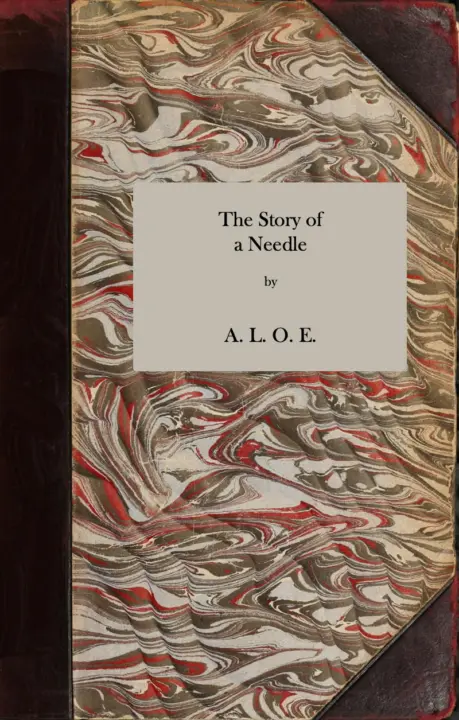
"The Story of a Needle" by A. L. O. E. is a children's narrative written in the late 19th century. This whimsical tale follows the life journey of a needle, exploring its creation, education, and experiences as it interacts with various characters, including human children and other tools. The story delves into themes of purpose, usefulness, and the importance of character development. The beginning of the work introduces the reader to the needle's origins, from its raw state as iron ore to its forging into a functional tool. The needle reflects on its early experiences in a factory, enduring various treatments to attain its final form. As the needle gains consciousness, it observes human characters, particularly children, and begins to ponder its purpose beyond mere existence. This opening sets the stage for a lively exploration of the needle's adventures, interactions, and philosophical musings as it fits into the lives of the family it serves, particularly focusing on the themes of education and growth.
Introduction adapted from the source catalogue; source summaries may be automatically generated.
Free to read · English · 26,618 words · No account needed
MAKE TIME FOR A GOOD BOOK
On by default. Untick to stop anonymous reading totals. Each page counts after 10 seconds in view. How this works.
Anonymous counting is on unless you have switched it off.
“WHAT was that extraordinary metal,” cried I, “which I took for a ball of silver, till I saw the drops running about on the carpet?”
“Ha! ha!” laughed the spiteful old Scissors, which, speck of rust and all, had been replaced in the box, “you never saw the solemn philosopher, Mrs. Thimble, ever cutting a dance like that!”
“The lady called it quicksilver,” I observed. “Was it, then, no relation
of my friend?”
“Relation!” again exclaimed the Scissors; “a relation that would eat her, rim, top, and all; make holes for her knowledge to run out of! Quicksilver is a dangerous neighbour.”
“Dangerous both to metal and to man,” quietly rejoined my learned companion. “Its power can dissolve both silver and gold; and to the human species it acts as a powerful poison.”
“I wonder that they do not leave it alone, if it does such mischief,”
said I.
“Do you not know,” replied my friend, “that reason and knowledge can find valuable uses even in those things which at first sight appear only hurtful? From quicksilver, also called mercury, a medicine is prepared, which, under the name of calomel, has helped to preserve many a life.”
“How strange!” I exclaimed; “medicine and poison, safety and danger, both from the same curious metal! But is it always a liquid like that?”
“Oh no!” replied the Thimble; “mixed with other metals, it becomes staid and quiet enough. Look at that beautiful mirror in the gilded frame, which reflects every object in the room. To what, think you, does it owe its beauty? To an amalgam (that is the title given to the mixture)—an amalgam of mercury and tin, which lines the glass at the back.”
“And makes it a pretty aid to vanity and folly,” said the broken-pointed Scissors, with bitterness. “If there is one thing which silly mortals like better than another, it is to look at their own faces in a glass.”
“If mercury has often ministered to vanity and folly,” said the Thimble, “I remember hearing of one curious instance where it served to mortify them both. A dashing lady, who was absurd enough to try to increase her beauty by covering her yellow complexion with a delicate coating of white paint, once visited a quicksilver mine. She must have felt it strange to find herself in that gloomy place, where the sickly miners, by the glare of torch-light, pursue their unwholesome occupation.”
“Why should it be unwholesome?” I asked.
“Because mercury is of that poisonous nature, that it is said that those employed to procure it seldom live longer than two years in the mine.”
Your reading position is saved on this browser. Take it to another device with a library code. Reading pages adapt to text, rather than matching a printed edition.
A. L. O. E.
A. L. O. E.
A. L. O. E.
A. L. O. E.
BEHIND THE BOOK
This eBook is for the use of anyone anywhere in the United States and most other parts of the world at no cost and with almost no restrictions whatsoever. You may copy it, give it away or re-use it under the terms of the Project Gutenberg License included with this eBook or online at www.gutenberg.org. If you are not located in the United States, you will have to check the laws of the country where you are located before using this eBook. Read the source licence.
The original source file, including credits and licence, is retained by this library. Request an original-format copy at no charge. Please include the book title and Project Gutenberg identifier #65365.
KEEP YOUR CURIOSITY GOING
Coulson Kernahan

Maurice Baring
Frances Wright
Cécile Tormay

Frederic Jesup Stimson

W. H. P. (William Henry Pope) Jarvis