THE CLASSIC COLLECTION✦The golden fleeceCLASSIC FREE BOOKS
The golden fleece
A. L. O. E.
THE CLASSIC COLLECTION · 1863
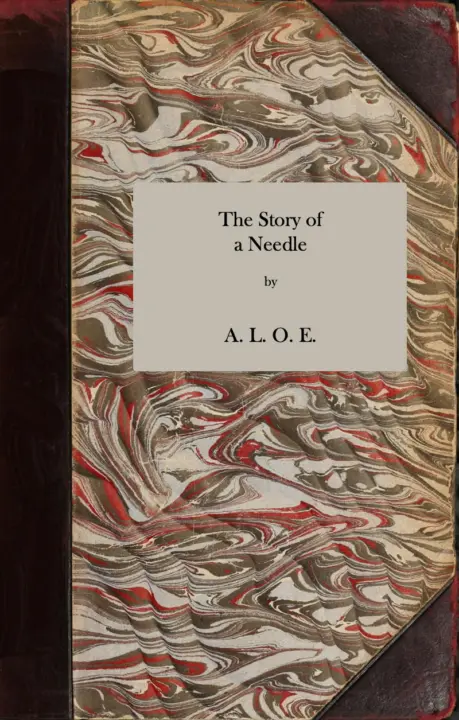
"The Story of a Needle" by A. L. O. E. is a children's narrative written in the late 19th century. This whimsical tale follows the life journey of a needle, exploring its creation, education, and experiences as it interacts with various characters, including human children and other tools. The story delves into themes of purpose, usefulness, and the importance of character development. The beginning of the work introduces the reader to the needle's origins, from its raw state as iron ore to its forging into a functional tool. The needle reflects on its early experiences in a factory, enduring various treatments to attain its final form. As the needle gains consciousness, it observes human characters, particularly children, and begins to ponder its purpose beyond mere existence. This opening sets the stage for a lively exploration of the needle's adventures, interactions, and philosophical musings as it fits into the lives of the family it serves, particularly focusing on the themes of education and growth.
Introduction adapted from the source catalogue; source summaries may be automatically generated.
Free to read · English · 26,618 words · No account needed
MAKE TIME FOR A GOOD BOOK
On by default. Untick to stop anonymous reading totals. Each page counts after 10 seconds in view. How this works.
Anonymous counting is on unless you have switched it off.
“I AM not very sorry,” observed I to the Thimble, “that careless Miss Lily has forgotten to replace our companion, Mrs. Scissors, in the box. Her manners are so sharp, her remarks so cutting, that I take little pleasure in her society.”
“She has a little speck of rust on her, I own,” quietly replied my philosophic friend; “but we must all learn to bear patiently with the weaknesses of others, and see that we keep our own metal bright.”
“You have no difficulty about that,” I observed.
“Pardon me,” answered the Thimble; “silver is not subject to rust, but it tarnishes, especially if exposed to impure, smoky air.”
“And was your origin as low as mine?” I inquired; “were you also dug
from the earth?”
“I was dug out of a mine in Norway; I have been, like you, purified in a furnace, and exposed to heavy blows of the hammer.”
“I wonder how long it is,” exclaimed I, “since man first found out the use of metals, and employed them in making whatever he requires!”
“The use of metals was known before the time of the Flood, more than four thousand years ago. Tubal-Cain is the name of the first man who is recorded to have worked in metals.”
“Oh!” cried I, “how much I should like to know who it was who first
invented needles!”
“I dare say that the invention is of early date,” replied the Thimble, “though the needles of ancient times were probably far inferior to the polished, delicate articles of which I see so fine a specimen before me. I have heard that needles were first manufactured in England by an Indian, in the reign of stout Harry the Eighth, upwards of three hundred years ago.”
“Well,” I exclaimed in admiration, “what it is to have a thimbleful of information! I shall always couple silver and knowledge together, the best metal and the best thing in the world!”
“Ah, there you are wrong!” said my bright companion; “there is a metal far more precious than silver, and a possession even more valuable than knowledge. What is learning compared to virtue! what is silver compared to gold!”
“Gold! what is that?” said I. You must remember that I was but a young needle, with little information, but eager to obtain more.
“Gold is what is called a perfect metal,” replied the Thimble; “it is injured by neither fire nor water, and it is reckoned of great value in the world. It is found chiefly in South America, California, and lately in the immense island of Australia.”
“And has it to submit to the hammer as well as we?” I inquired.
Your reading position is saved on this browser. Take it to another device with a library code. Reading pages adapt to text, rather than matching a printed edition.
A. L. O. E.
A. L. O. E.
A. L. O. E.
A. L. O. E.
BEHIND THE BOOK
This eBook is for the use of anyone anywhere in the United States and most other parts of the world at no cost and with almost no restrictions whatsoever. You may copy it, give it away or re-use it under the terms of the Project Gutenberg License included with this eBook or online at www.gutenberg.org. If you are not located in the United States, you will have to check the laws of the country where you are located before using this eBook. Read the source licence.
The original source file, including credits and licence, is retained by this library. Request an original-format copy at no charge. Please include the book title and Project Gutenberg identifier #65365.
KEEP YOUR CURIOSITY GOING
Coulson Kernahan

Maurice Baring
Frances Wright
Cécile Tormay

Frederic Jesup Stimson

W. H. P. (William Henry Pope) Jarvis