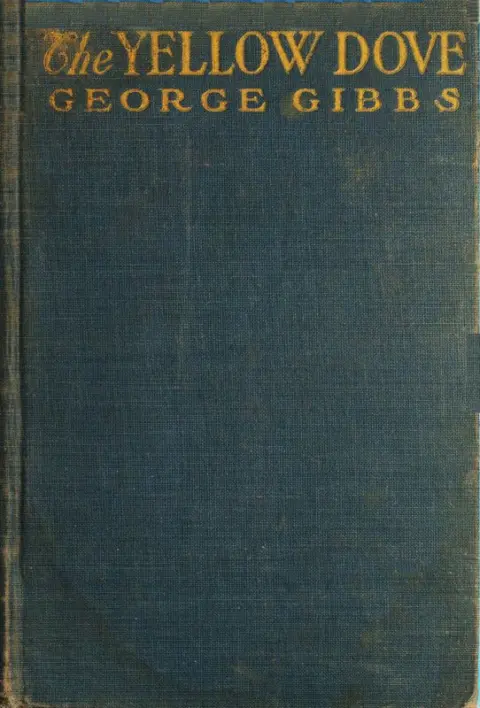
The Yellow Dove
George Gibbs
THE CLASSIC COLLECTION · 1920
"The Splendid Outcast" by George Gibbs is a novel written in the early 20th century. The story follows Jim Horton, a war-injured soldier in a hospital recovering from a successful operation, who grapples with his identity after assuming his cowardly twin brother Harry's name and position. The narrative seems to delve into themes of honor, identity, and deception against the backdrop of World War I, suggesting an exploration of the complexities of brotherhood and moral choices. The opening of the novel presents Jim Horton awakening in a hospital bed, struggling with pain and confusion as he learns that he has taken on the identity of his brother, Harry, a lieutenant thought to be wounded in battle. Jim recalls the events leading to his injuries and taxingly considers his brother’s cowardice and the decisions he made during their time in the war. As Jim pieces together his memories, he contemplates the implications of his actions, including the attendance of both his twin brother's wife, Moira, and her father, Barry Quinlevin, who are oblivious to the ruse. This opening setup establishes a tension-filled scenario filled with potential conflicts regarding identity and honor, and hints at the evolving dynamics as Jim must choose whether to maintain the deception or reveal the truth to Moira and face the consequences.
Introduction adapted from the source catalogue; source summaries may be automatically generated.
Free to read · English · 99,128 words · No account needed
MAKE TIME FOR A GOOD BOOK
On by default. Untick to stop anonymous reading totals. Each page counts after 10 seconds in view. How this works.
Anonymous counting is on unless you have switched it off.
"Perhaps," said Moira briefly. "You have been able to find some of the
witnesses?"
"Yes, Madame. The most important. But it would give me pleasure to
know----"
"In a moment, Monsieur. I am intent upon this problem. Perhaps we shall learn something. It is Monsieur Joubert that I wished to see particularly. He is a carpenter and lives in the court at the rear----"
"It is he I have found, Madame." And turning aside, Matthieu beckoned toward the corridor, and Monsieur Joubert entered. He was well known to Moira and saluted her, his brow troubled.
"Bon jour, Monsieur Joubert," she said, trying to control the beating of her heart and the labor of her breathing, for here she knew was to be the test of the worth of her discoveries. Everything that she believed, would stand or fall by the testimony of the people who had followed Jim Horton up the stair.
"Bon jour, Madame 'Orton," said the carpenter politely.
"Where were you, Monsieur," she began, "when you heard Monsieur Horton's
cry of alarm?"
"In the court below, Madame. I was standing with Monsieur Lavaud, the pastry cook, at the angle of the wall just inside the Loge of Madame Toupin----"
"And when you heard the cries what did you do?" asked the girl.
"I waited a moment in fear and then with Monsieur Lavaud went toward the
entrance."
"Were there some others there?"
"Oui, Madame. A number of persons came running into the court. They seemed to spring from the earth as if by magic."
"And were you among the first to rush up the stair?"
"Oui, Madame. There were but two or three before me."
"And whom did you find on the second landing?"
"Monsieur 'Orton and a lady who told us that a murder had been
committed."
"And you went with him up the stair?"
"Yes, Monsieur. A policeman had come rushing in, and we all mounted to
the third floor."
"Was it dark out there on the third floor landing?"
"Not dark, but dim. The studio door was open and threw a light
outside."
"And what did you do then?"
"Some rushed into the studio. We were all greatly excited. I stood in the hallway. Some went to the small hall room, the door of which was partly open."
"It was dark inside the hall room?"
"Oui, Madame--dark."
"You have testified that one of the crowd went into the small hall room and came out saying that no one was there."
"Non, Madame. No one was there. I and Monsieur Lavaud went into the room, made a light and verified the statement of the man who had come out."
Your reading position is saved on this browser. Take it to another device with a library code. Reading pages adapt to text, rather than matching a printed edition.
George Gibbs
George Gibbs
George Gibbs
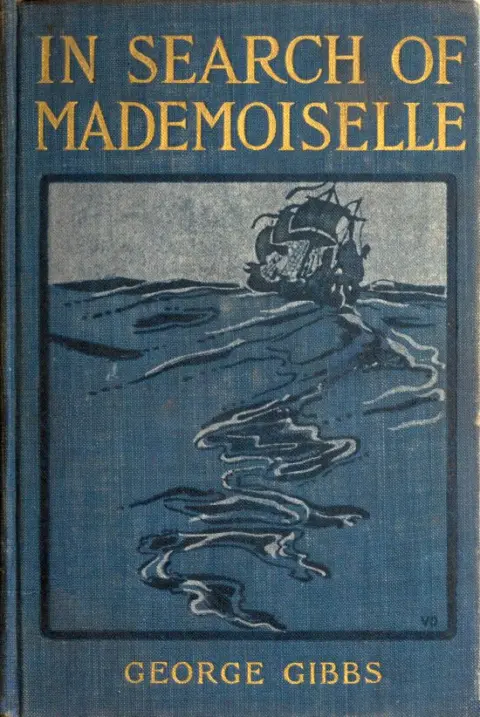
George Gibbs
BEHIND THE BOOK
This eBook is for the use of anyone anywhere in the United States and most other parts of the world at no cost and with almost no restrictions whatsoever. You may copy it, give it away or re-use it under the terms of the Project Gutenberg License included with this eBook or online at www.gutenberg.org. If you are not located in the United States, you will have to check the laws of the country where you are located before using this eBook. Read the source licence.
The original source file, including credits and licence, is retained by this library. Request an original-format copy at no charge. Please include the book title and Project Gutenberg identifier #47900.
KEEP YOUR CURIOSITY GOING
Coulson Kernahan

Maurice Baring
Frances Wright
Cécile Tormay

Frederic Jesup Stimson

W. H. P. (William Henry Pope) Jarvis