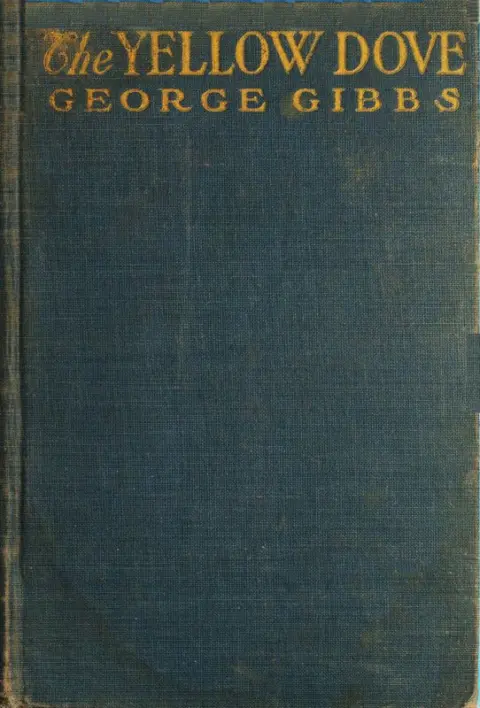
The Yellow Dove
George Gibbs
THE CLASSIC COLLECTION · 1920
"The Splendid Outcast" by George Gibbs is a novel written in the early 20th century. The story follows Jim Horton, a war-injured soldier in a hospital recovering from a successful operation, who grapples with his identity after assuming his cowardly twin brother Harry's name and position. The narrative seems to delve into themes of honor, identity, and deception against the backdrop of World War I, suggesting an exploration of the complexities of brotherhood and moral choices. The opening of the novel presents Jim Horton awakening in a hospital bed, struggling with pain and confusion as he learns that he has taken on the identity of his brother, Harry, a lieutenant thought to be wounded in battle. Jim recalls the events leading to his injuries and taxingly considers his brother’s cowardice and the decisions he made during their time in the war. As Jim pieces together his memories, he contemplates the implications of his actions, including the attendance of both his twin brother's wife, Moira, and her father, Barry Quinlevin, who are oblivious to the ruse. This opening setup establishes a tension-filled scenario filled with potential conflicts regarding identity and honor, and hints at the evolving dynamics as Jim must choose whether to maintain the deception or reveal the truth to Moira and face the consequences.
Introduction adapted from the source catalogue; source summaries may be automatically generated.
Free to read · English · 99,128 words · No account needed
MAKE TIME FOR A GOOD BOOK
On by default. Untick to stop anonymous reading totals. Each page counts after 10 seconds in view. How this works.
Anonymous counting is on unless you have switched it off.
A moment longer she waited, summoning calm and resolution, when the knocking on the door began again and her name was called.
"Coming," she replied, looking around the studio keenly. And then catching sight of Jim Horton's hat, whisked it under the couch and then opened the door.
Barry Quinlevin came in, Harry carrying his bag. With a gay laugh he
caught Moira into his arms.
"Well,--it's joyful I am to be back, dusty and unwashed, but none the less glad to be here. How are ye, child? By the amount of time ye took opening the door, I thought ye might be dead----"
"I'm very tired--," she murmured, "I've not been up to the mark----"
He held her off and looked at her in the dim light from the gas jet.
"A little peaky--eh--too much moping in the dark. Let's have some lights--and a drink of the Irish. 'Twill do none of us harm."
He moved into the studio and Harry Horton set the bag down.
"Did you have a successful trip?" asked Moira, putting more color into
her voice than she felt.
"So, so," said Quinlevin. "A bottle, Moira--and some glasses and water," and when she had obeyed, "There--the very sight of it's already making a new man of me. Harry, boy--yer health."
Moira sat and listened while he described the incidents of his trip. Harry could not meet her look, but she saw that he drank sparingly. As for her father, she watched him in silence, aware of his flamboyant grace and charm, again incredulous as to the things she knew of him. But his letter to Harry in her shirtwaist seemed to be burning the fair skin of her breast to remind her of his venality.
On his way to the bottle he pinched her pale cheeks between his long fingers. "Where's yer spirit, girl? Ye look as though ye'd been hearing a banshee. A fine husband ye've got, and all, to be putting lilies in yer cheeks instead of roses!"
"She stays in the studio too much," put in Harry, uneasily.
"A good jumper and a few stone walls of County Galway would set ye right in a jiffy. We'll be taking ye there, one day soon, I'm thinking, if ye don't come to life. What is it, child?"
"Oh--nothing--I'm just tired."
He took his glass and held it to the light with a critical air.
"Maybe it's better if ye go to bed then. I'll just clean up a bit and then come back and have a talk with you, Harry boy."
Your reading position is saved on this browser. Take it to another device with a library code. Reading pages adapt to text, rather than matching a printed edition.
George Gibbs
George Gibbs
George Gibbs
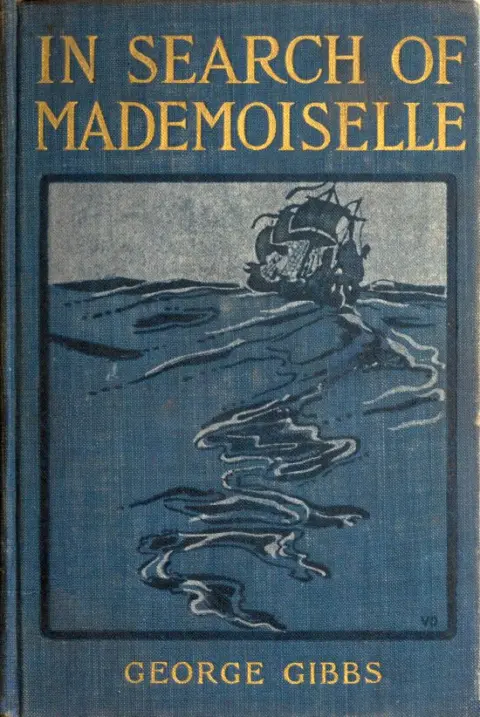
George Gibbs
BEHIND THE BOOK
This eBook is for the use of anyone anywhere in the United States and most other parts of the world at no cost and with almost no restrictions whatsoever. You may copy it, give it away or re-use it under the terms of the Project Gutenberg License included with this eBook or online at www.gutenberg.org. If you are not located in the United States, you will have to check the laws of the country where you are located before using this eBook. Read the source licence.
The original source file, including credits and licence, is retained by this library. Request an original-format copy at no charge. Please include the book title and Project Gutenberg identifier #47900.
KEEP YOUR CURIOSITY GOING
Coulson Kernahan

Maurice Baring
Frances Wright
Cécile Tormay

Frederic Jesup Stimson

W. H. P. (William Henry Pope) Jarvis