The club of masks
Allen Upward
THE CLASSIC COLLECTION · 1900
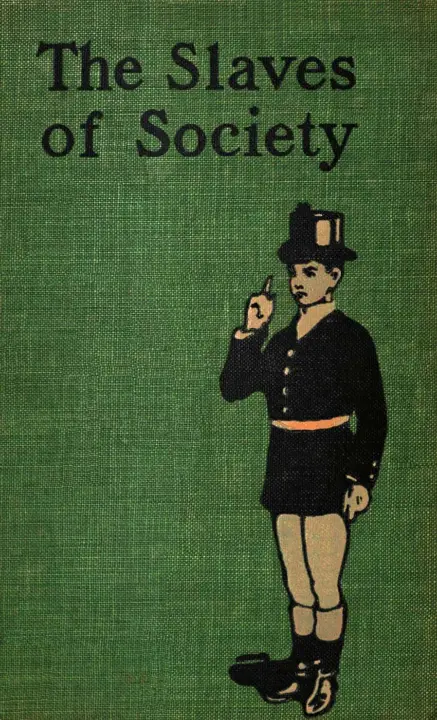
"The Slaves of Society: A Comedy in Covers" by Allen Upward is a comedic novel written in the late 19th century. The narrative delves into the intricacies of social class and personal relationships in British society, particularly focusing on the lives of the upper class. Central to the story are the marchioness and her daughter, Lady Victoria, as they navigate societal expectations and romantic entanglements, specifically involving the music-hall singer Belle Yorke and the wealthy Mr. Hammond. The opening of the story introduces a scene in the lavish drawing-room of the marchioness, where she engages in witty banter with Mr. Despencer about the burdens of social status. They discuss the suitability of potential marriage prospects for Lady Victoria, weighing a wealthy brewery heir against the dubious reputation of Belle Yorke, a rising star in the music hall. Through this dialogue, hints of hidden relationships and societal pressures arise, establishing the foundation for the comedic elements that unfold as the characters interact with each other and the societal norms they each grapple with. The introduction sets a satirical tone that explores themes of ambition, reputation, and the farcical nature of social customs.
Introduction adapted from the source catalogue; source summaries may be automatically generated.
Free to read · English · 37,736 words · No account needed
MAKE TIME FOR A GOOD BOOK
On by default. Untick to stop anonymous reading totals. Each page counts after 10 seconds in view. How this works.
Anonymous counting is on unless you have switched it off.
“Yes, mother?”
Lady Victoria bowed slightly to Despencer, who had risen at her entrance, and walked across to where the marchioness was seated.
The marchioness gazed at her daughter as if she had been a
chimney-sweeper.
“You dreadful child! You know this is my day, and you come in like that! Have you no regard for people’s feelings?”
Victoria smiled disdainfully.
“I suppose you mean Mr. Despencer’s feelings?” she observed.
“I mean the feelings of society,” returned her mother sternly. “You are more like an anarchist than a well-bred girl.”
Lady Victoria indulged in the tiniest of yawns.
“I think the anarchists are very interesting people,” she remarked. “If it weren’t for them, there would be nothing to read about in the papers.”
“There would be China,” returned the marchioness in a shocked voice.
The marchioness considered herself a politician. Her husband had once been Master of the Deerhounds.
“Bother China!” said Lady Victoria, dropping into a chair. “Is that what you sent for me about?”
The marchioness raised her eyes in mute appeal to the ceiling.
“I sent for you because I wanted to speak to you privately before
anybody comes.”
Despencer, who had been about to sit down again, stood up, and moved towards the door. The marchioness recalled him.
“Where are you going?”
“I thought you wanted to be alone.”
“Don’t be absurd! I don’t count you.”
“Perhaps Lady Victoria does,” Despencer suggested, with a rather nervous glance in her direction.
Lady Victoria did not condescend to return the look.
“Pray, don’t trouble yourself about me, Mr. Despencer,” she said, negligently. “I assure you I never know that you are in the room.”
“Don’t be rude, Victoria!” said her mother, more crossly than she had spoken yet. “Mr. Despencer is one of your best friends.”
“I suppose that means he has been saying something unpleasant about
me?” was the retort.
Despencer ventured to interpose.
“I may be a poet, but my imagination doesn’t carry me so far as that,” he said, in his most insinuating tones.
Lady Victoria gave him one crushing look, and turned to the marchioness.
“My dear mother, I wish you wouldn’t train Mr. Despencer to say these silly things. Surely he is not a suitor for my hand?”
“Be quiet, Victoria!” said her indignant parent. “From the way you treat him he might be your husband. But I’m sure it isn’t a thing for you to joke about. Do you remember that this is your third season, and that you are nearly twenty?”
Her daughter smiled in good-tempered derision.
Your reading position is saved on this browser. Take it to another device with a library code. Reading pages adapt to text, rather than matching a printed edition.
Allen Upward
Allen Upward
Allen Upward
Allen Upward
BEHIND THE BOOK
This eBook is for the use of anyone anywhere in the United States and most other parts of the world at no cost and with almost no restrictions whatsoever. You may copy it, give it away or re-use it under the terms of the Project Gutenberg License included with this eBook or online at www.gutenberg.org. If you are not located in the United States, you will have to check the laws of the country where you are located before using this eBook. Read the source licence.
The original source file, including credits and licence, is retained by this library. Request an original-format copy at no charge. Please include the book title and Project Gutenberg identifier #67606.
KEEP YOUR CURIOSITY GOING
Coulson Kernahan

Maurice Baring
Frances Wright
Cécile Tormay

Frederic Jesup Stimson

W. H. P. (William Henry Pope) Jarvis