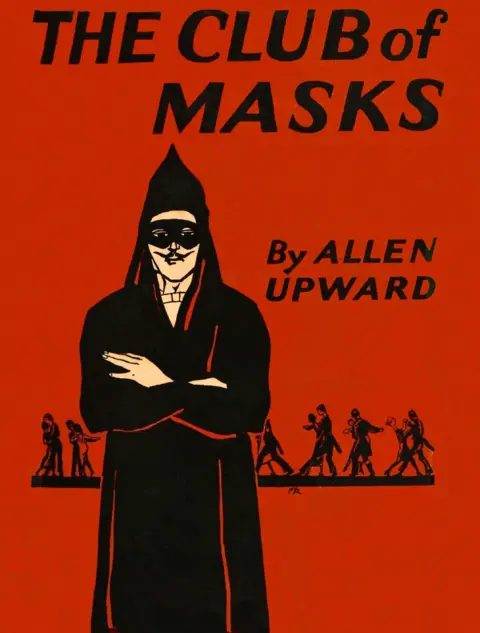
The club of masks
Allen Upward
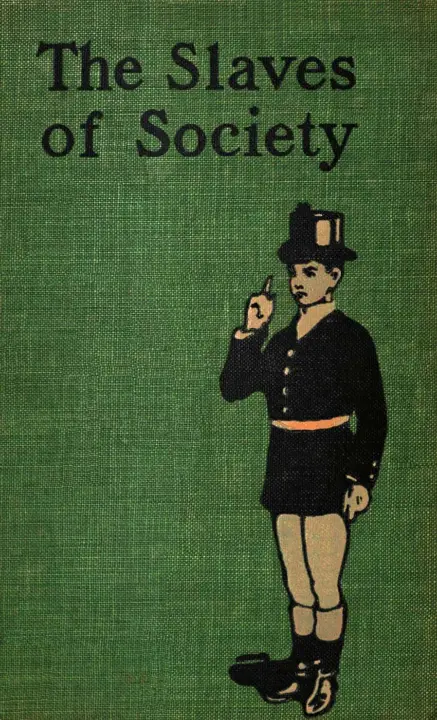
THE CLASSIC COLLECTION · 1900
"The Slaves of Society: A Comedy in Covers" by Allen Upward is a comedic novel written in the late 19th century. The narrative delves into the intricacies of social class and personal relationships in British society, particularly focusing on the lives of the upper class. Central to the story are the marchioness and her daughter, Lady Victoria, as they navigate societal expectations and romantic entanglements, specifically involving the music-hall singer Belle Yorke and the wealthy Mr. Hammond. The opening of the story introduces a scene in the lavish drawing-room of the marchioness, where she engages in witty banter with Mr. Despencer about the burdens of social status. They discuss the suitability of potential marriage prospects for Lady Victoria, weighing a wealthy brewery heir against the dubious reputation of Belle Yorke, a rising star in the music hall. Through this dialogue, hints of hidden relationships and societal pressures arise, establishing the foundation for the comedic elements that unfold as the characters interact with each other and the societal norms they each grapple with. The introduction sets a satirical tone that explores themes of ambition, reputation, and the farcical nature of social customs.
Introduction adapted from the source catalogue; source summaries may be automatically generated.
Free to read · English · 37,736 words · No account needed
MAKE TIME FOR A GOOD BOOK
On by default. Untick to stop anonymous reading totals. Each page counts after 10 seconds in view. How this works.
Anonymous counting is on unless you have switched it off.
“Far better not,” observed the cynic. “The truth is sometimes very disagreeable. I myself much prefer to be told pleasant falsehoods.”
“And to tell them, I suppose?”
Despencer did not wince.
“I am always anxious to oblige,” he answered, pointedly.
“You have no prejudice against Miss Yorke?” was Hammond’s next question.
“I have no prejudices at all, I can assure you. I am a most
broad-minded person.”
“It would make no difference to you, I suppose, if this report were true? It wouldn’t injure her in your opinion?”
“On the contrary, it would greatly increase my respect for her.”
Hammond seemed to be trying to sound the depths of his companion’s
character.
“I congratulate you. But you wouldn’t marry her?”
Despencer drew back, and shook his head with an amused air.
“Oh no! I am afraid I am not broad-minded enough for that.”
“Why not?”
“I couldn’t outrage decency, you know. Society would think me worse
than the marquis.”
“Damn society!”
“Oh, it is damned already,” said Despencer, quickly. “But even down below there are certain regulations which must be respected. There is an etiquette of Pandemonium.”
Hammond gave him another thoughtful look.
“You are a very clever man, Despencer, but, do you know, you almost make immorality tedious. If you are not careful, people will begin to get bored by vice, and virtue will become the fashion.”
“That is not a bad idea. There is always something attractive in
novelty.”
Again Hammond reflected for a minute, and again he resumed his
questioning.
“Tell me, has the marchioness heard this rumor?”
Despencer had not been expecting this question, and it nearly threw him off his guard. His eye met Hammond’s for a moment before he answered.
“I should hardly think so, or she wouldn’t have had her here. That would have been too daring, even for her.”
“It would be equally daring for her to come here if there were anything in it. Surely her very presence here proves her innocence?”
“Yes; but what about Lord Severn’s absence? You saw him hurry out the
moment she arrived?”
“My God, yes!” The words were dragged from Hammond in a burst of anguish. “There is some damned mystery in this!” he muttered between his teeth.
“Of course, it may be a mere coincidence,” the tempter threw in, artfully. “But I am always so suspicious of coincidences.”
Hammond was not listening. A new idea had occurred to him.
“I have a great mind to go to Severn himself, and put myself in his hands. But, then, of course, one couldn’t trust him,” he added, regretfully.
“He is a man of honor,” objected the other.
Your reading position is saved on this browser. Take it to another device with a library code. Reading pages adapt to text, rather than matching a printed edition.
Allen Upward
Allen Upward
Allen Upward
Allen Upward
BEHIND THE BOOK
This eBook is for the use of anyone anywhere in the United States and most other parts of the world at no cost and with almost no restrictions whatsoever. You may copy it, give it away or re-use it under the terms of the Project Gutenberg License included with this eBook or online at www.gutenberg.org. If you are not located in the United States, you will have to check the laws of the country where you are located before using this eBook. Read the source licence.
The original source file, including credits and licence, is retained by this library. Request an original-format copy at no charge. Please include the book title and Project Gutenberg identifier #67606.
KEEP YOUR CURIOSITY GOING
Coulson Kernahan

Maurice Baring
Frances Wright
Cécile Tormay

Frederic Jesup Stimson

W. H. P. (William Henry Pope) Jarvis