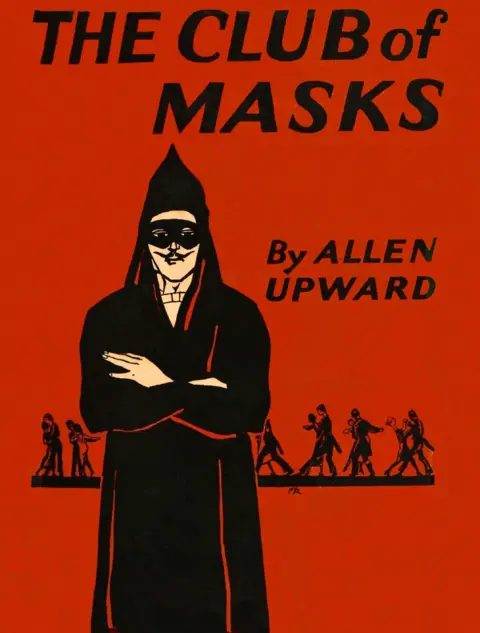
The club of masks
Allen Upward
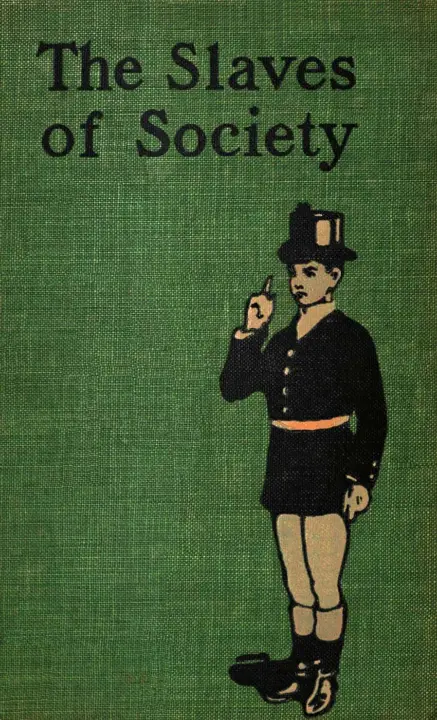
THE CLASSIC COLLECTION · 1900
"The Slaves of Society: A Comedy in Covers" by Allen Upward is a comedic novel written in the late 19th century. The narrative delves into the intricacies of social class and personal relationships in British society, particularly focusing on the lives of the upper class. Central to the story are the marchioness and her daughter, Lady Victoria, as they navigate societal expectations and romantic entanglements, specifically involving the music-hall singer Belle Yorke and the wealthy Mr. Hammond. The opening of the story introduces a scene in the lavish drawing-room of the marchioness, where she engages in witty banter with Mr. Despencer about the burdens of social status. They discuss the suitability of potential marriage prospects for Lady Victoria, weighing a wealthy brewery heir against the dubious reputation of Belle Yorke, a rising star in the music hall. Through this dialogue, hints of hidden relationships and societal pressures arise, establishing the foundation for the comedic elements that unfold as the characters interact with each other and the societal norms they each grapple with. The introduction sets a satirical tone that explores themes of ambition, reputation, and the farcical nature of social customs.
Introduction adapted from the source catalogue; source summaries may be automatically generated.
Free to read · English · 37,736 words · No account needed
MAKE TIME FOR A GOOD BOOK
On by default. Untick to stop anonymous reading totals. Each page counts after 10 seconds in view. How this works.
Anonymous counting is on unless you have switched it off.
“Er--let me--Mr. Despencer, a friend of mine.”
A look of hopeless bewilderment appeared on the alderman’s speaking countenance. Despencer skilfully put in:
“A friend of Mr. Hammond’s as well. The marchioness thought it better for me to come here with her.”
The tension was relieved. Alderman Dobbin seated himself facing his visitors, while the marchioness opened the conversation.
“I have taken the liberty of coming here, Mr. Dobbin, without waiting till you came to my house, because I wanted to have a private chat with you. You know how difficult it is to get five minutes’ conversation with any one in those crushes.”
The alderman bowed, much gratified at being supposed to know anything
whatever on the subject.
“Of course, what I am going to say to you is in confidence,” the marchioness proceeded. “I am sure you would not dream of mentioning to Mr. Hammond that we had been here.”
“Certainly not. Your ladyship may trust me absolutely. Not a soul shall
know of it.”
“I have heard Mr. Hammond speak of you so often that I feel you are quite an old friend. No doubt he has talked of us to you?”
The alderman smiled feebly. He would have given a good deal to be able to say yes, but could not quite bring himself to it.
“Perhaps I ought to say he has talked of my daughter, Lady Victoria?”
Alderman Dobbin had never heard of such a person as Lady Victoria. His smile became feebler still. The marchioness coughed discreetly, and glanced towards Despencer. He came gallantly to the rescue.
“It has been understood for some time that Mr. Hammond was likely to marry Lady Victoria, as, of course, you know.”
“Yes, of course; quite so,” jerked out the alderman, deeply ashamed of his ignorance on the point.
The marchioness heaved a sigh.
“I need not ask if the match had your approval, Mr. Dobbin, because I am sure that you, as a friend of Mr. Hammond’s, must see what an advantage such a connection would be to him in his political career.”
“Certainly, your ladyship. Nothing could be better. It would go a long
way in Tooting.”
“Ah! And now, do you know, I am almost afraid that the idea will have to be abandoned. I hesitate whether I ought to allow my daughter to think of Mr. Hammond any longer.”
“Dear me! I am very sorry to hear your ladyship say that.”
Her ladyship shook her head sadly.
“Yes. I have no doubt you understand the reason.”
The alderman’s face again clearly betraying that he had not the
remotest idea of the reason, Despencer came to his assistance once
more.
Your reading position is saved on this browser. Take it to another device with a library code. Reading pages adapt to text, rather than matching a printed edition.
Allen Upward
Allen Upward
Allen Upward
Allen Upward
BEHIND THE BOOK
This eBook is for the use of anyone anywhere in the United States and most other parts of the world at no cost and with almost no restrictions whatsoever. You may copy it, give it away or re-use it under the terms of the Project Gutenberg License included with this eBook or online at www.gutenberg.org. If you are not located in the United States, you will have to check the laws of the country where you are located before using this eBook. Read the source licence.
The original source file, including credits and licence, is retained by this library. Request an original-format copy at no charge. Please include the book title and Project Gutenberg identifier #67606.
KEEP YOUR CURIOSITY GOING
Coulson Kernahan

Maurice Baring
Frances Wright
Cécile Tormay

Frederic Jesup Stimson

W. H. P. (William Henry Pope) Jarvis